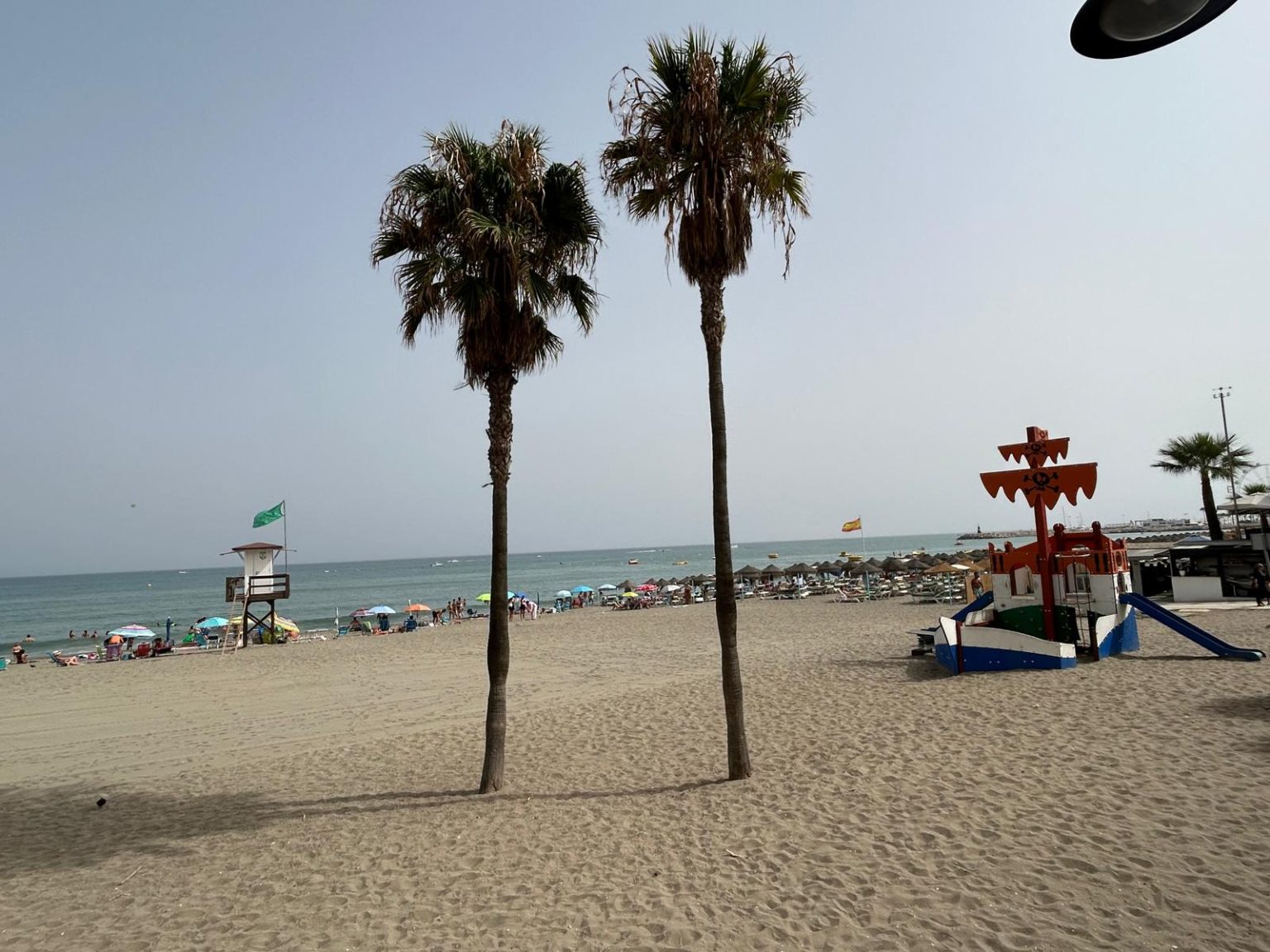

Andalucia’s coastline could lose between five and 25 metres of dry beach by 2050 as a result of climate change, a new study released by the Junta has warned.
In its worst-case scenario, the report warns that up to 33 beaches could disappear entirely over the coming decades, particularly along the Malaga shoreline and the western coast of Cadiz.
The projections are based on sea level rise scenarios modelled by the Intergovernmental Panel on Climate Change (IPCC).
READ MORE: Chaos in Cadiz as huge sea swell damages chiringuito and washes away footbridge
Beaches retreating into the sea
The scale of erosion will vary depending on the type of beach and its sediment composition, but researchers say open beaches with fine sand and deeper ‘closure depths’ are at the greatest risk.
By the year 2100, some areas could see a permanent retreat of up to 65 metres, leaving little or no dry sand exposed during high tides.
The findings form part of an ongoing study on flooding and coastal erosion under different climate change pathways. Results are still being validated but already present what experts describe as an urgent warning for planners and coastal communities.
Two complementary studies
The ‘iccoast’ project follows an earlier 2022 study on coastal vulnerability, which mapped in detail the resources, infrastructure, and activities at risk from climate change across Andalucía’s coast.
That earlier research also produced a coastal risk atlas and a draft adaptation plan for maritime-terrestrial public land.
Together, the two initiatives provide Andalucía with some of the most advanced tools in Spain for anticipating the effects of climate change on coastal environments.
A looming threat already visible
Signs of erosion and regression are already evident in parts of the region, from narrowing urban beaches to the loss of protective dunes.
Authorities say the challenge will be to balance tourism, coastal livelihoods, and environmental protection while implementing adaptation measures before irreversible damage sets in.
As sea levels rise, Andalucia faces the prospect of not only losing some of its most iconic beaches but also the economic and cultural lifelines that depend on them.
Andalucia beaches at risk, according to NASA
Previous NASA forecasts suggest that Cadiz will be the Andalucia province most severely affected by rising seas, with parts of its coastline expected to see waters climb by 12cm within just six years and up to 75cm by 2090.
The data, which extend into the next century, paint a stark picture for low-lying beaches and towns along the Bay of Cadiz and the Guadalquivir estuary.
One of the clearest examples comes from Bonanza beach, near Sanlúcar de Barrameda. According to NASA’s models, the sea here will rise 26cm by 2050 and 75cm by 2100. By 2150, the increase could reach an extraordinary 126cm, placing much of the shoreline under serious threat of permanent flooding.
The Bay of Algeciras faces a slightly gentler trajectory, with levels projected to rise 18cm by 2050, 58cm by 2100, and 101cm by 2150. In Tarifa, the trend is almost identical: 21cm by 2050, 64cm by 2100, and 110cm by 2150.
While the progression is slower than in Bonanza, both towns are expected to confront significant coastal erosion, habitat loss, and pressures on port infrastructure.
On the Atlantic coast, NASA models for Huelva point to a more gradual rise at first: 16cm by 2040. But the pace increases sharply towards the end of the century, with a 58cm rise by 2090 and 117cm by 2150.
The Mediterranean provinces of Malaga and Almeria show almost identical forecasts. Both are projected to see seas climb by around 20cm in 2050, 60–61cm by 2100, and just over one metre by 2150.
For the Costa del Sol, this raises acute concerns for urban beaches already narrowed by erosion, while in Almeria, areas such as Cabo de Gata could face dramatic ecological changes.
Read more Andalucia news at the Spanish Eye.