
If you are working as self-employed (autonomo) in Spain, there is an important change you need to be aware of.
Since January 1, 2026, Spain’s tax authority, (Agencia Tributaria), has been actively monitoring payments made and received by autonomos via Bizum, as well as bank card transactions, using detailed data supplied directly by banks.
Crucially, the €3,000 reporting threshold has now been scrapped. Until last year, banks only had to report movements once income exceeded that amount. From January, there is no minimum at all – meaning every digital payment can be checked, no matter how small.
A growing burden for the self-employed
The change comes at a time when many freelancers and small business owners already feel under pressure.
According to the latest barometer from the Federacion Nacional de Asociaciones de Trabajadores Autonomos, 90% of autonomos say their administrative workload increased over the past year, while 80% believe higher taxes damaged their business during 2025.
Tax advisers warn that this new level of scrutiny adds another layer of responsibility – particularly for foreign residents unfamiliar with Spain’s compliance culture.
Issue an invoice for every digital payment
One message from advisers is repeated again and again: every payment needs an invoice.
Whether a client pays you via Bizum or card, each transaction should be backed up by a specific invoice.
This allows the Hacienda to cross-check what appears in your bank account with what you declare in your IVA (VAT) and IRPF (income tax) returns.
Angela Cal, business director at consultancy Talenom in northern Spain, warns that small, frequent payments can easily slip through the net if accounting and invoicing are not kept perfectly aligned.
Speaking to Economia Real, she said the safest approach is one payment, one invoice – even when the client is a private individual.
This is particularly relevant for British professionals such as consultants, tradespeople, therapists, dentists or lawyers who charge individuals and increasingly receive payments digitally.
Keep business and personal accounts separate
This is one area where many expats fall into trouble.
Using the same bank account (and Bizum profile) for business income and personal transfers – such as family gifts or shared expenses – can quickly become a nightmare if the Hacienda comes knocking.
Advisers strongly recommend having:
- One account exclusively for your professional activity, including Bizum payments
- A separate personal account for everyday life
If you need to move money between the two, do so via a clear transfer, so the origin of each payment is obvious.
‘When you mix everything together, it’s chaos and very difficult to control,’ warned expert Cal.
‘It’s very difficult to keep track, so it’s advisable to have one account for business, with income and payments from your business activities, including Bizum payments, and another for personal use.
‘If you need to add funds to your personal account, you can transfer money from the business account to the personal one, but make sure the two accounts are kept separate.’
Prepare now for Verifactu and digital reporting
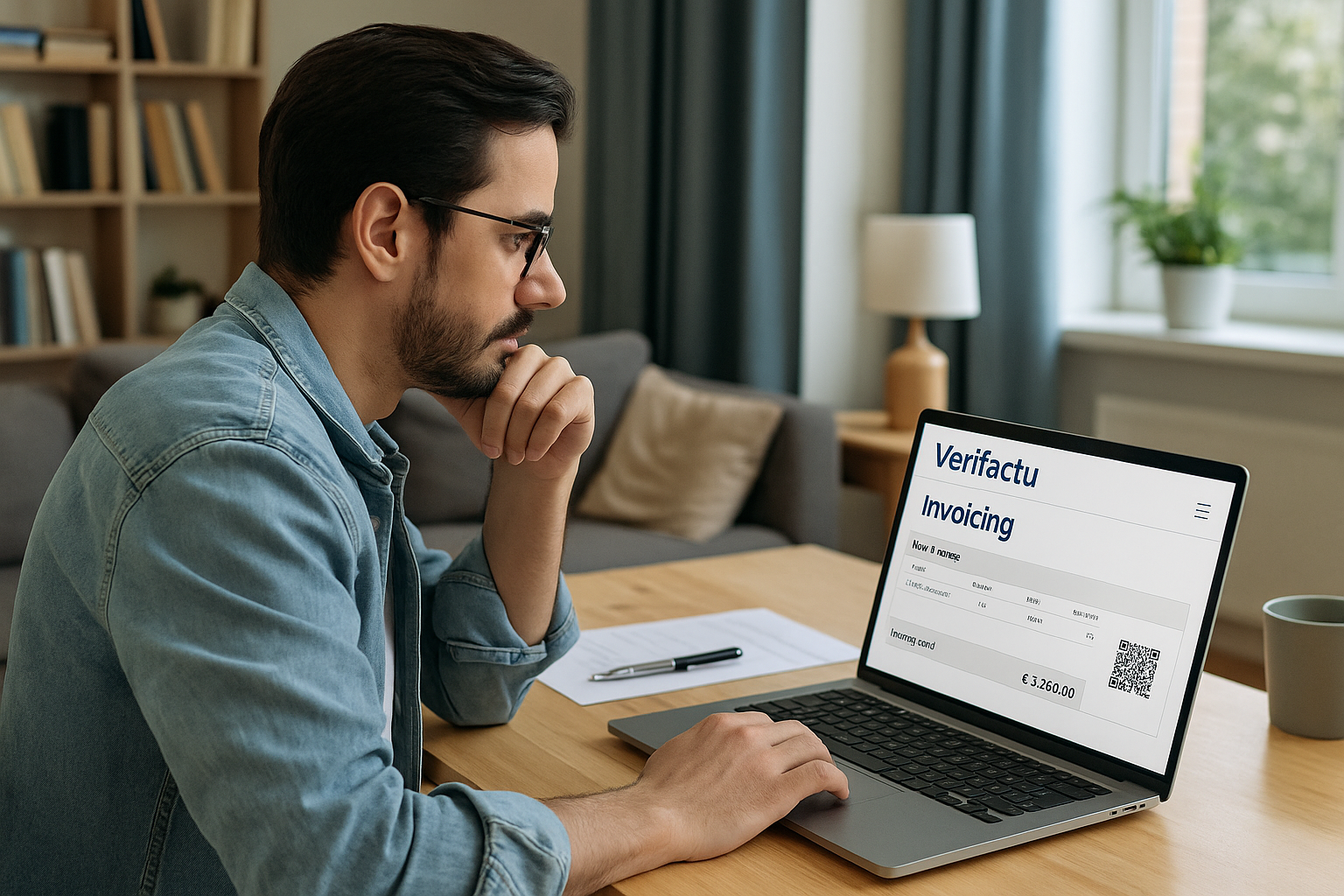
Autonomos are also being urged to prepare in advance for Verifactu, Spain’s certified digital invoicing system.
Using approved invoicing software and keeping structured digital records makes it far easier to respond to inspections.
Advisers describe this as a sign of ‘good faith’ that reduces risk and professionalises your business – something especially important for foreign residents who may already feel under closer scrutiny.
What Hacienda can do with Bizum and card data
Banks now send information monthly, giving Hacienda near real-time visibility of your income via Bizum, cards or platforms such as PayPal.
If the figures in your VAT or income tax returns do not match what Hacienda already has from the banks, a provisional tax assessment can be issued almost immediately.
You would be required to pay the difference, plus surcharges, and could also face a formal penalty process.
Cal warns: ‘Immediately after the declaration is made, a provisional settlement will be issued if the income reported is less than what the Tax Agency has on record through bank information, because payments made with Bizum are now also registered.
‘In that case, the self-employed worker will have to pay the difference generated by the provisional settlement, plus the corresponding surcharge.
‘Furthermore, a penalty procedure will be initiated, which could result in a fine and could reach significant amounts.’
Fines of up to 150% of undeclared income
Under Spain’s General Tax Law (Law 58/2003), penalties range from 50% to 150% of undeclared income.
In practical terms, failing to declare €2,000 received via Bizum could result in a €3,000 fine, on top of repaying the €2,000 owed – before interest or surcharges are even added.