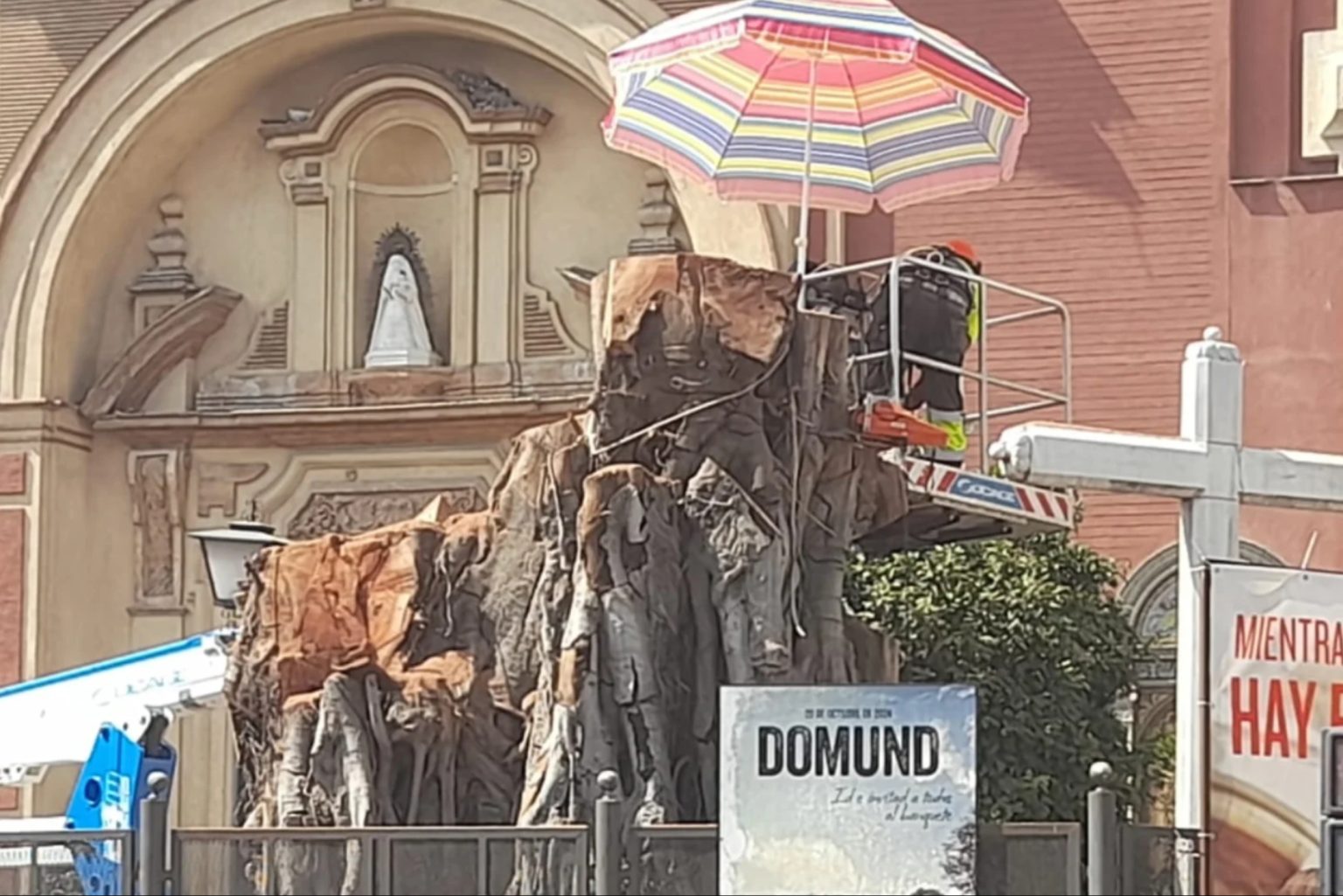

It is one of the most ironic images seen by locals in Sevilla for a long time; A tree feller takes shelter under a beach umbrella while cutting down what was once one of the city’s shadiest trees.
This is the capital of Andalucia, in southern Spain, where highs during the summer can exceed 45C, making shaded areas essential, particularly for vulnerable members of society.
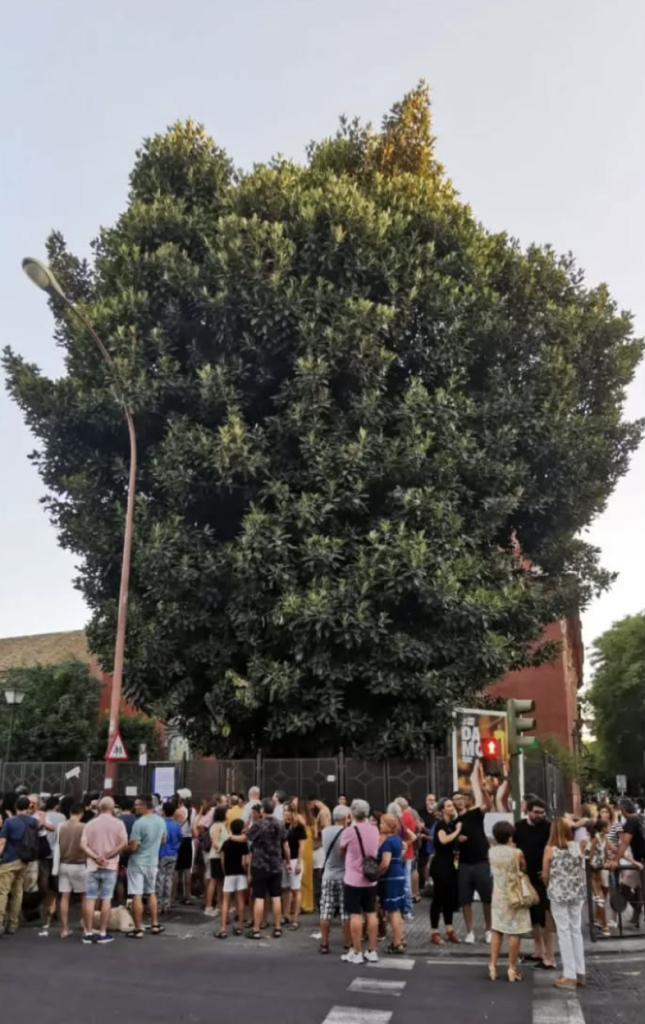
And the tree being cut is no ordinary specimen. It is the emblematic centennial ficus of the San Jacinto church, in the neighbourhood of Triana.
It had stood tall for 112 years before being felled this month after years of wrangling between activists and the city council.
The Ficus San Jacinto activist group who shared the image said: ‘Tell us, from the bottom of your heart, don’t you see something odd in this photo? Paradoxical perhaps?
‘Don’t you think it’s ridiculous that they have to protect themselves from the sun with a beach umbrella because they’re cutting down what was once one of the trees that provided the most shade to the neighbourhood?’

But the case is not unique, with scores of trees being felled in some areas to make way for homes or new urban centres. While the city council has launched programmes to replant trees, locals fear they won’t be enough.
A recent study in The Lancet found that Sevilla’s nighttime temperatures run 3C hotter than surrounding rural areas.
In summer 2022 – the hottest on record – more than 450 people died in Sevilla province from heat-related causes.
Experts believe that reaching just 30% tree canopy cover across urban spaces could reduce heat-related deaths by 2% – and that currently Sevilla has one of the lowest tree coverages in Europe.
Now, activists, residents, and environmentalists are raising the alarm.
Dozens of groups, including Sevilla por el Clima, Salva tus Arboles and Nervion Verde have united in a manifesto condemning what they call ‘massive felling’ and ‘wild pruning’ by the municipal government.
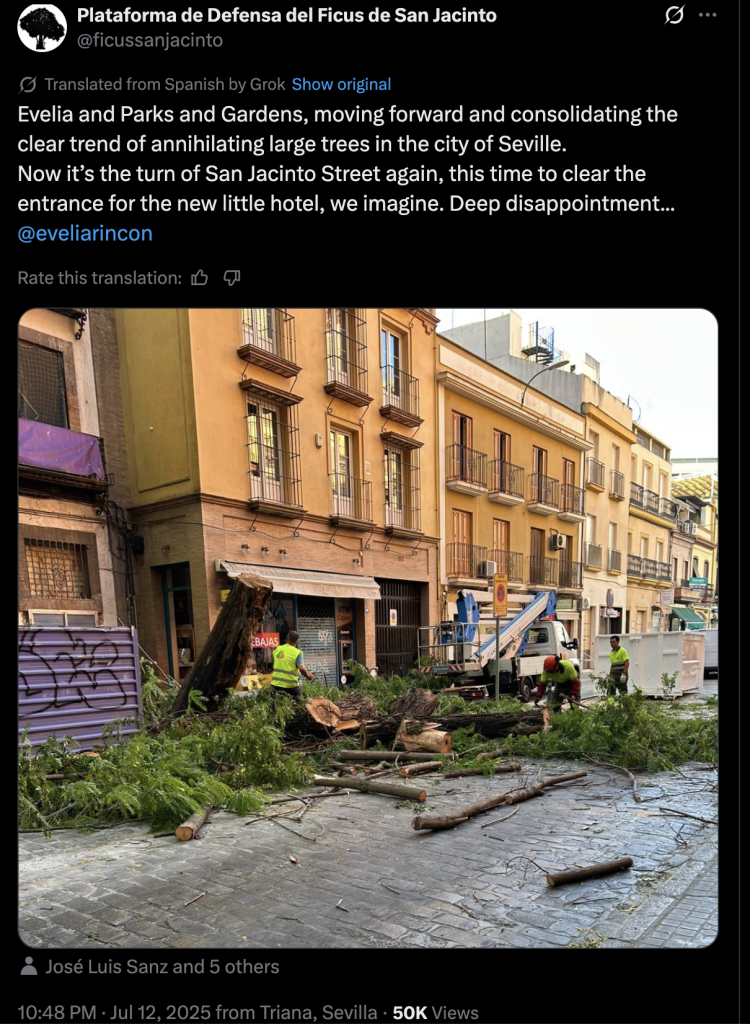
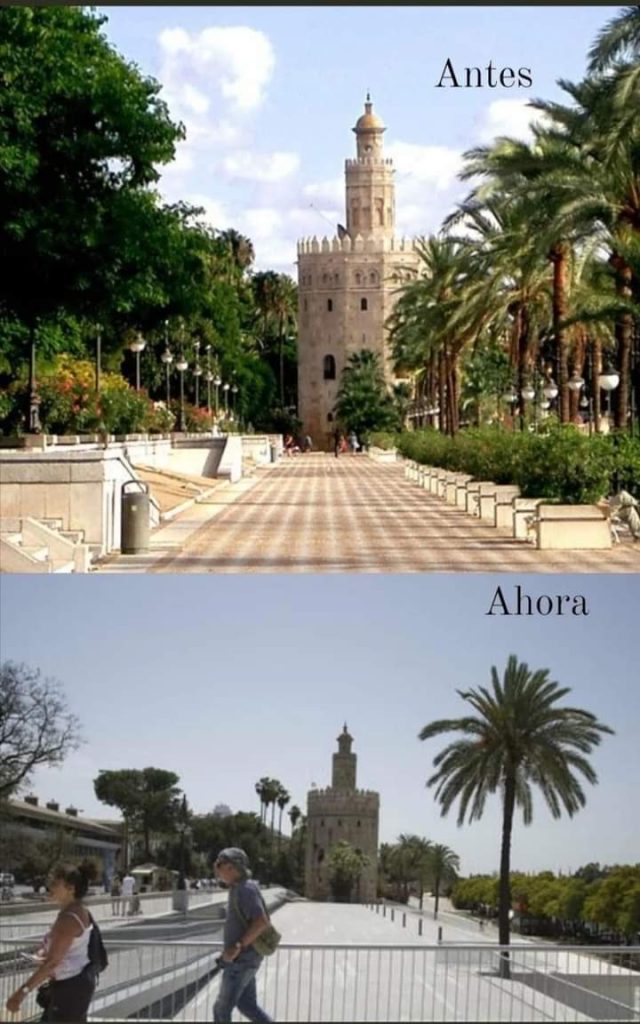
They accuse the council of stripping away shade under the guise of public safety, while ignoring professional guidelines and turning streets into barren, unliveable corridors.
Triana’s centennial ficus tree has proven to be one of the flashpoints. Despite scientific reports suggesting it still retained 5% life (meaning it could have been saved), local authorities felled it – replacing a piece of living history with a stump and a plaque.
Environmentalists denounced the loss as a failure of care and transparency. The city council argued that its roots were buckling pavements and risked causing structural damage to the church.
Meanwhile, the Ministry of Defence plans to clear nearly 389 trees in Tablada – 73 % of the local canopy – to reurbanise the neighbourhood.
Residents argue many of these trees are healthy, decades old, and could be preserved through thoughtful design, not plowed under.
Still, there are green shoots of hope. Sevilla’s Urban Tree Management Plan, rolling out between 2019 and 2039, aims to raise tree cover by 5% over 20 years by planting 5,000 trees every year.
From 2020 to 2024, between 1,000 and 5,500 trees were planted annually across streets and parks.
A spring 2024 initiative, Replanta Sevilla, rallied 19 businesses to finance the replanting of over 1,000 trees toppled by Storm Bernard.
Other efforts centre on climate adaptation through design. The LIFE WaterCool project targets Macarena, turning asphalt-heavy avenues into cooling corridors using permeable pavements, thirsty shrubs, and carbon-hungry trees like ficus and paulownias.
Sevilla mayor, Jose Luis Sanz, has promoted awnings on Avenida de la Constitucion – but critics argue that fabric shades can’t match the air-cooling power of leaves.
Trees don’t just block sun, they breathe and evaporate, dropping the ambient temperature by up to 5C.
Like many crises, the poorer areas are being the worst hit.
A university-led urban ecology study shows that low-income neighbourhoods like Poligono Sur and Torreblanca suffer the greatest neglect, and are plagued with dead tree trunks, parched soil and empty planting pits.
Meanwhile, affluent areas like Los Remedios and Nervion show signs of proper care and biodiversity.
Read more Andalucia news at the Spanish Eye.