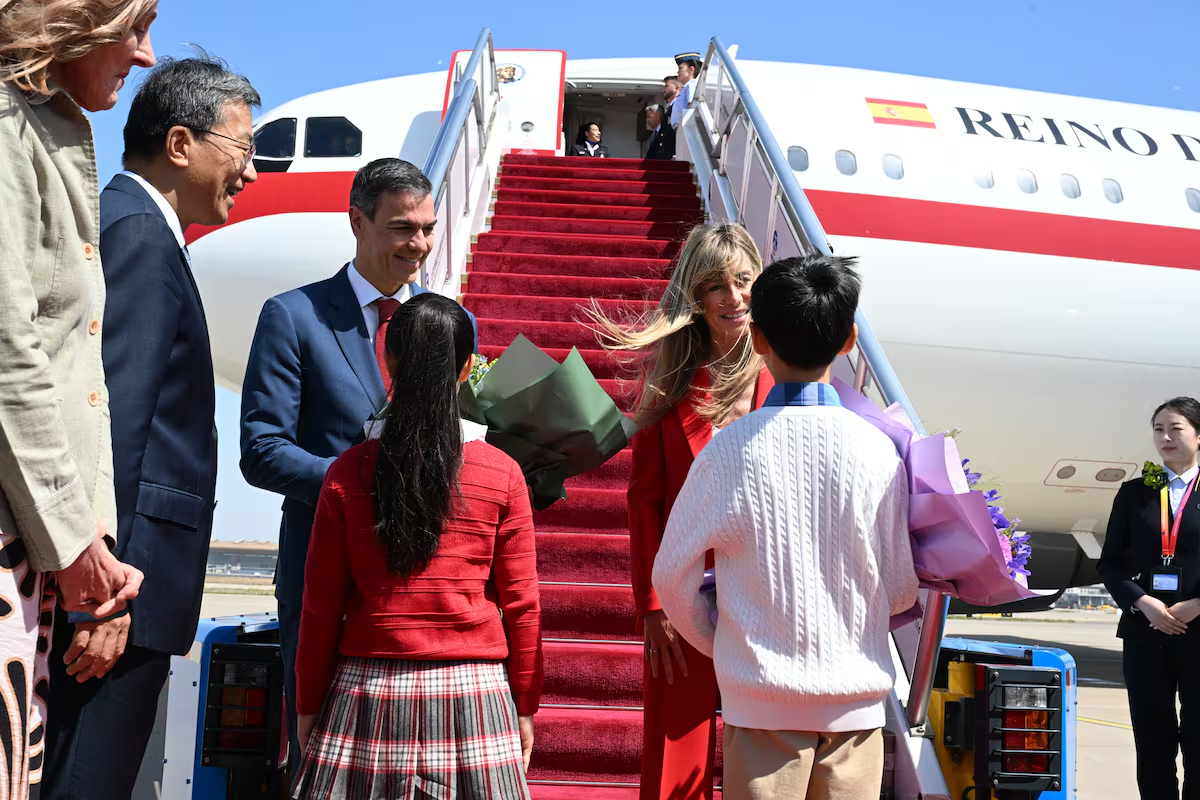

Pedro Sanchez is receiving one of the highest levels of diplomatic treatment China can offer during his latest visit to Beijing.
The Spanish leader is making his fourth trip to China since the pandemic, more than any other Western counterpart, in a move that cements his position as one of Europe’s most engaged leaders with Xi Jinping.
According to protocol experts, Sanchez is due to be treated on a ‘head of state’ level during the visit – a notable elevation in status typically reserved for top-tier global leaders.
The visit, organised at the invitation of the Chinese Communist Party, includes two state banquets at the Great Hall of the People – an honour rarely extended and usually reserved for key international partners.
Sanchez was accompanied by his wife, Begoña Gomez, upon their arrival on Saturday, with both expected to attend the high-level receptions over the coming days.
The trip also includes visits to major institutions such as Tsinghua University and the Chinese Academy of Sciences, where Sánchez is due to receive an honorary distinction.
Business and influence behind the scenes
Beyond diplomacy, the visit has a strong economic and corporate dimension.
Meetings have been scheduled with major Chinese technology and industrial firms, alongside investment forums aimed at attracting capital into Spain – particularly in sectors such as renewable energy, infrastructure and advanced manufacturing.
Tech giants and strategic sectors
Among the planned stops is a visit to Xiaomi, where Sanchez is expected to meet senior executives as part of efforts to deepen cooperation in innovation and industry.
The political core of the trip will centre on meetings with Xi and Chinese premier Li Qiang, with discussions focused on trade, investment and expanding collaboration in strategic sectors.
Several bilateral agreements are expected to be signed, aimed at boosting Spanish exports while encouraging Chinese investment in Spain.
A growing relationship
The visit comes as Spain’s relationship with China is drawing increased scrutiny, particularly as geopolitical tensions with the US continue to simmer.
Sanchez’s repeated visits and the level of access granted by Beijing have reinforced perceptions that Madrid is positioning itself as a key European interlocutor with China.
At the same time, critics have pointed to the role of intermediaries and the presence of major Chinese firms – including companies such as Huawei – in sensitive sectors.
Diplomatically, the trip represents one of the high points of Sanchez’s international agenda.
From ceremonial honours to direct engagement with China’s top leadership, the visit signals both deepening ties and a calculated effort by Spain to strengthen its global positioning.