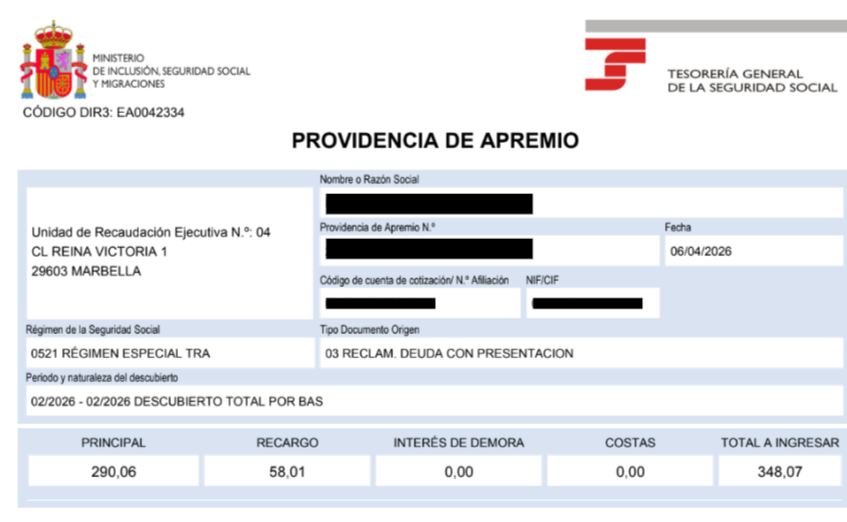

A British expat is sounding the alarm after being handed a ‘disgusting’ fine from the Spanish tax authorities – in a case that highlights the often harsh realities of going self-employed in Spain.
The 32-year-old resident only became self-employed last year but has been struggling to make ends meet, particularly during the early stages of setting up their business.
They had no money in their account when the taxman attempted to take their monthly quota – the mandatory social security payment for freelancers – a day earlier than expected.
‘I had money coming in on the first of the month but they took it early, which means they put me down as missing the payment,’ they told the Spanish Eye.
‘I usually pay €87 per month to be able to work as a freelancer, but my accountant just told me they are now demanding €348 because I was unable to pay – that’s 400% the original amount.
‘It’s absolutely disgusting, they have no compassion or care, they just want to screw you over with every chance they get.
‘They would have known I had nothing in my bank account, it is so cruel that they don’t give you a few days grace period, or simply try to take the amount again a few days later.
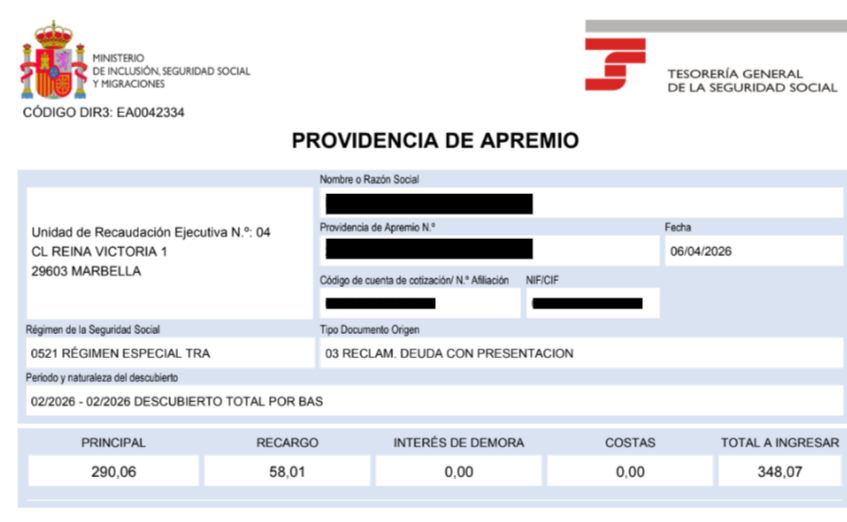
‘If I couldn’t pay the €87, in what world do they think I have €348 to spare?
‘Unless you have significant savings to get you through two years, do NOT bother moving to Spain to start a business, they will grind you down and destroy you!’
Every self-employed worker in Spain – known as an ‘autónomo’ – must pay a monthly social security contribution, typically collected automatically via direct debit by the Agencia Tributaria alongside the social security system.
While new freelancers can benefit from discounted rates, such as the widely used flat fee of around €80–€90 per month in their first year, the system is notoriously rigid.
Payments are taken on fixed dates and, if they fail, surcharges can be applied almost immediately.
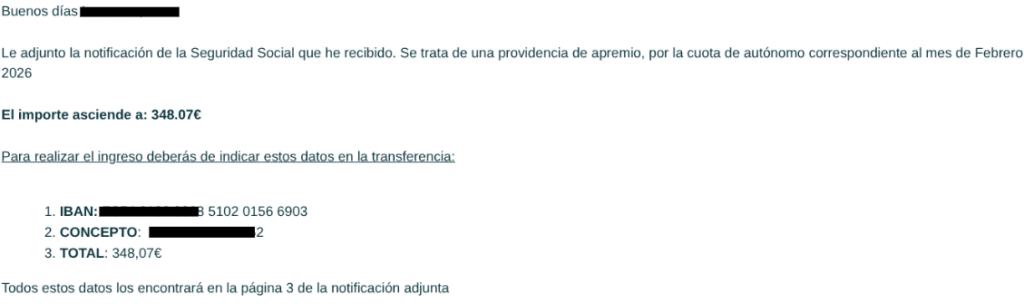
Under current rules, missing a payment can trigger automatic penalties and backdated charges, often pushing a small monthly fee into several hundred euros.
In some cases, freelancers can also temporarily lose access to reduced rates, meaning future payments increase significantly.
Critics have long argued that Spain’s autpnomo system is one of the toughest in Europe, particularly because the fee must be paid regardless of income.
That means even those earning little – or nothing – are still liable for the full contribution.
For many expats and new entrepreneurs, this creates a high-risk environment in the first year of trading, when income is often unstable and cash flow unpredictable.
The case is far from isolated. Advisors regularly warn that freelancers in Spain need a financial buffer to survive the first 12 to 24 months, not just to cover living costs, but to ensure they can meet fixed obligations like the monthly cuota, even during slow periods.
Read more Andalucia news at the Spanish Eye.