
Brits are fuming after being forced to cough up €16 or more on the Costa del Sol’s toll road in what has been branded a ‘tourist tax’ in all but name.
Scores of expats and visitors took to social media to criticise the AP-7, which runs along the Malaga coastline and which significantly hikes its prices during holiday periods – including now for Easter.
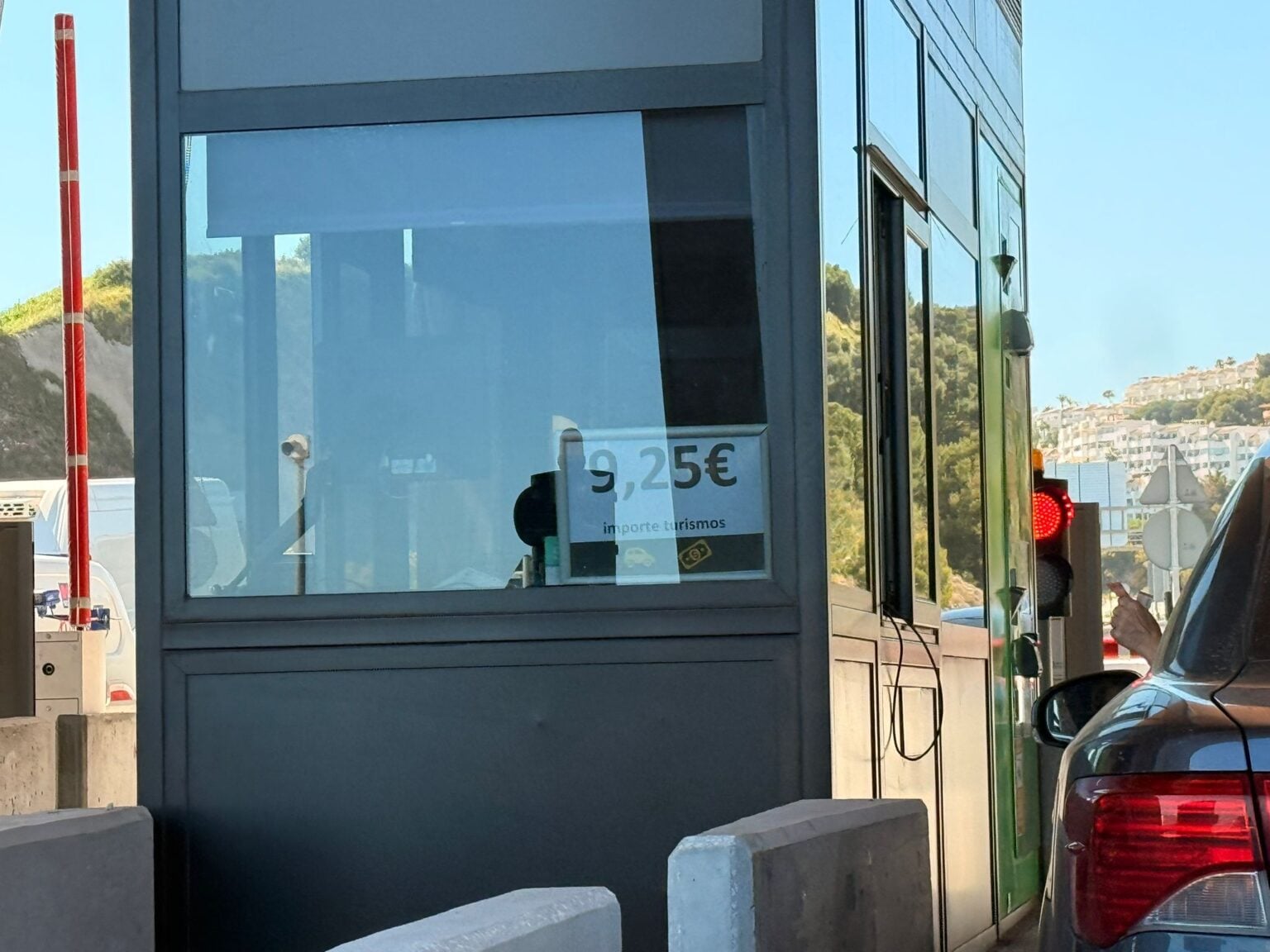
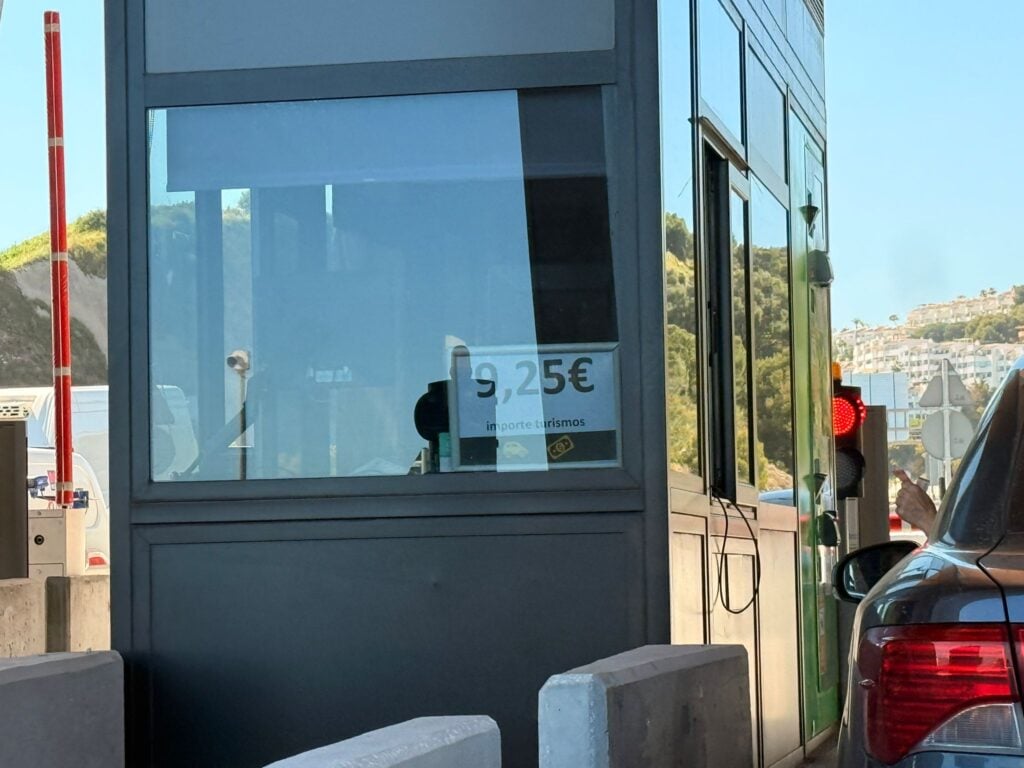
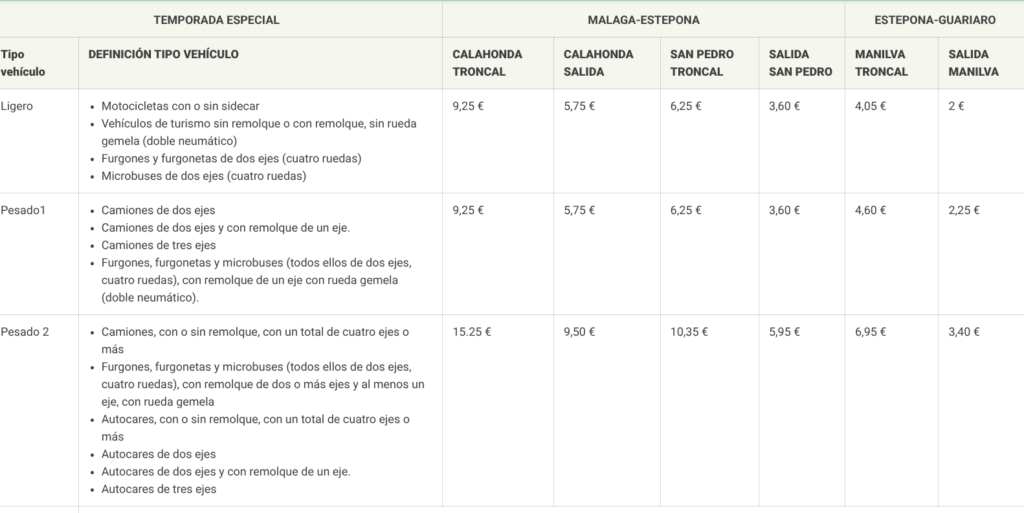
Those using the road from Malaga to Marbella have to pay €9.25, before the amount grows if you travel onwards to San Pedro, and then again to Manilva.
It means that those travelling from Malaga to Manilva during Easter face toll road charges of just over €20.
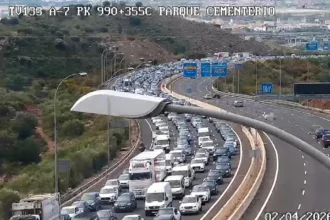
While you can opt to avoid the AP-7 for the toll-free A-7, you are often choosing to be stuck in painful traffic jams.
Posting in an expat forum, expat John Cook fumed: ‘I see the vultures are out on the AP-7 tolls for Easter – San Pedro is up from €3.85 to €6.25, or you can sit in the every day traffic jams on the A-7.’
‘Isn’t that absolutely disgusting,’ added Graham Edwards, ‘What a rip off.’
Tanya Nugent, who lives in Estepona, added: ‘No doubt it’s a great road but two tolls to get here from the airport, the first is almost €10 and the second €6.25, that they call it a tourist tax is a disgrace.
‘It’s hiked up during each holiday period, it shouldn’t be allowed.’
Others defended the charge, saying it’s ‘a price worth paying’ to avoid traffic and be able to drive ‘in safety.’
Paul Thomas said: ‘Safety is priceless. Honestly, the way drivers undertake here is unforgiveable given the accident stats on the A7… it’s still good value for your life and those of your loved ones.’
Who makes money from the toll?
Behind the AP-7 Costa del Sol toll is a highly profitable concession model that benefits both the private operator and the Spanish state.
The motorway is run by Ausol, a private company that forms part of the wider infrastructure group Cintra, itself owned by Ferrovial.
Since the concession began in 1999, the road has generated around €1.3 billion in revenue.
Of that, approximately €985million has been recorded as operating profit for the concessionaire, proving just how lucrative the stretch between Malaga and Guadiaro has been.
The company finances, maintains and operates the motorway, recouping its investment, and generating returns, through tolls paid by drivers. Contracts typically run for decades, giving operators long-term, predictable income streams.
At the same time, the state also benefits significantly as around €384 million has been collected in taxes over the same period, including VAT and corporation tax, meaning Madrid profits even without directly operating the road.
Critics argue this dual revenue stream helps explain why toll reductions have been limited. Despite the scale of profits generated over more than two decades, proposed discounts for drivers on the Costa del Sol remain minimal – often amounting to just a few cents per journey.
With the concession still in place for years to come, the AP-7 remains one of Spain’s most expensive – and profitable – roads.
Read more Andalucia news at the Spanish Eye.