Pet owners in Benahavis have been warned after deadly caterpillars were spotted on the move this week.
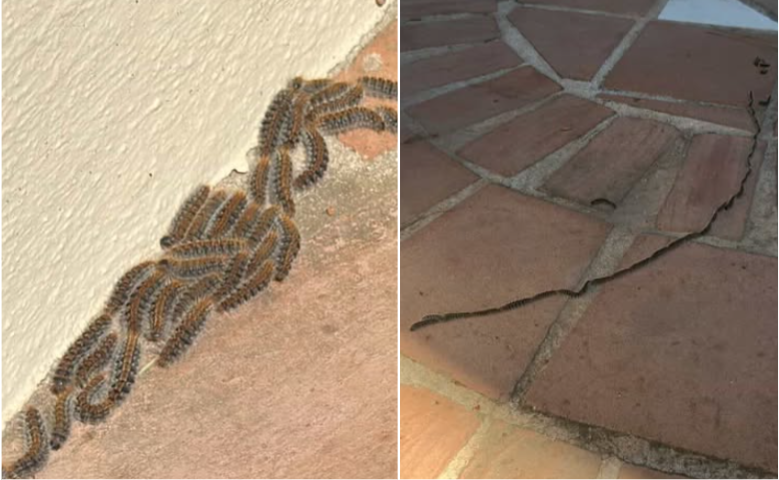
The pine processionary caterpillars were seen travelling in a single file in Los Arqueros, an area popular with British expats.
Photos shared online showed dozens of the insects on the march.
The person who posted the snaps said: ‘This is in Los Arqueros, Benahavis, in the Las Jacaranda urbanisation.
‘I wanted to share these photos, maybe it will save some lives.’
What is the pine processionary?
The pine processionary is the larval stage of a moth that lays its eggs in pine trees during the summer.
When the eggs hatch, the caterpillars build the familiar white silky nests (bolsones) that appear in the tops of pine trees during autumn and winter. The real danger comes later.
Between winter and early spring, the caterpillars descend from the tree in long head-to-tail lines – the ‘procession’ that gives them their name. They then bury themselves in the soil to complete their life cycle.
As they move, they release thousands of microscopic urticating hairs containing a toxin that can cause severe irritation – and in the case of dogs, even death.
When is processionary season in Spain?
The typical cycle is:
- Summer: The moth lays eggs.
- Autumn–winter: Nests become visible in pine trees.
- January to April (depending on climate): Caterpillars descend in procession.
In warmer areas – including much of Andalucia – they can begin descending as early as December. With increasingly mild winters, the season often starts earlier than many people expect.
If you’ve already spotted nests or seen caterpillars moving in lines, you are in the critical window.
Why are they dangerous?
The tiny hairs covering the caterpillars contain a toxin that can cause:
- Intense skin irritation
- Allergic reactions
- Eye inflammation
- Respiratory problems
- Severe swelling of the tongue and mouth in dogs
For pets, especially dogs, the risk is serious. Simply sniffing or attempting to bite a caterpillar can trigger a rapid reaction within minutes or hours. Veterinary treatment is often urgently required.
Even airborne hairs can cause reactions without direct contact.
What to do if dog is affected
In a TikTok video, an officer from the Policia Nacional last year warned that any dog who comes into contact with the caterpillars will need ‘immediate veterinary attention.’
She added: ‘You must try to remove as many hairs of the caterpillar from your pet as possible, always without rubbing… the best way is to put them in lukewarm water and take out as many hairs as possible.
‘As soon as you can, pick up your pet and take them to the vets.’
She said the signs to look out for will be swelling or inflammation on the dog’s face, nose, tongue or cheeks.
They can also salivate more than usual while the hairs can cause their tongue to begin to decay, in a process known as necrosis.
Read more Andalucia news at the Spanish Eye.