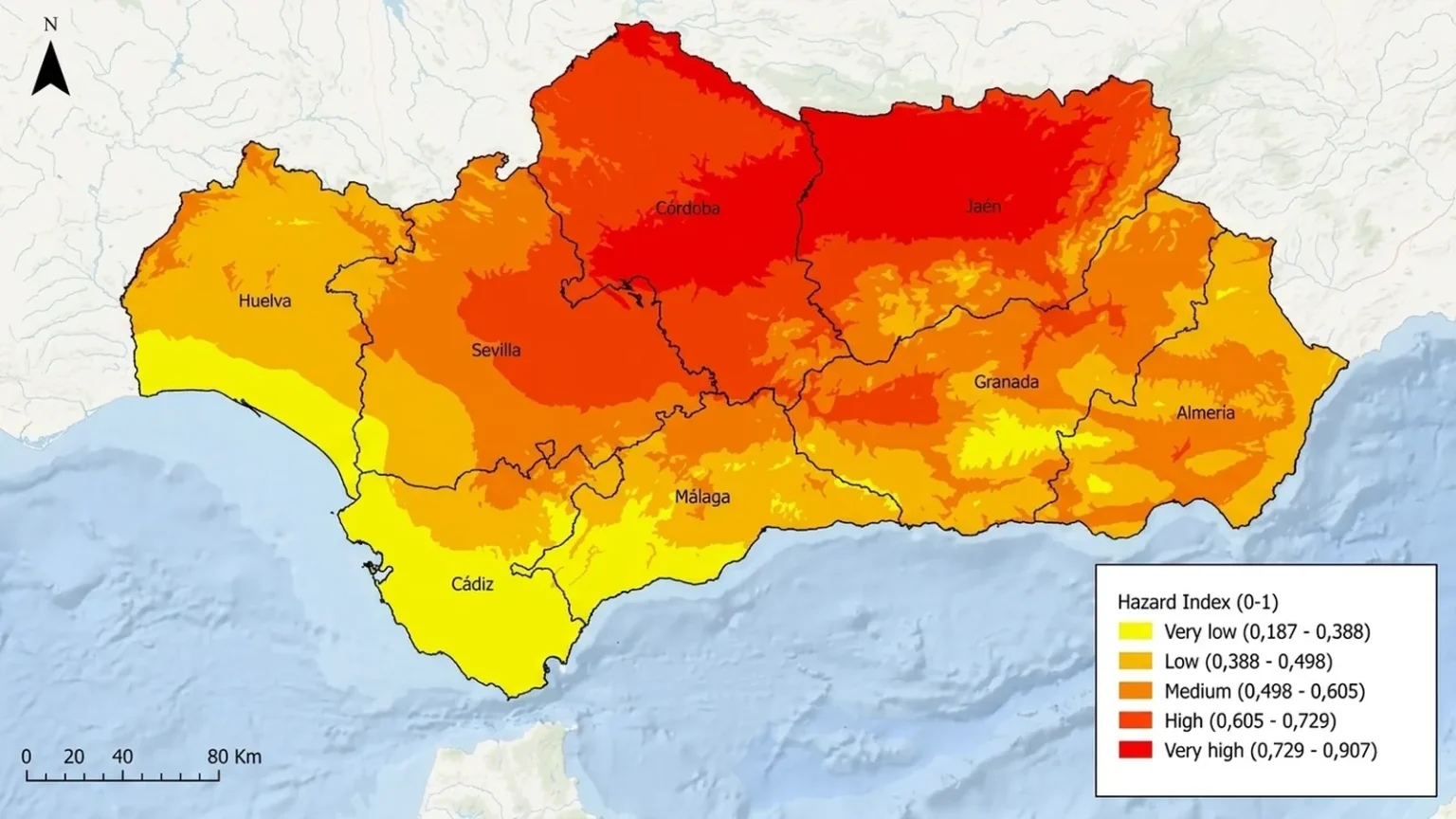

A new study has found that more than half of Andalucia is at risk from extreme heat, while the worst-hit areas are also the least protected.
Researchers from the Universities of Granada, Almeria and Malaga have found that more than half of the region’s population lives in areas classified as high or very high priority for action against extreme heat.
Their findings, published in the International Journal of Disaster Risk Reduction, paint a stark picture of inequality, in which those most exposed to rising temperatures are often the least able to cope.
The study identifies three key risk factors: high exposure to extreme temperatures, social vulnerability (including low income and ageing populations), and poor access to so-called ‘climate refuges’ such as parks, shaded areas or air-conditioned public buildings.
In many cities these factors stack up, meaning some of the most disadvantaged neighbourhoods are also the hottest – and have the least access to places where residents can cool down.
The divide is especially visible in urban outskirts.
While city centres tend to have more green spaces and better infrastructure, poorer peripheral neighbourhoods are often left with fewer trees, less shade and longer walking distances to relief.
According to researchers, the result is a growing ‘heat inequality’ gap.
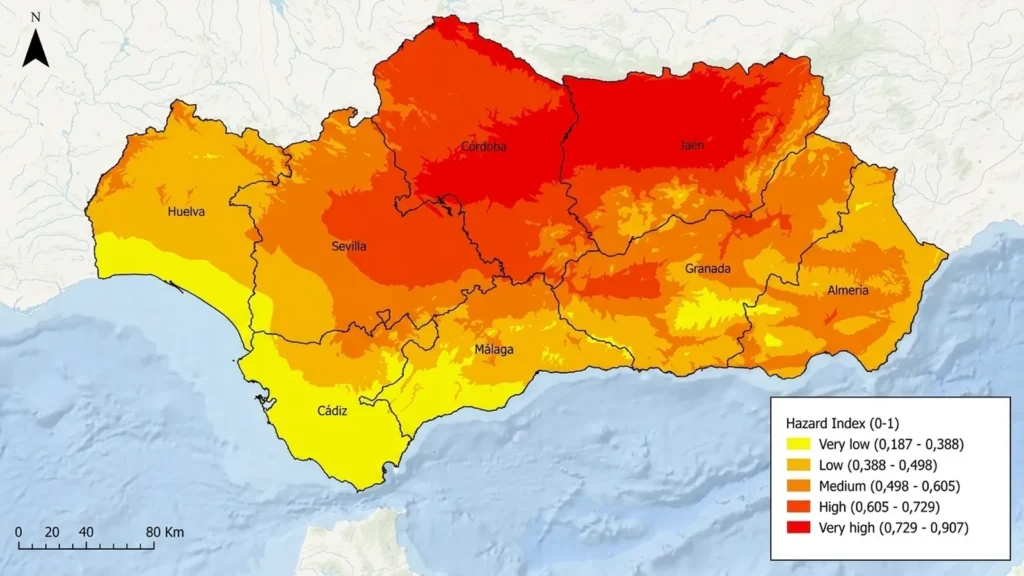
Researchers used detailed mapping and urban analysis to pinpoint exactly where these high-risk zones are, combining temperature data, social indicators and walking access to cooling spaces.
The conclusion is that current urban planning is not protecting those who need it most.
With heatwaves becoming more frequent and intense across southern Europe, the risks are only set to grow.
The study calls for urgent action and warns that without targeted policies, existing inequalities could deepen further.
That means investing in green spaces, expanding shaded areas, improving access to air-conditioned public buildings and creating formal networks of ‘climate refuges’ – something Andalucia currently lacks at a regional level.
Crucially, the researchers stress that this is no longer just an environmental issue but one of public health and equality.
Read more Andalucia news at the Spanish Eye.