An invasive Asian seaweed spreading rapidly along Andalucía’s coastline is multiplying at an alarming rate.
A new study led by researchers from the Universities of Malaga and Granada has revealed that Rugulopteryx okamurae is able to reproduce asexually, effectively cloning itself.
Unlike many species, this macroalgae doesn’t rely on traditional reproduction.
Instead, it creates clones through specialised cells and reproduces from small fragments that break off and grow into new individuals.
These fragments can drift through the water and settle elsewhere, allowing the species to spread quickly across large areas.
Scientists estimate the algae could generate more than half a million new individuals per square metre each year.
Its peak activity occurs in spring and summer, when conditions favour rapid growth and reproduction.
Originally from the western Pacific, the species was first detected in southern Spain in 2015.
Since then, it has spread across large parts of the Andalucian coast, invading sensitive ecosystems such as Posidonia oceanica seagrass meadows, which are protected under European law.
The impact has been significant, as native species are displaced while marine biodiversity is reduced.
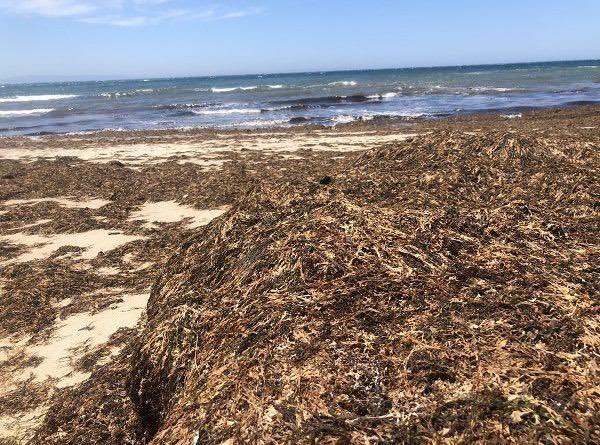
Fishing activities are also affected, while large masses of algae wash up on beaches, requiring costly clean-up operations.
One of the most striking findings is how the algae behaves differently in Spain compared to its native environment.
While it can reproduce sexually in its original habitat, researchers found that in Andalucia it relies almost entirely on asexual reproduction, making its spread even more efficient.
Experts say early detection and rapid action are key to controlling the species.
While complete eradication is unlikely, targeted removal during peak growth periods could help limit its spread and give native species a chance to recover.
Understanding how the algae reproduces is crucial, researchers say, as it will allow authorities to design more effective strategies to manage what is now considered one of the most damaging invasive species in Andalucia’s marine environment.
Read more Andalucia news at the Spanish Eye.