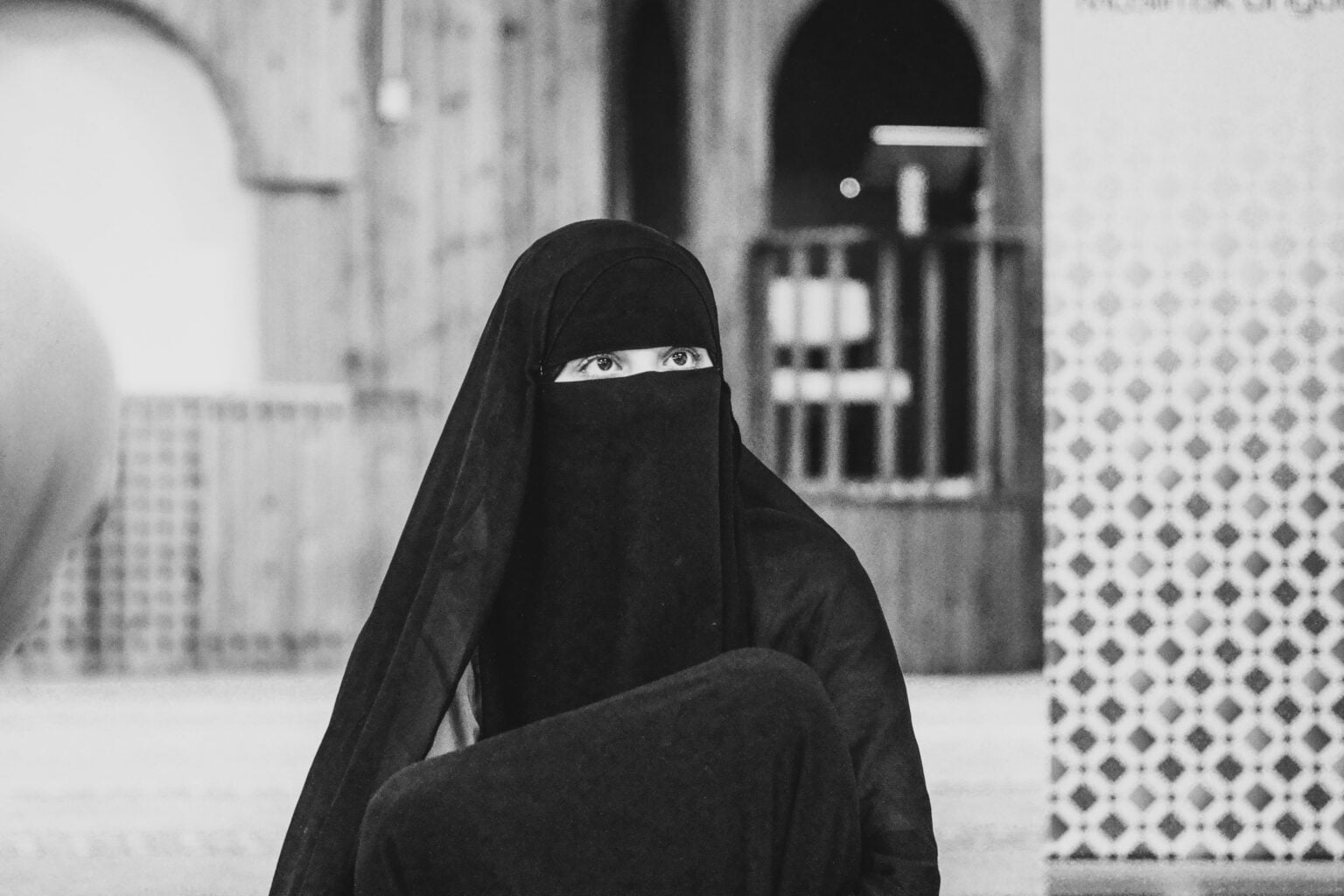

Sevilla City Council has approved a controversial proposal to ban the burka and niqab in municipal buildings – but has also admitted it likely cannot enforce it.
The motion, put forward by far-right party Vox and backed by the ruling Partido Popular (PP), passed in a full council vote on Thursday. PSOE and Podemos–Izquierda Unida voted against.
Despite the political backing, the reality is more complicated as the ban currently has no clear legal basis under Spanish law.
Approved but not applicable
City officials have acknowledged that the measure will not be implemented for now.
‘The council cannot break the law,’ municipal sources told El Diario, admitting that whether the restriction can be applied will ultimately depend on the state.
In practice, that means the proposal will sit in limbo until there is national legislation or legal backing to support it.
Why it may not be legal
The core issue is jurisdiction, as Spanish law does not explicitly allow local councils to impose blanket bans on face coverings.
Previous rulings, including from the Supreme Court, have set limits on how far municipalities can go in regulating personal attire.
While Vox argues there is legal justification by pointing to European court rulings and Spain’s Citizen Security Law, those interpretations are disputed and do not clearly support a local ban of this kind.
Even within the council there were doubts. During earlier discussions, officials raised the possibility of requesting a legal report, but no such step has been taken.
Instead, the council appears to be waiting for a national framework.
Politics behind the vote
Vox framed the proposal as a matter of security, arguing that visible identification is essential in public buildings.
The PP backed the motion, presenting its support partly through a feminist lens, criticising what it sees as the imposition of such garments on women.
Opposition parties rejected both arguments, however, with the PSOE accusing the PP of aligning itself with the far right, while Podemos–IU described the proposal as ‘legally dubious’ and ‘based on hate.’
What happens next?
For now, the ban exists only on paper. Unless Spain’s national government introduces legislation or courts clarify the issue, Seville will not be able to enforce the restriction.
That leaves the city with a policy approved in principle but one that cannot be applied in practice.
Read more Andalucia news at the Spanish Eye.