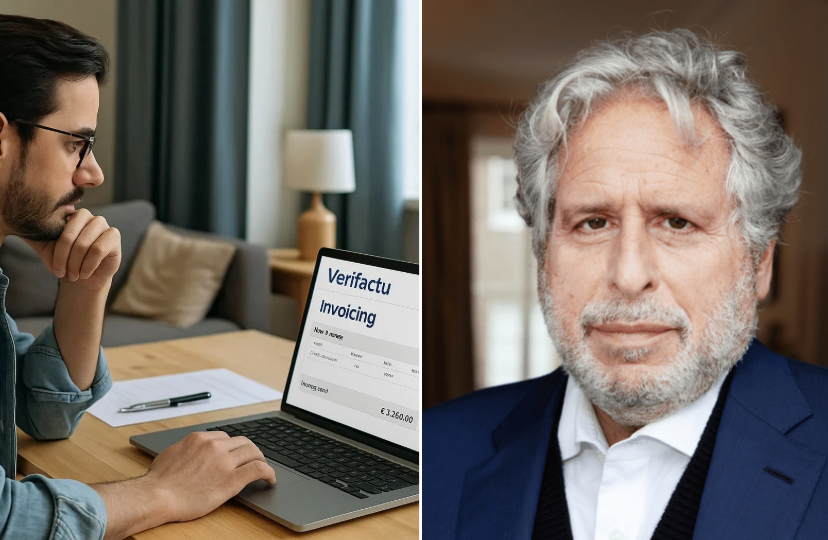

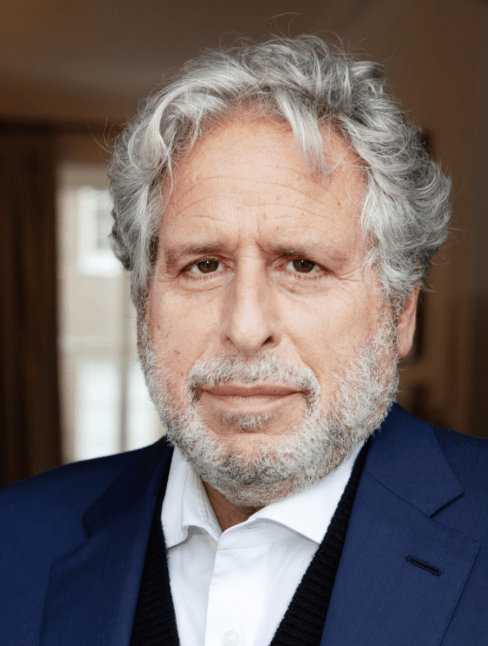
Spain has been branded ‘the North Korea of taxes’ by high-profile international lawyer Robert Amsterdam, who launched an extraordinary attack on the country’s tax system in a wide-ranging interview.
Amsterdam – a lawyer known for taking on authoritarian regimes and even clashing with Vladimir Putin – claimed Spanish taxpayers are operating under a system built on fear, excessive state power and a presumption of guilt.
‘Spain is the North Korea of taxation,’ he said bluntly, speaking to The Objective.
‘Imagine people being afraid every day. Imagine lawyers who don’t want to challenge the tax agency.’
‘Presumption of guilt’ for taxpayers
One of his most serious criticisms is that Spain’s system effectively treats taxpayers as guilty until proven innocent.
‘In Spain, when it comes to taxes, you don’t have presumption of innocence – you have presumption of guilt,’ he said.
Amsterdam pointed to the legal principle that grants tax authorities a presumption of correctness in their assessments, arguing it creates a deeply uneven playing field between citizens and the state.
He also warned of the sweeping powers available to the tax agency, including the ability to freeze bank accounts, access detailed financial data and – in the near future – monitor invoices in real time under new systems such as VeriFactu.
‘Santa Claus knows if you’ve been good or bad – in Spain, that could be about the tax agency,’ he said.
‘Perverse incentives’ and bonuses
A key issue, according to Amsterdam, is the system of bonuses for tax inspectors.
He claims inspectors are financially rewarded based in part on how much money they collect – something he says creates ‘perverse incentives’.
‘If an assessment is wrong, the inspector doesn’t return the bonus,’ he said. ‘So the system pushes decisions against the taxpayer. There is never any benefit of the doubt.’
He dismissed official explanations that such bonuses are limited, calling them “nonsense” and insisting the structure encourages aggressive enforcement.
Lawyers ‘afraid’ to challenge Hacienda
Amsterdam also claimed that many legal professionals in Spain are reluctant to take on the tax authorities.
‘I met lawyers who were afraid – they didn’t even want to be seen with me,’ he said, adding that even institutions such as bar associations are unwilling to confront Hacienda.
He described a situation in which individuals are left to fight a ‘massive agency’ alone, often taking years to recover money if they successfully challenge a decision.
‘Spain is no longer a country of laws’
Beyond taxation, Amsterdam extended his criticism to Spain’s broader legal framework.
‘Spain is no longer a country of laws, it is a country of decrees,’ he said, accusing the government of relying excessively on executive measures rather than stable legislation.
He also criticised the lack of recent national budgets and what he described as a lack of accountability in political leadership.
Call for political action
Amsterdam urged Spaniards to turn tax reform into a major political issue.
‘No one should be elected without promising serious reform – a taxpayer bill of rights, the end of ‘pay to play’, and the end of bonuses,’ he said.
He argued that freelancers and small business owners are particularly affected, facing not only high taxes but also what he described as an ‘astronomical’ burden of compliance.
‘Young people are leaving Spain because they don’t see a future,’ he added.
‘You don’t expect North Korea to be operating inside a European country,’ he said.