
The European Union has unveiled a new legal framework aimed at making it easier for startups to operate across all 27 member states, in a bid to boost innovation and cut bureaucracy.
The initiative – known as ‘EU Inc.’ – introduces a simplified system designed to help entrepreneurs navigate the bloc’s complex patchwork of national laws while expanding across borders.
At the heart of the proposal is the so-called ’28th regime’, an optional legal structure that would sit alongside existing national systems.
This would allow companies to operate under a single, unified framework across the EU, rather than dealing with different rules in each country.
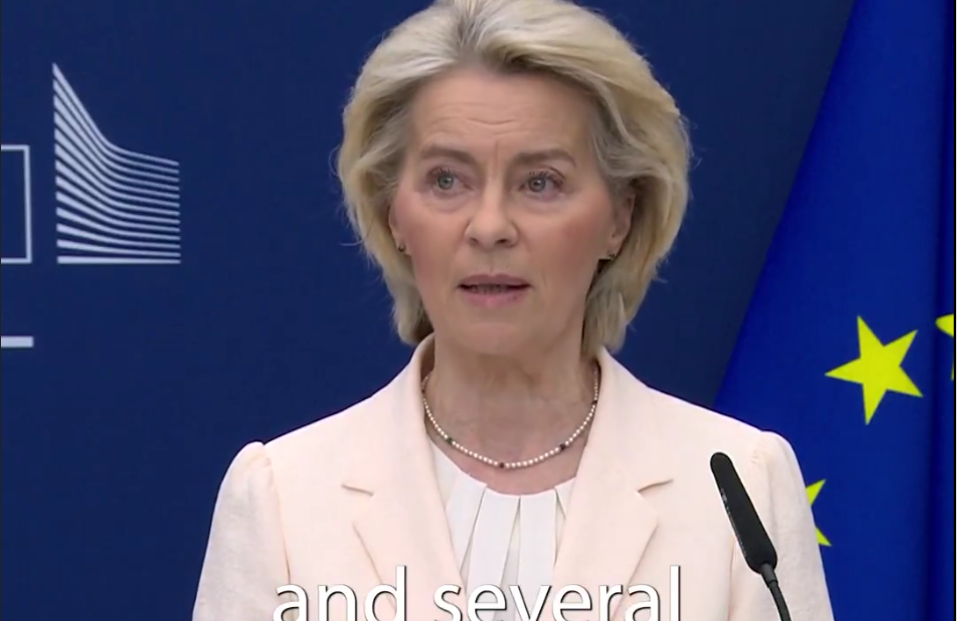
European Commission President Ursula von der Leyen said the goal is to make Europe ‘the best place for innovators’.
Cutting red tape for startups
Under the plan, entrepreneurs would be able to register a company in as little as 48 hours, with a minimum starting capital of just €1 and a maximum cost of €100.
EU Justice Commissioner Michael McGrath said excessive bureaucracy is currently pushing many entrepreneurs to set up businesses outside the EU.
‘Too often, red tape drives our best entrepreneurs elsewhere,’ he said. ‘EU Inc. is a direct way to tackle this problem.’
The system will be supported by a digital platform allowing companies to register quickly and operate across borders without the usual administrative hurdles.
No changes to tax rules
Despite concerns, EU officials have stressed that the new framework will not alter how or where companies pay taxes.
Corporate taxation will continue to depend on where a company’s ‘effective management’ is based and where it carries out its economic activity, as well as where it has a permanent establishment.
Officials have made clear that ‘this does not change corporate tax, where companies pay tax, or where individuals pay income tax’.
For individuals, the rule remains simple: tax is paid in the country of fiscal residence.
Labour laws also remain national
The Commission has also insisted that EU Inc. will not affect labour laws, which will still be determined by where an employee physically works – regardless of where the company is registered.
Issues such as remote work and social security contributions are not directly covered by EU Inc., but fall under separate EU initiatives like the Fair Labour Mobility package.
Concerns over loopholes
Trade unions have raised concerns that the new system could open the door to tax avoidance or weaker labour protections.
However, Brussels says safeguards will be in place to prevent abuse, including checks against shell companies and money laundering.
‘Preventive controls will stop this being used for tax evasion or fraudulent purposes,’ McGrath said.
More flexibility for founders
The proposal also includes new tools designed to help founders retain control of their companies as they grow.
These include the ability to issue shares with multiple voting rights and to place conditions on the transfer of shares, allowing startups to attract investment without losing control.
At the same time, the role of intermediaries such as notaries will be reduced. While checks will still exist, they will be limited in cost and time – capped at €100 and completed within 48 hours.
Special courts and faster insolvency processes
The EU is also encouraging member states to create specialised courts for EU Inc. companies to ensure faster and more consistent rulings.
In addition, insolvency procedures would be simplified, with a single criterion for liquidation – the inability to pay debts – and greater use of digital communication to speed up cases.
Authorities would aim to resolve simplified insolvency proceedings within six months.
Next steps
The proposal will now need to be negotiated and approved by the European Parliament and member states, with the EU aiming for adoption by the end of 2026 and the first company registrations in early 2027.
If successful, EU Inc. could mark a major shift in how businesses are created and scaled across Europe – offering a unified legal path while leaving core issues like taxation and labour law firmly in national hands.
It could also dramatically cut costs for business owners in Spain, who currently have to fork out thousands of euros just to set up a limited company.