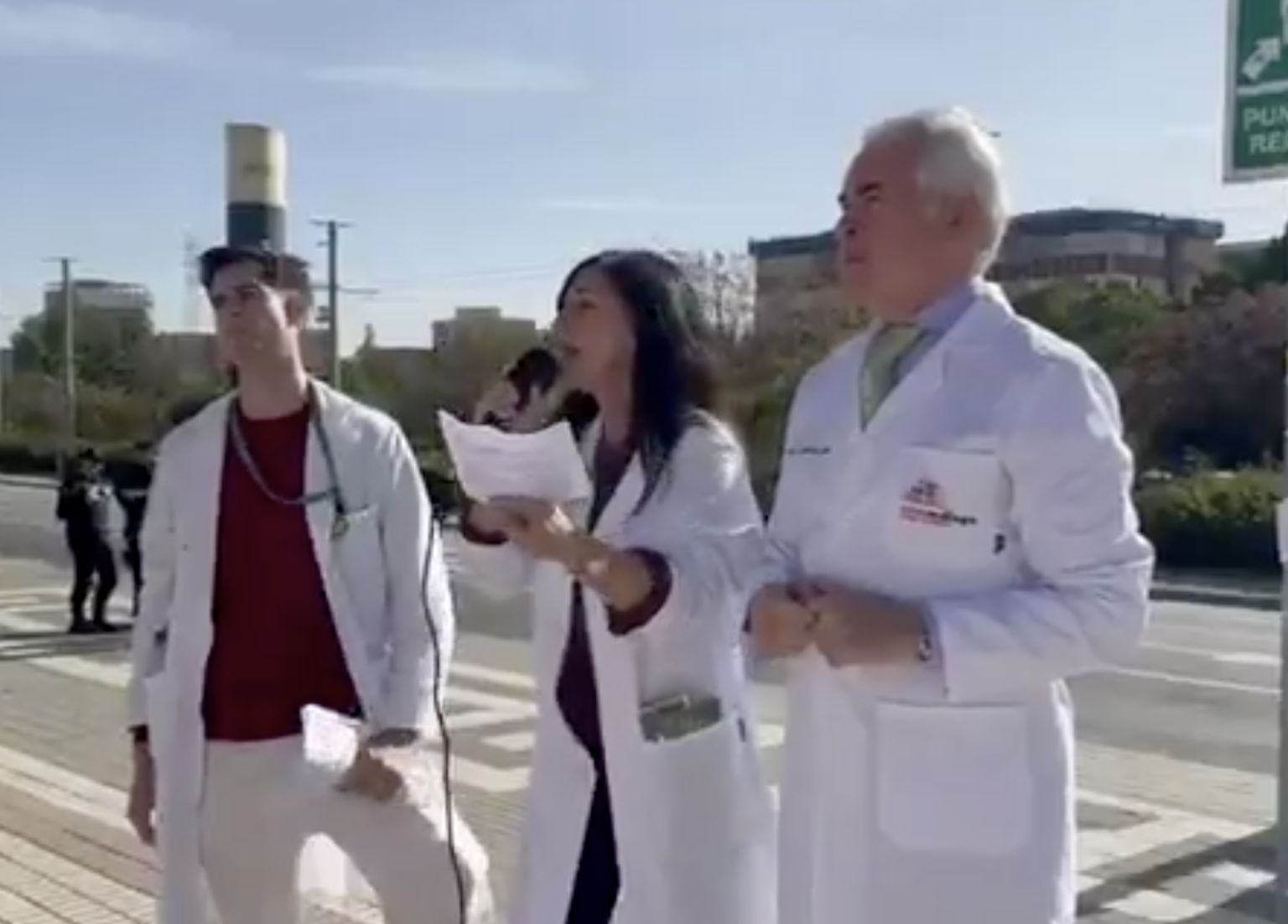

Thousands of doctors across Andalucia are back on strike this week in a growing showdown with the Spanish government over proposed changes to the national health statute.
More than 30,000 medical professionals are expected to take part in the five-day stoppage from Monday to Friday.
The protest will peak on Wednesday with a major demonstration in Sevilla, starting outside the San Telmo Palace.
The walkout marks the second week of action after an earlier strike in February caused major disruption across the region’s health service.
During that first week alone, almost 300,000 medical appointments and procedures were cancelled across Andalucia, affecting both primary care and hospitals. The economic impact has been estimated at €39.4 million.
Hospital figures show the scale of the disruption. Around 96,500 outpatient consultations were suspended, along with more than 20,600 diagnostic tests and over 5,000 scheduled operations.
Emergency care will still run
Despite the strike, health authorities say essential services will continue. The Andalusian Health Service (SAS) has already approved minimum service levels for the strike days scheduled throughout the coming months, which could continue until the week of June 15-19 unless an agreement is reached earlier with the Ministry of Health.
In primary care centres that have an emergency unit (SUAP), urgent care will continue to operate as normal, meaning no additional minimum staffing will be assigned during those hours.
In health centres without an emergency unit, one doctor will be assigned to deal exclusively with urgent cases during the normal opening hours of the clinic. Smaller satellite clinics will not have minimum service requirements.
Hospitals will largely operate at the level normally seen on Sundays or public holidays. Emergency departments, intensive care units and maternity wards will remain fully operational.
Authorities say urgent diagnostic tests and procedures will continue as normal. Treatments such as dialysis, chemotherapy, radiotherapy, cancer surgery and fertility procedures will also go ahead to ensure patients with serious conditions are not affected.
For hospital wards, staffing levels must not exceed 50 percent of the normal weekday workforce between 8am and 3pm, but essential care for patients requiring immediate treatment must still be guaranteed.
Operating theatres are expected to maintain their usual schedule where possible to avoid large-scale rescheduling of procedures.
Union calls for mass support
The Andalusian Medical Union (SMA), one of the organisations behind the strike, is urging doctors across the region to join the protest in large numbers and attend the demonstration in Sevilla on March 18.
Doctors say they are demanding their own professional statute, a dedicated negotiation table for the medical profession and a job classification system that properly reflects doctors’ qualifications and responsibilities.
They are also calling for changes to working hours and pay, arguing that doctors are facing excessive shifts while being underpaid for overnight and emergency duties.
The union has also warned that the Andalusian regional government cannot ignore the dispute.
According to the SMA, both Madrid and the regional health authorities must act. The union is demanding that the Ministry of Health open genuine negotiations, while the Andalusian Health Department must take responsibility for improving working conditions, salaries and organisation within the region’s medical workforce.
Read more Andalucia news at the Spanish Eye.