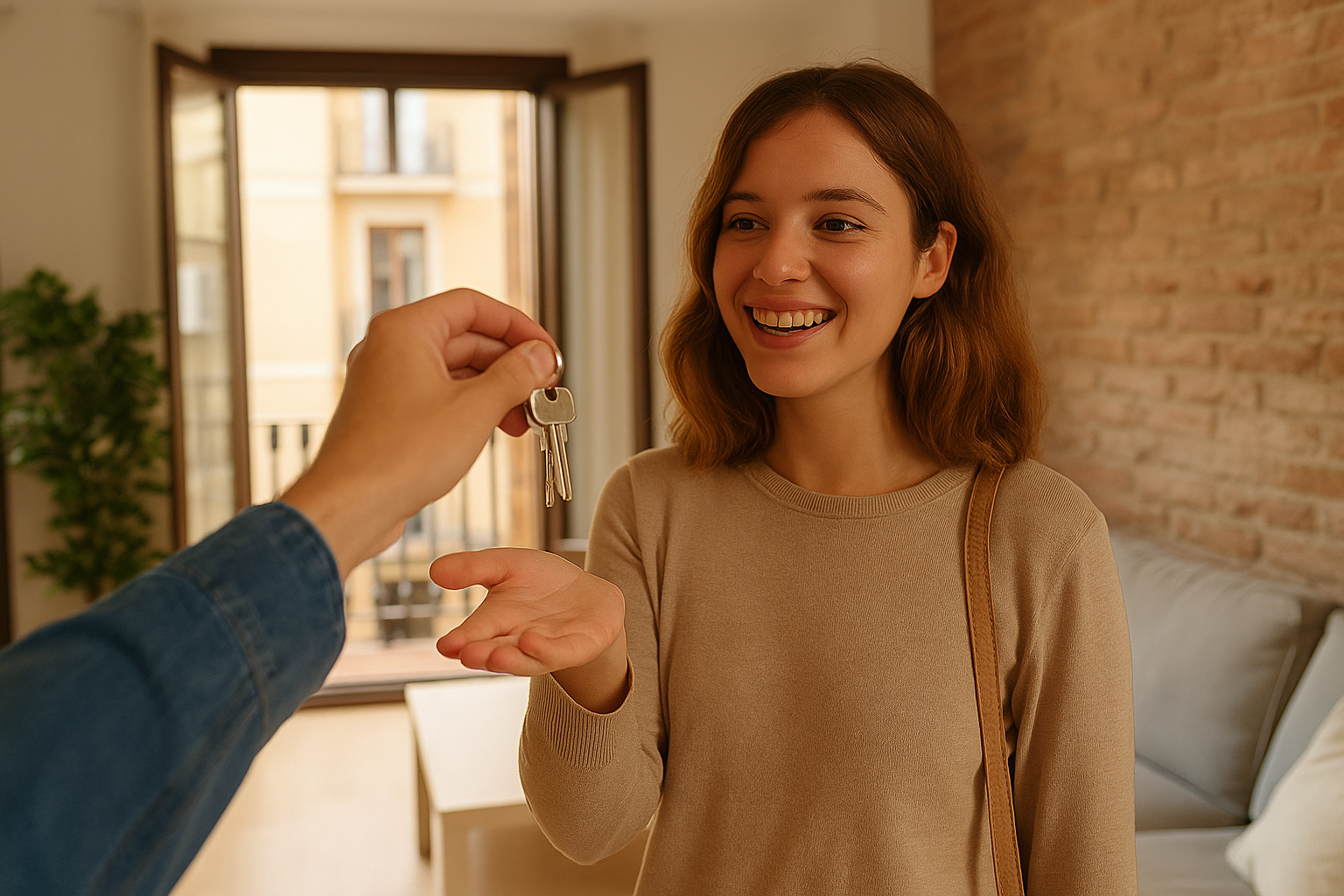

Helping your children buy a home by gifting or lending them money is increasingly common (and necessary) in Spain.
However, these transactions must be properly documented and declared to avoid problems with the tax authorities.
The amount of tax owed can vary significantly depending on the autonomous community (region) where the recipient lives.
As housing becomes harder to afford, the number of financial gifts from parents to children continues to rise.
In 2025, around 225,000 donations were registered in Spain – a 13% increase compared to 2024 – according to the General Council of Notaries.
At the same time, banks are now expected to report large private transactions to Spain’s tax agency when they exceed €25,000 per year, strengthening monitoring of undeclared income and potential fraud.
When family donations must be declared
Any financial gift from parents to children must be declared under Spain’s Inheritance and Gift Tax (Impuesto sobre Sucesiones y Donaciones – ISD), regardless of the amount. Technically, this includes even wedding gifts.
These donations are taxed under the ‘inter vivos’ category and are regulated differently by each autonomous community, which sets its own tax rates, deductions and allowances.
In many regions the tax can be almost completely reduced thanks to regional bonuses – especially when the donation is between close relatives.
The biggest reductions generally apply to:
- Group I: children or adopted children under 21
- Group II: children over 21, spouses, parents and adoptive parents
Which regions offer the biggest tax reductions?
Several regions apply a 99% tax reduction for donations between close relatives, meaning the tax is practically eliminated in many cases.
Regions offering this major reduction include:
- Madrid
- Andalucia
- Canary Islands
- Castilla y Leon
- Murcia
- Valencia
However, other regions offer fewer reductions, meaning receiving financial help from parents can result in much higher tax bills. This is the case in regions such as:
- Catalonia
- Galicia
- Aragon
How much tax you might pay
The exact tax depends on several factors, including the amount donated, the purpose of the donation, the age of the recipient and their existing wealth.
Tax advisory firm TaxDown calculated an example where parents gift €500,000 to their 30-year-old child to buy their first primary residence.
In this scenario, the cheapest regions are:
- Canary Islands: €110 tax
- Balearic Islands: €350
- Madrid: €430
- Castilla y Leon: €600
- Murcia: €690
- Valencia: €700
- Andalucía: €760
However, in other regions the cost rises dramatically.
For the same €500,000 gift:
- La Rioja: €30,500
- Aragón: €28,300
- Galicia: €27,000
- Catalonia: €27,000
- Castilla-La Mancha: €1,600
In La Rioja, for example, the 99% reduction only applies to the first €400,000, and the region does not provide additional deductions for home purchases.
What happens if parents gift a property instead of money?
If parents decide to gift a property rather than cash, there is an additional tax implication.
The donor may have to pay capital gains tax in their income tax (IRPF). This gain is calculated as the difference between the original purchase value of the property and its current market value at the time of the donation.
This gain is generally taxed in the savings tax base at an average rate of around 21%.
However, there is an important exemption: if the donor is over 65 years old and the property is their primary residence, they do not have to pay capital gains tax on the donation.
In that case, the only tax typically payable would be the local municipal capital gains tax (plusvalía municipal).
Read more Andalucia news at the Spanish Eye.