Iran’s new supreme leader has vowed to keep the Strait of Hormuz closed in a move that could wreak havoc on Andalucia’s economy.
In his first message since taking over from his slain father, Mojtaba Khamenei struck a defiant tone on Thursday, threatening US military bases in the Middle East and vowing that the ‘blood of the martyrs will be avenged.’
‘The Strait of Hormuz must remain closed,’ he said in a statement read by a presenter on state television, accompanied by images of the Iranian flag and a photograph of Khamenei.
Traffic through the strategic Strait of Hormuz – a route used to transport around 20% of the world’s oil – has been effectively brought to a standstill following Iranian attacks on ships in the area.
The attacks are a response to the war launched by the US and Israel against Iran on February 28.
Khamenei, who has not been seen in public since being selected for the role on Sunday, also threatened US military bases across the region, warning that they would ‘inevitably’ be targeted.
War felt in Andalucia
The fallout is beginning to have economic consequences far beyond the Middle East, with farmers and ranchers in Andalucia warning that rising costs are putting severe pressure on the sector.
As well as reshaping geopolitical alliances and increasing diplomatic tensions worldwide, the conflict is affecting global energy markets.
Bombings targeting refineries in the Middle East and the disruption of shipping through the Strait of Hormuz have pushed energy prices sharply higher.
Oil prices have climbed to around $100 per barrel, while natural gas prices have risen by more than 50%.
For farmers and livestock producers, this translates directly into higher production costs, particularly for fuel, fertilisers and transport.
In Andalucia, the timing could hardly be worse. The sector is still recovering from a series of powerful storms earlier this year that severely damaged crops across the region.
Sebastian Gonzalez, a farmer from Lebrija in Sevilla province and provincial secretary of the farmers’ union COAG, says many growers have already lost most of their winter harvest.
‘In my area there are farmers who have suffered damage of 90 percent or even 100 percent in crops like cauliflower, broccoli and spinach,’ he told El Diario.
Just as farmers were preparing for the spring planting season, they have been hit with another setback: soaring energy and agricultural input costs.
‘Three weeks ago agricultural diesel was €0.88 per litre, and by Saturday it had already reached €1.25,’ Gonzalez explained.

Fertiliser prices have also surged, rising between 30% and 40% so far and potentially doubling during the current campaign, he warned.
According to Gonzalez, farms that previously spent around €800 to €1,000 per hectare on fuel and fertiliser are now seeing costs approach €2,000 per hectare.
‘We farmers are taking big risks without even knowing whether the harvest will reach the market,’ he said, warning that some of the increased costs will inevitably be passed on to consumers.
Olive sector also under pressure
The situation is similar in Jaen, the world’s largest olive oil producing region.
Francisco Elvira, an olive grower in the province, says rising energy costs are already affecting production.
‘We’ve seen fuel rise by about 20 cents and nitrogen fertiliser increase by around €200 per tonne,’ he explained.
Nitrogen fertilisers are produced using natural gas, meaning their prices closely follow energy markets.
‘When energy goes up, our costs go up too,’ Elvira said.
At the same time, the olive sector is dealing with a difficult harvest season. Heavy rains earlier this year interrupted harvesting and left part of the crop uncollected.
‘The rains caught us with a third of the harvest still on the trees, and half of that ended up being lost in the fields,’ he said.
The combination of production losses and rising costs is putting many farms under severe financial pressure.
‘It’s like a company losing 15% of its income while its costs increase by another 15%,’ Elvira said.
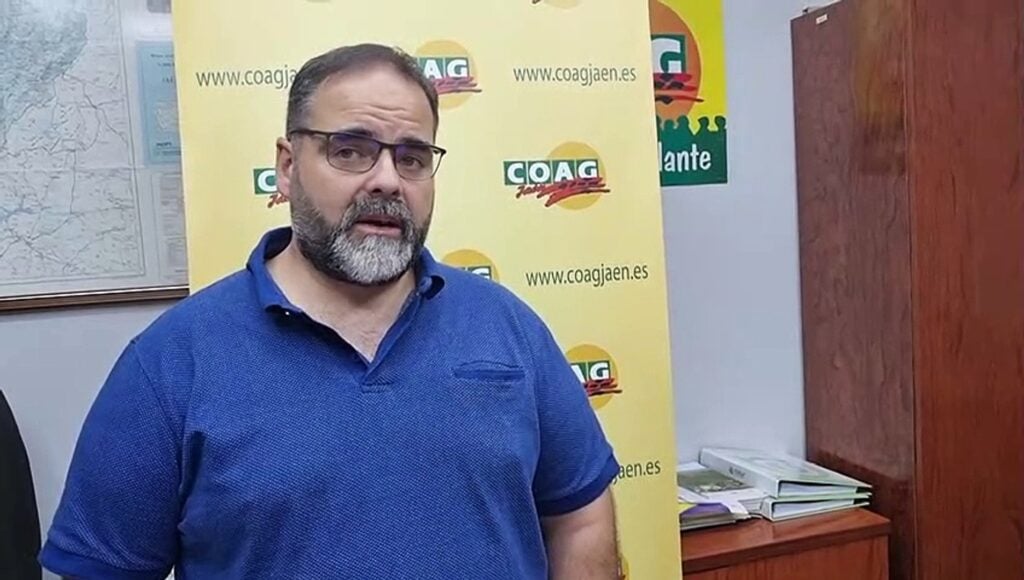
He also noted that olive oil markets are highly sensitive to global events, with international tensions often influencing prices.
Livestock producers fear feed price increases
Livestock farmers are facing similar concerns.
Clara Torreblanca, a goat dairy farmer and free-range egg producer in Granada, says energy prices directly affect daily operations.
‘We always keep a backup generator because if electricity fails we need to maintain refrigeration to preserve the milk,’ she said.
However, her biggest concern is the possible rise in animal feed costs.
‘In livestock farming the main inputs are feed and forage, and that’s where we’re most worried,’ she explained.
Torreblanca also believes some price increases are happening too quickly to reflect real supply shortages.
‘The rise in diesel or fertiliser prices has happened in a matter of hours, when there is still no real shortage of raw materials,’ she said, describing it as ‘pure speculation’ in some markets.
Higher energy prices could also increase the cost of packaging, she warned, particularly cardboard, which would push up the final price of products such as eggs and dairy.
According to Torreblanca, the situation highlights the vulnerability of Europe’s food system to international conflicts.
‘Whenever a war breaks out in a country we depend on for raw materials, European agriculture starts to suffer,’ she said.

She argues that Europe should strengthen its food sovereignty to reduce reliance on external suppliers.
‘We cannot leave our food supply in the hands of third countries,’ she said.
Agriculture is key for Andalucia’s economy
The impact of rising costs is especially significant in Andalucia, where agriculture plays a crucial role in the regional economy.
According to the Junta, olive-related products alone were worth €5.4 billion in 2024, representing 31.6% of the region’s agricultural production value.
The olive sector also accounts for around 2% of Andalucia’s GDP and provides a major source of rural employment.
A typical harvest season generates around 18 million workdays for olive oil production and another 4.25 million for table olives.
The sector is also highly dependent on exports. In 2025, Andalucia exported agro-food products to the US worth €1.16 billion, including €813.6 million related to olive products.
Spain’s Ministry of Agriculture says it is closely monitoring the situation.
Read more Andalucia news at the Spanish Eye.