
Authorities in Sevilla province have launched their earliest and largest mosquito surveillance and control campaign to date following heavy rainfall that has increased the risk of disease transmission.
According to the Junta de Andalucia, the unusually wet conditions this year could raise the likelihood not only of the West Nile virus but also other mosquito-borne diseases such as dengue, chikungunya and Zika.
In response, the Sevilla Provincial Council has begun fumigation and monitoring work across the province.
The campaign was officially coordinated during a meeting between provincial president Javier Fernandez and mayors from 15 municipalities.
The launch event took place in Villamanrique de la Condesa, where local leaders from towns in the Bajo Guadalquivir area gathered to discuss the measures being implemented in zones considered to have the highest mosquito risk.
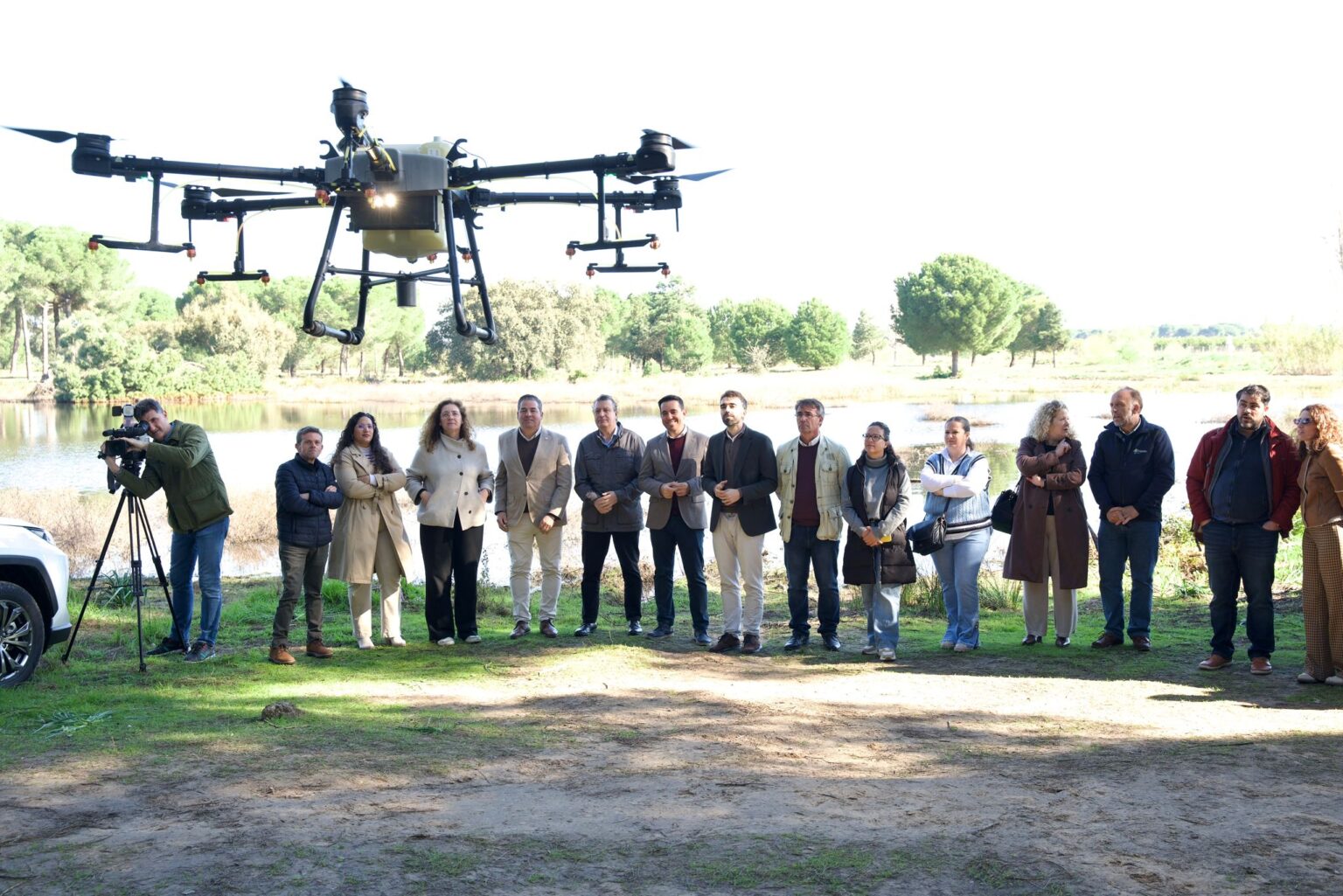
After the meeting at the town hall, officials visited the nearby Laguna de San Lazaro, where surveillance and control work is already underway.
The campaign is being carried out by the public engineering company Tragsatec under a two-year contract worth €6 million.
According to Fernandez, the budget will be split evenly across both years of the programme.
Fumigation and monitoring began on March 2 and will continue until November, when colder weather typically reduces mosquito activity.
The prevention programme includes extensive larval sampling, installation of nesting boxes, spraying systems, and the use of drones and aircraft to treat affected areas.
Last year alone, around 40,000 larval samples were collected during monitoring operations.
Tragsatec technician Jose Antonio Valero explained that drones are particularly useful for treating hard-to-reach areas.
‘Drone treatments may not be the most suitable for very large surfaces, but they are extremely useful in locations where other equipment cannot reach,’ he said.

Valero also warned that standing water significantly increases the likelihood of mosquito breeding.
‘We expect it to be a complicated year, but we are here to fight them,’ he added.
Despite the heightened risk, Fernandez urged residents not to panic.
‘The risk is greater because of the heavy rainfall in recent months. Experts say it will be a higher-risk year,’ he said.
‘We want to send a message of calm and reassurance. We will keep citizens informed and provide clear and updated information.
‘We will do everything possible to ensure there are no victims and that infections remain as low as possible.’
‘The West Nile virus can kill people. This is not just a local pest problem for town halls to deal with,’ he added.
‘Even so, we are not going to wait for others to act. The provincial council will step forward and we will not spare any resources to combat the problem.’
Read more Andalucia news at the Spanish Eye.