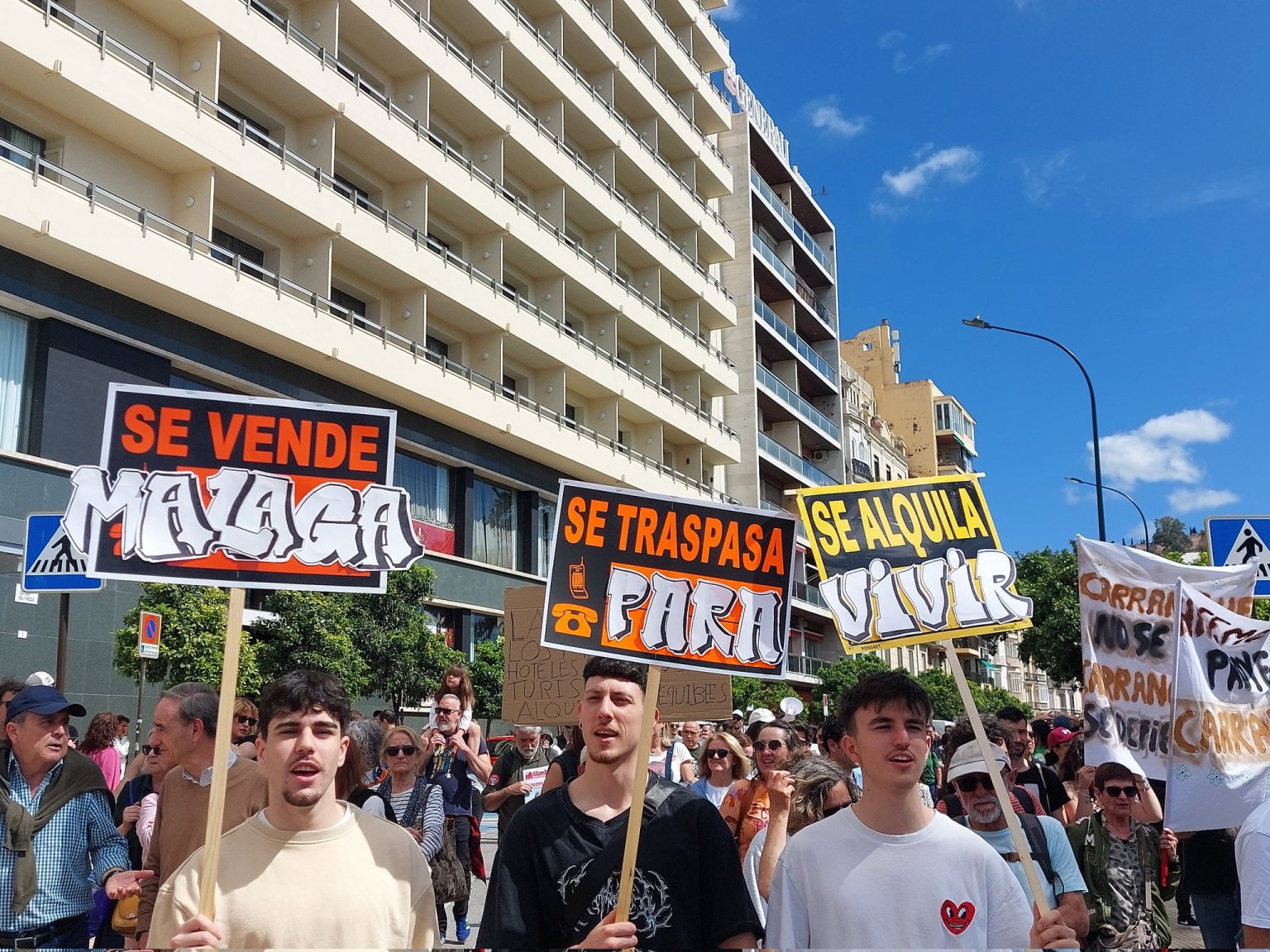

The mayor of Barcelona has declared ‘the gravy train is over’ for foreign property hunters who ‘buy to speculate or rent out’ homes.
The Socialist, Jaume Collboni, has already committed to removing all 10,000 tourist flats in the city by 2028.
But speaking to La2Cat television station last week, he said he wants to ban all non-EU citizens from buying properties as second homes.
He believes foreigners are worsening the housing crisis by snapping up properties at higher prices and reducing supply.
‘I would ban non-EU foreigners from buying second homes in Barcelona,’ Collboni said.
‘For those who buy to speculate or to rent out, the gravy train is over in Barcelona.’
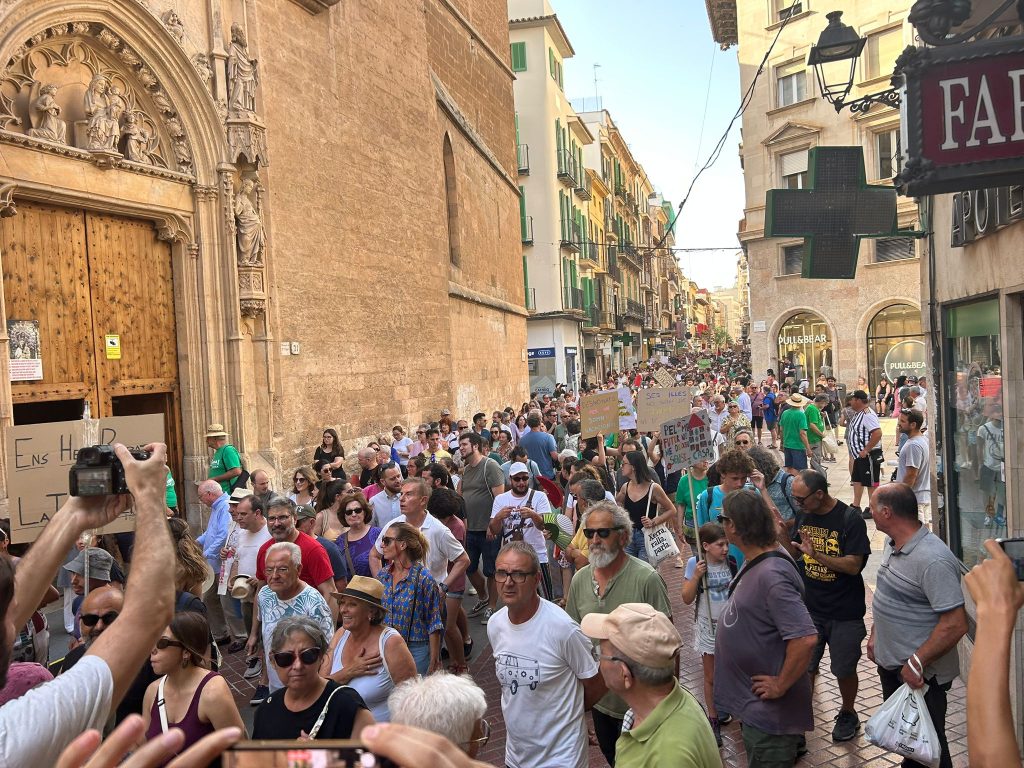
Barcelona is at the forefront of the growing anti-tourism movement, which has seen an increasing number of protests over the past couple of years.
Young people who are unable to get on the property ladder are blaming the crisis on the surging number of foreigners – who now account for 26.5% of Barcelona’s population (up from 10.8% in 2002).

It comes as a fresh protest is planned for today against corporations that buy up blocks and turn them into holiday apartments.
Holiday islands
It’s not just Barcelona where this sentiment is rising, as foreigners also face bans on the holiday islands of Mallorca, Menorca and Ibiza.
Across the Balearic Islands, around 16% of homes are owned by foreign nationals, totalling around 90,000.
According to a study by a Mallorca activist group, five properties were being built or extended in rural land every week between 2021 and 2024, mostly by holidaymakers or expats.
Meanwhile, Mes per Mallorca, a local left-wing party, suggested banning non-residents from purchasing homes.
Its MP Luis Apesteguia said ‘extraordinary measures’ were needed to tackle overtourism, adding: ‘We have to prioritise the houses that are for living in – not for those who want to speculate and continue with this game of Monopoly.’
Could bans become nationwide?
Apesteguia believes that getting the bill approved regionally could pave the way for a national law.
However, prime minister Pedro Sanchez’s lack of a strong absolute majority means any such plan would struggle to get through parliament.
Sanchez last year announced plans for a ‘100% tax’ on non-resident homebuyers, but there has been no news on the proposal since.
According to statistics for 2025, foreigners accounted for 14% of all property sales, with Brits snapping up 7,700 homes, roughly around 1%.
Mark Stucklin, from Spanish Property Insight, told the i: ‘Britons make up a tiny proportion of the buyers of properties in Spain. To say they are worsening the housing crisis is not true. It is the lack of affordable housing which is the problem.’
He pointed out that most Britons bought properties in areas like the Costa Blanca, not in saturated cities like Barcelona.
Andalucia unlikely to bite the hand that feeds
In Andalucia, a report released in March last year based on data from Rightmove International, analysed the number of properties currently for sale in areas traditionally popular with foreign buyers, especially British.
It revealed that Andalucia is the region with the largest supply for this market, with some 28,211 homes specifically advertised for this group.
It means that any law that seeks to ban or restrict this market could have a serious impact on the regional economy.
The Costa del Sol was positioned as the second most affected market, with almost 25,000 homes for sale, followed by the Costa Blanca in Alicante, with nearly 13,000 properties available.
It means the 100% tax increase for non-EU buyers touted by Sanchez could discourage foreign investment and alter the dynamics of the real estate market in these areas.
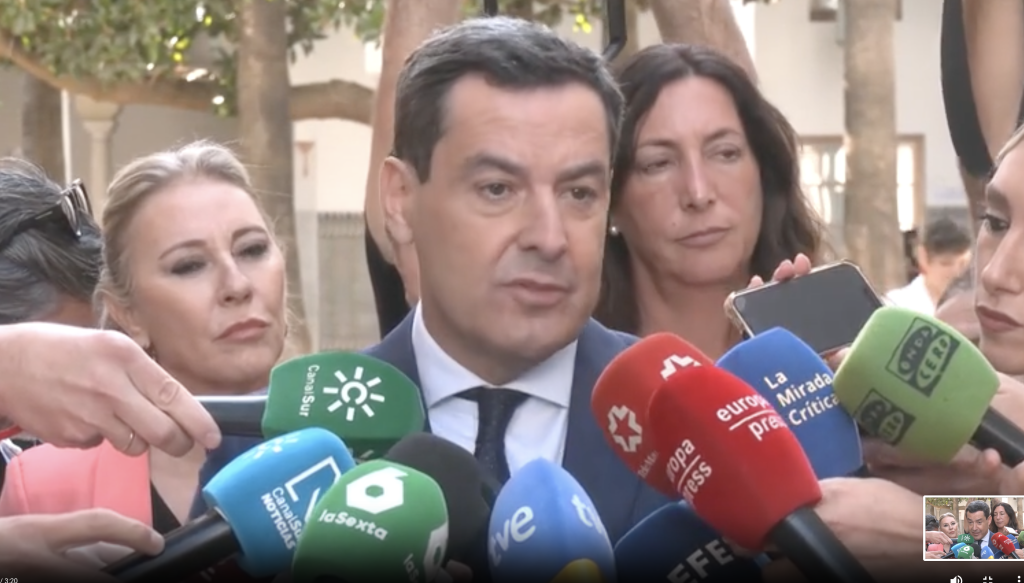
This would undermine President Moreno’s goal of increasing foreign investment into Andalucia, which has been a key part of his agenda.
Jose Antonio Borges, director of eXp Spain, admitted high demand from foreign buyers has driven up prices and reduced supply in Andalucia, making it difficult for Spanish residents to buy homes.
However, he warned that a sudden drop in demand could negatively impact property values, affecting current homeowners.
He instead proposed that the government reduce restrictions for domestic buyers and encourage the construction of new homes, which would allow the market to stabilise without the need for drastic measures.
Tourists a ‘convenient villain’
According to leading Spanish economist Gonzalo Bernardos, tourist flats have become a convenient villain in Spain’s housing debate.
Speaking last month at a roundtable at the Circulo Ecuestre in Barcelona, Bernardos argued that public discussion around short-term tourist rentals has been built on a false premise, insisting that the numbers simply don’t support the narrative.

The expert pointed to Barcelona as an example, where tourist apartments account for around 1.18% of the total housing stock.
‘Eliminating housing for tourist use is not going to lower rents,’ Bernardos said, dismissing the idea that removing such a small share of homes could meaningfully ease pressure on rents.
‘To think that by eliminating that 1% you are going to solve access to housing makes no sense.’
Nationwide, Bernardos said tourist rentals represent 1.43% of homes, most of them concentrated in coastal areas rather than major cities.
While Spain’s six largest cities are home to 16.8% of the population, they contain just 12.6% of tourist rentals – figures he says undermine claims that short-term lets are ‘invading’ urban housing markets.
Bernardos insisted that the lack of homes being built is the true culprit.
‘Access to housing is a problem of lack of supply,’ he said, arguing that no amount of regulation can compensate for not building enough homes.
He was also sharply critical of policies that, in his view, deter investment.
‘When the message is sent that investing in housing is a risk, the investment disappears,’ he warned, and when it does, prices inevitably rise.
He also pushed back against what he described as an ideological backlash against tourism itself.
‘Here there is a crusade against tourism,’ he said, noting that tourism still contributes 12.6% of Spain’s GDP, broadly unchanged since 2019.
‘There has not been uncontrolled growth,’ he added, cautioning that portraying tourism as the root of urban problems risks ‘killing the goose that lays the golden eggs.’
In his view, the focus on tourist rentals has become a distraction.
‘They’re not the problem… the problem is that we’re not building enough housing,’ he concluded.