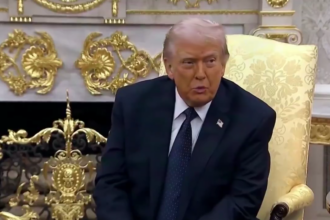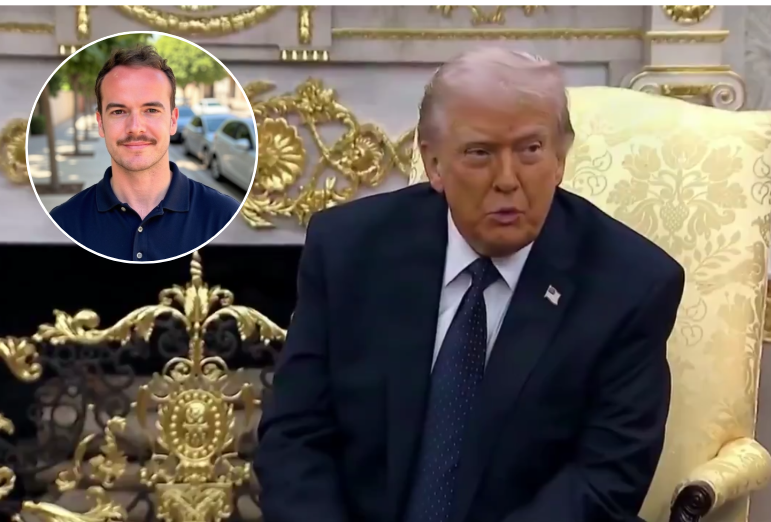

Donald Trump has branded Spain a ‘terrible ally’ in his latest outburst against the EU.
Spain’s crime? Refusing to let US forces use its bases at Rota and Moron for strikes on Iran. For Washington, that refusal was unacceptable.
But Spain is not a vassal state, it is a sovereign country that has every right to decide when it participates in military action.
Prime Minister Pedro Sanchez summed up Madrid’s position in four words: ‘No to the war.’
You may agree with that stance or disagree with it, but it is a legitimate position.
Trump’s response was to brand Spain a ‘terrible ally’ and hint at economic punishment, even raising the possibility of ‘stopping all trade’ with the country.
In other words, support the war that we started – without consulting any of our allies – or face the consequences.
That behaviour looks far closer to the actions of a ‘bad ally’ than anything Spain has done.
Spain has spent decades supporting the transatlantic relationship. It hosts key US military bases, contributes to NATO missions and plays a role in European security.
Yet the moment Madrid chooses a different path, the reaction from Washington is threats.
Let’s not forget that Europe has seen this pattern before.
The Iraq war was pushed by the US with the promise of eliminating weapons of mass destruction and bringing stability to the Middle East.
The weapons never appeared and the region was left more unstable than before.
It is hardly surprising that some European governments are now more cautious when Washington calls for military action in the Middle East – particularly when there is no clear goal or objective.
If the United States treats its allies as partners only when they agree, then Europe needs to start thinking seriously about its strategic independence.
That does not mean cutting ties with the US, as the transatlantic alliance still matters.
But it does mean reducing the assumption that Europe must automatically fall in line with American foreign policy.
Spain’s position on the Iran conflict may be controversial, but it reflects a broader shift that is already happening across Europe, which is a growing belief that the continent must be able to stand on its own feet.
Allies should be able to disagree without threats, embargoes or insults.
If Washington can’t accept that, then perhaps it is time Europe begins to look beyond the US when shaping its future.