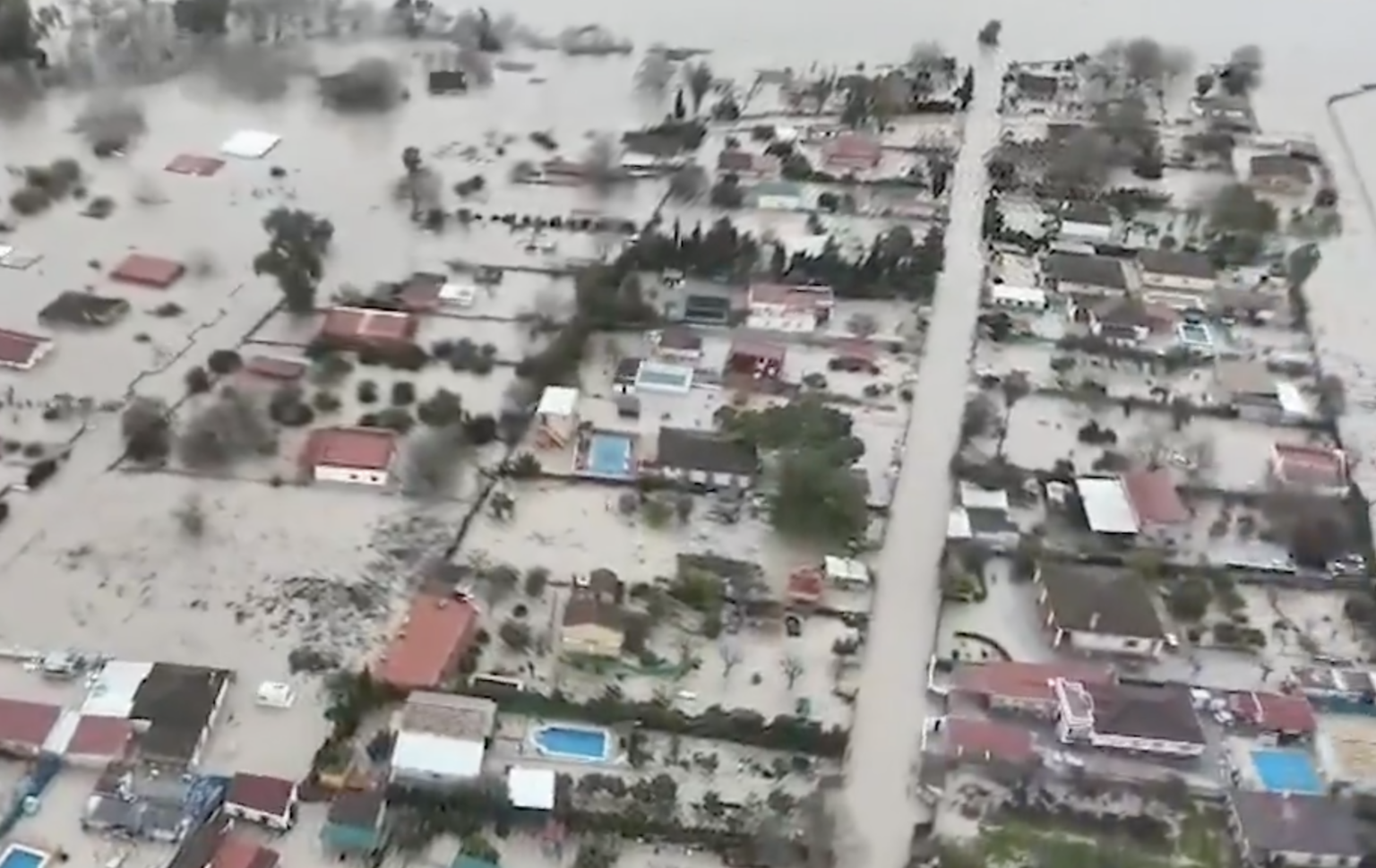

After months of near-constant rain, flooding and storm chaos, the Junta de Andalucia has officially declared the succession of Atlantic storms battering the region since November a natural disaster.
The decision, approved this week by the regional government’s Council of Ministers, covers the extraordinary run of weather systems from late 2025 through February 2026 – bringing persistent downpours, flash flooding and record river surges to all eight provinces.
There have also been multiple deaths, including a woman who died while jumping into a torrent to save her dog in Malaga, and a 92-year-old man crushed by a tree in Cordoba.
A young Moroccan woman was also killed by a falling tree while walking to collect her TIE card in Torremolinos.
Earlier this month, the Junta said the damage caused by the series of storms will exceed €4 billion.
This figure represents the losses suffered by agriculture (around €3.4 billion), and the cost of repairing the damage to roads, which amounts to more than €500 million.
Four months of saturation
According to the Junta, the repeated arrival of highly active Atlantic frontal systems led to ‘frequent and persistent rainfall’, with some periods of intense downpours producing ‘highly significant’ cumulative totals across the region.
The result has been widespread soil saturation, drastically reducing the land’s ability to absorb water. Instead of filtering into the ground, rainfall has rapidly run off the surface, swelling rivers, triggering sudden surges and causing repeated flooding in both rural and urban areas.
For many residents across Andalucia, it has felt like the wettest winter in years. Now, the regional government has formally recognised the scale of the damage.
Agriculture and fisheries hit hardest
The declaration unlocks emergency powers and funding to support affected sectors, particularly agriculture and fishing, which have borne the brunt of the storms.
In the countryside, the impact has been severe:
- Crops have been lost to prolonged flooding
- Farmland has suffered soil erosion and landslides
- Irrigation systems and agricultural infrastructure have been damaged
- Some farms have been temporarily cut off due to destroyed access roads
In the worst-hit areas, agricultural activity has ground to a halt, significantly compromising production capacity.
Meanwhile, around 90% of Andalucia’s fishing fleet has reportedly been forced to remain in port due to dangerous sea conditions – effectively paralysing the region’s fishing economy for extended periods.
Emergency repairs and financial aid
The Junta has instructed the Ministry of Agriculture, Fisheries, Water and Rural Development to activate aid measures aimed at restoring production capacity in the agri-food and fishing sectors.
Funding will come from a mix of European, national and regional sources, and the regional government also plans to request the activation of all available extraordinary disaster mechanisms at higher levels.
The declaration allows emergency procedures to fast-track:
- Repairs to rural roads that have become dangerous or impassable
- Restoration of irrigation and water infrastructure
- Urgent works on public hydraulic systems
- Improvements to flood defences
Roads destroyed, farms isolated
Rural tracks have suffered particularly heavy damage. In some cases, entire sections have been destroyed or left completely impassable, making it difficult or impossible for farmers to reach their land.
Several agricultural holdings were temporarily isolated, preventing producers from carrying out essential tasks such as harvesting, feeding livestock or transporting goods.
Dams, pumping stations and drainage systems damaged
The storms have also inflicted serious damage on hydraulic infrastructure across the region. Affected structures include:
- Dams and weirs
- Pumping stations
- Irrigation canals and pipelines
- Sanitation systems
- Urban and rural drainage networks
- Flood defence installations
Regional officials say urgent repairs are required to prevent further risk to communities and ensure water management systems are restored ahead of future rainfall.
What happens next?
While the declaration does not immediately put cash into farmers’ pockets, it enables the Junta to move far more quickly on funding approvals and infrastructure works.
For a region that has endured both extreme drought and now months of flooding in recent years, the announcement underlines how volatile Andalucía’s weather patterns have become – and how exposed key sectors remain to climate extremes.
For many in rural communities, the hope now is simple: that recovery funds arrive quickly — and that spring finally brings a break from the storms.
Read more Andalucia news at the Spanish Eye.