
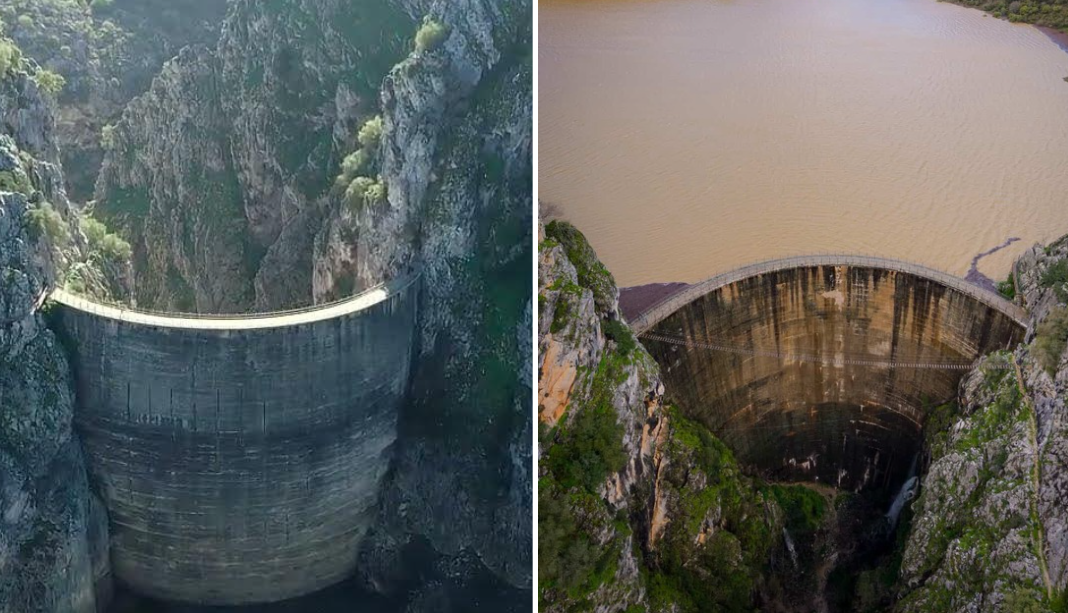

All eyes will be on a 103-year-old ‘ghost’ dam in Malaga on Friday as it is expected to overflow following weeks of consistent rain.
The disused structure in Montejaque, in the Serrania de Ronda, is just 20cm away from overspilling, and that’s before Storm Oriana blows in on Friday.
The Ronda region is under a yellow alert for heavy rain, with state weather agency Aemet predicting 60mm per square metre over 24 hours.
It is amid these conditions that the Los Caballeros dam, better known as the Montejaque dam, has gone from historical curiosity to a source of real concern.
After weeks of torrential rain, the reservoir has filled to levels never previously recorded.
Incredible before and after photos reveal the mind-boggling amount of water that has gathered over these past weeks.
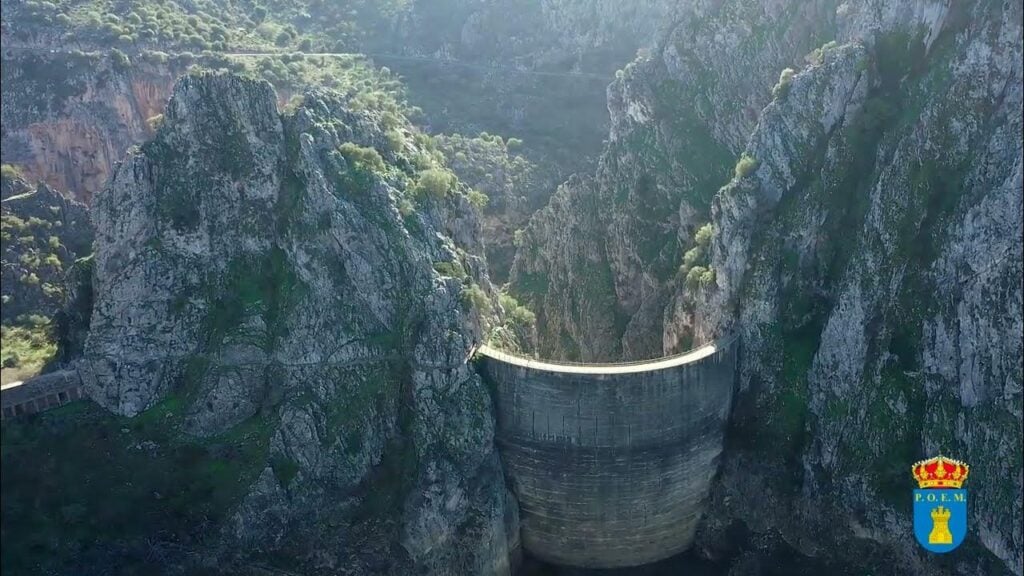
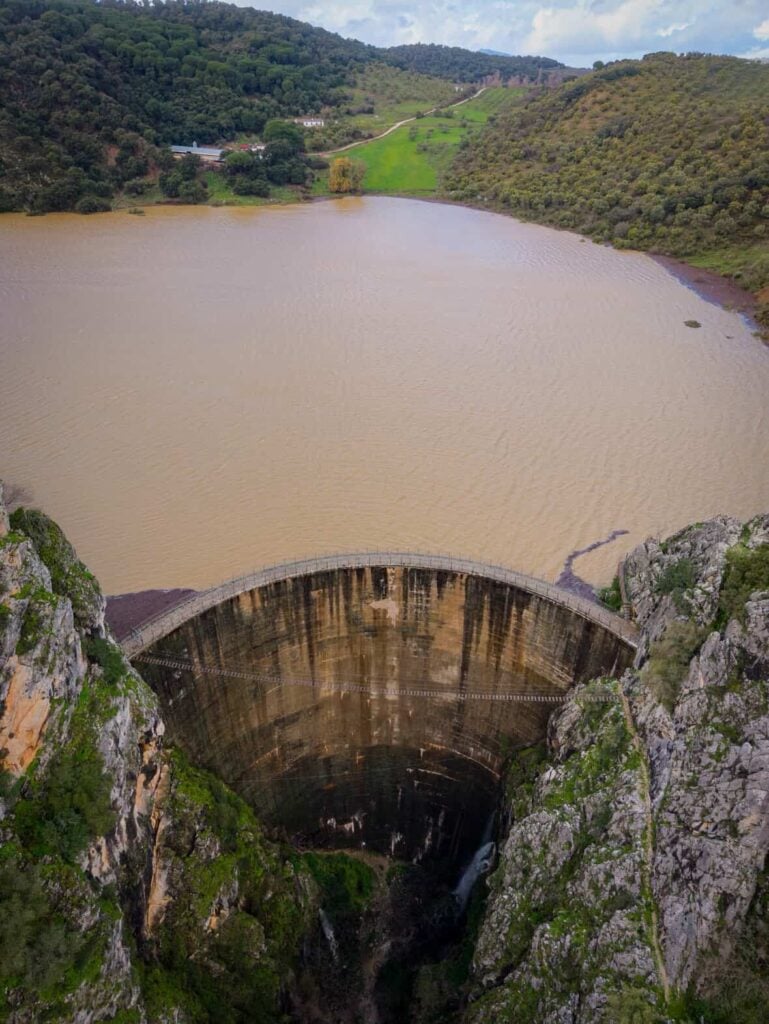
Water has risen to just below the crest of the 83-metre wall, prompting the precautionary evacuation of more than 200 residents in Estacion de Benaojan and several families in Jimera de Libar.
The main concern is that an uncontrolled overtopping could threaten the stability of the structure.
A giant built on unstable ground
The dam was inaugurated in 1923 with a bold mission to generate hydroelectric power for isolated towns in the Serranía de Ronda and Grazalema.
The project was commissioned to the Swiss firm Electrowat and designed by engineer Henri Edwuard Gruner. At the time, its 83-metre arch dam was the tallest in Europe and was intended to produce 20,000 kilowatts of electricity.
The failure was not in the wall itself, but beneath it.
The structure was built on limestone terrain riddled with cavities and fissures, a karst system that behaves like a giant sponge.
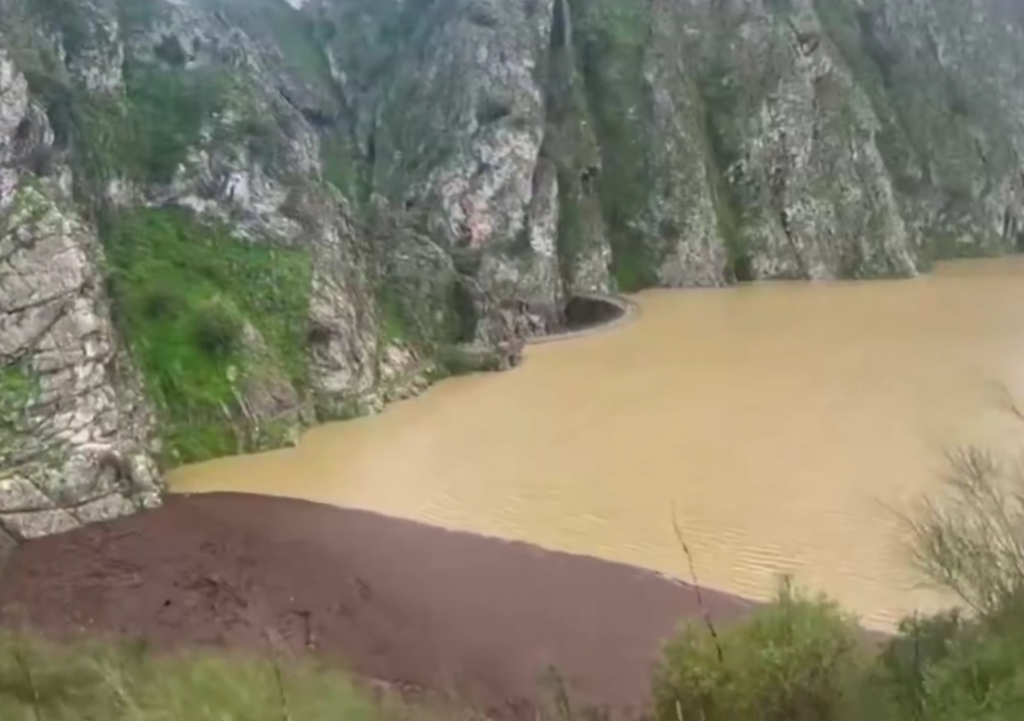
Each time the reservoir filled, the water drained rapidly into the subsoil. Attempts to seal the ground with concrete and asphalt proved unsuccessful. The power plant never generated electricity.
Today, the dam is often cited in engineering schools as a textbook example of geological miscalculation.
It has never been seen this full because the karst network usually soaks up the rainwater.
However, this year, because the ground has become so saturated, it can no longer absorb rain quickly enough, meaning surface runoff intensifies and flows directly into the reservoir.
Normally, the porous terrain gradually ‘drinks’ the water back down, but this time it has struggled to keep up.
The three possible scenarios
The dam is currently being monitored around the clock by technicians from Endesa, the current owner, alongside regional authorities.
Experts are considering three main scenarios:
Progressive filtration:
Water continues to seep underground, gradually lowering the reservoir level.
Controlled overflow:
The reservoir exceeds capacity and spills via the overflow system, increasing downstream flow but in a regulated manner.
Structural failure:
This is the most feared scenario, though specialists stress it is highly unlikely. After a century standing, the dam has demonstrated significant resilience.
The principal concern would not be the water level alone, but a sudden, uncontrolled overtopping that could erode the base of the wall.
A mass drop of water from 80 metres could damage the foot of the structure if not properly channelled. It is not clear how severe the consequences of such an event would be.
Where will the water go?
In the event of overflow, water would feed into the underground Hundidero–Gato cave system, a five-kilometre route that eventually emerges at Cueva del Gato before flowing into the Guadiaro river.
Paradoxically, this complex cave network acts as a natural regulator, dampening surges before they reach populated areas.
There are no homes directly beside the dam and evacuations have been carried out as a precaution, particularly along the Guadiaro riverbank.
Once the rains subside and the karst system resumes absorbing water, the reservoir is expected to return to its usual state.
Read more Andalucia news at the Spanish Eye.