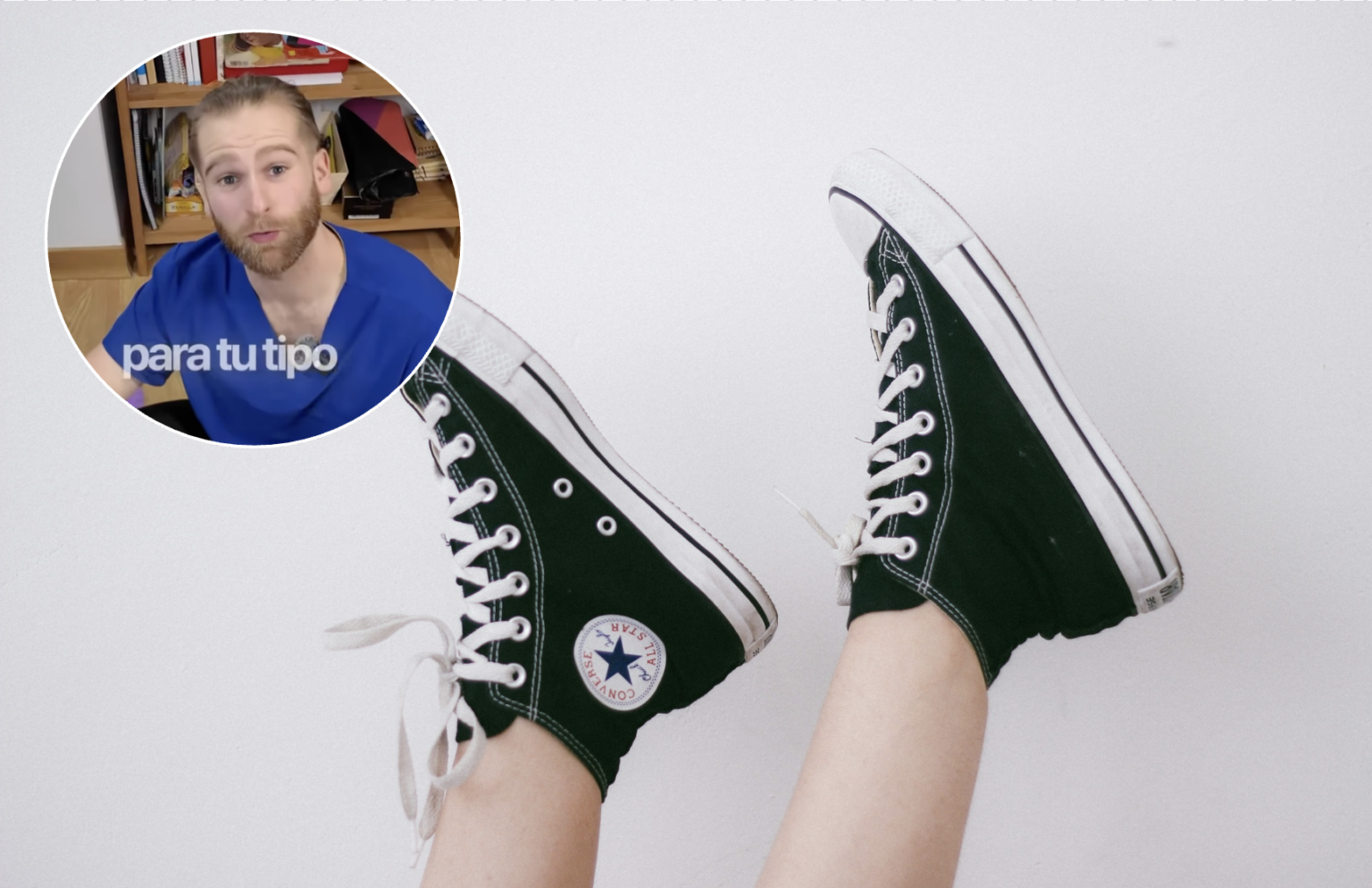

A leading Spanish podiatrist has sounded the alarm over some of the trendiest shoes and trainers.
Manu Vidal specialises in sports and children’s foot health and shares advice online about foot and ankle problems with his more than 330,000 followers.
He repeatedly warns that footwear directly affects not only the feet, but also the ankles, knees and back.
Choosing the wrong shoes can gradually undermine overall posture and quality of life.
In a recent series of posts, he analysed some of today’s most fashionable shoes – not for style, but for their impact on posture and foot health.
The three things a good shoe must have
Vidal judges footwear using three core criteria:
- Toe box – It should be as wide as possible, allowing the toes to spread naturally.
- Sole – The ideal sole is cushioned but also flexible, so the shoe adapts to natural foot movement.
- Heel – A slight heel elevation is recommended, but it must be uniform. Narrowing heels reduce stability and increase the risk of imbalance.
Based on these factors, he ranks popular shoes from best to worst.

The worst-rated shoes
At the bottom of his list are Converse trainers, which he considers particularly poor due to their narrow toe box and flat sole – without offering the benefits of true barefoot shoes.
Next come Crocs, which he says are fine for short, occasional use but unsuitable for walking long distances, especially for those prone to plantar fasciitis.
Also scoring badly are Adidas Samba, criticised for being tight, flat and rigid, and Nike Air Force 1, which he views as too stiff and narrow despite their popularity.
Mid-table options
Vans land in the middle: better cushioning than many fashion trainers, but still limited by a narrow toe box.
Reebok Classic models score slightly higher thanks to acceptable cushioning and some heel elevation, although their bulky heel shape prevents a better ranking.
The best shoes for your feet
The top three spots go to more performance-focused trainers: New Balance 740, ASICS Nimbus, and, in first place, Altra Escalante.
These models all share key features Vidal looks for: generous toe boxes, cushioned soles and a slight, stable heel drop – making them suitable for long periods of standing or walking.
Vidal says shoes designed for sport and movement consistently outperform rigid, narrow, fashion-led footwear.
While trends come and go, podiatrists insist that prioritising function over appearance can prevent long-term foot, joint and back problems and dramatically improve everyday comfort.
Read more Andalucia news at the Spanish Eye.