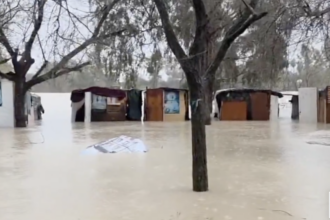

Marbella has announced an emergency plan to tackle its pothole problem after several cars burst their tyres over the weekend.
Footage shared online showed three cars stopped on the A-7 between Marbella and Estepona on Sunday night.
One of the drivers claimed that they had driven over pot holes, causing one of their tyres to blow out.
They said in an Instagram post: ‘Near Parque Antena in Estepona, the road is full of large potholes, and we got a flat tyre driving over one of them.
‘Minutes later, two other cars had the same problem. This is a disgrace; they need to fix it now.’
Another said: ‘I was one of those who got hit; my tyre literally blew out. I was lucky I was driving slowly, but when I stopped at Venta el Peregil, there were two other cars like mine, one with a broken steering column.
‘What are they waiting for to fix it? This is unacceptable… and tomorrow I’ll have to go back and dodge all the potholes that keep appearing every day. Shameful!’
The Marbella Trips Instagram account commented: ‘Last week I had two blown out tyres, one at that spot and another in Rio Real.’
Maria del Mar added: ‘Today we met up on the road to San Pedro near that area: three cars and two motorcycles with flat tyres and cracked rims.’
On Sunday, Marbella City Council announced it will be spending at least €450,000 to sort out the scourge.
It wrote in a statement: ‘The City Council is launching an emergency plan to repair damage caused by the rains in various streets and areas of the municipality.
‘The works will be divided into 200 projects covering a total of 3,900 square meters of potholes caused by the rainfall on roads in the five districts, representing an investment of €450,000.’
Details of Marbella pothole plan
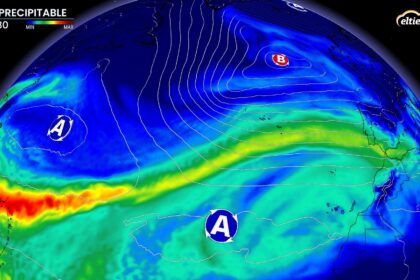
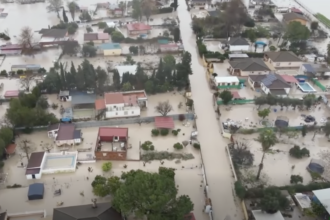
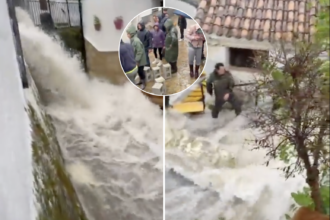
The councilor in charge, Diego Lopez, warned that ‘the heavy rains of recent days have caused many potholes in streets that are used daily by thousands of people, as these are the busiest streets in each area.’
He added: ‘Therefore, we have decided to undertake this plan to prevent the damage from worsening and causing more serious harm.’
The work will initially be carried out on Calle Vicente Blasco Ibáñez, Calle Salduba, and the section of the old N-340 highway near the Marbella Arch, in the East District; Parra and Jacinto Benavente streets, and Avenida de España, in Marbella Oeste; Calle Castilla, Carril de la Picaza, and the urban area of the Ronda road (A-397), in San Pedro Alcantara; Calles Rio Volga and Jorge Manrique, and Avenida del Prado, in Nueva Andalucia; and Avenida Andasol and Pastoral de Las Chapas, in the district of the same name.
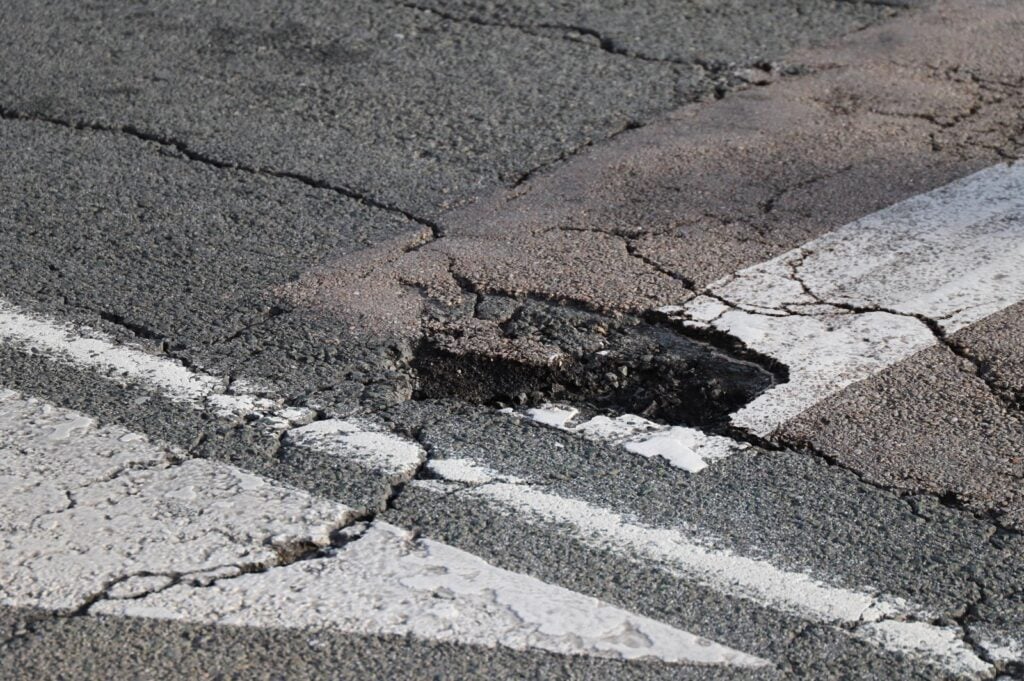
Lopez said: ‘The works will be carried out progressively and in a coordinated manner over the next two months, with the aim of improving the condition of the streets quickly and efficiently and reinforcing road safety in the municipality.
‘They will be carried out in phases and in an organised way to guarantee the normal functioning of the roads at all times and minimise any inconvenience that this improvement may cause, thus contributing to the well-being and quality of public spaces for all residents.’
Why do potholes appear after rain?
When there is heavy rainfall, the water is forced into micro-cracks on the road and into the layers underneath the asphalt.
Once water gets under the surface, it softens the sub-base (often compacted soil or gravel).
Cars and lorries pass over the weakened spot, causing the asphalt to break and collapse downward and slowly erode away until a bigger and bigger hole forms.
If drains are blocked or roads weren’t designed to shed water properly (a big problem in Andalucia), rain hangs around longer and massively increases damage.
Read more Andalucia news at the Spanish Eye.