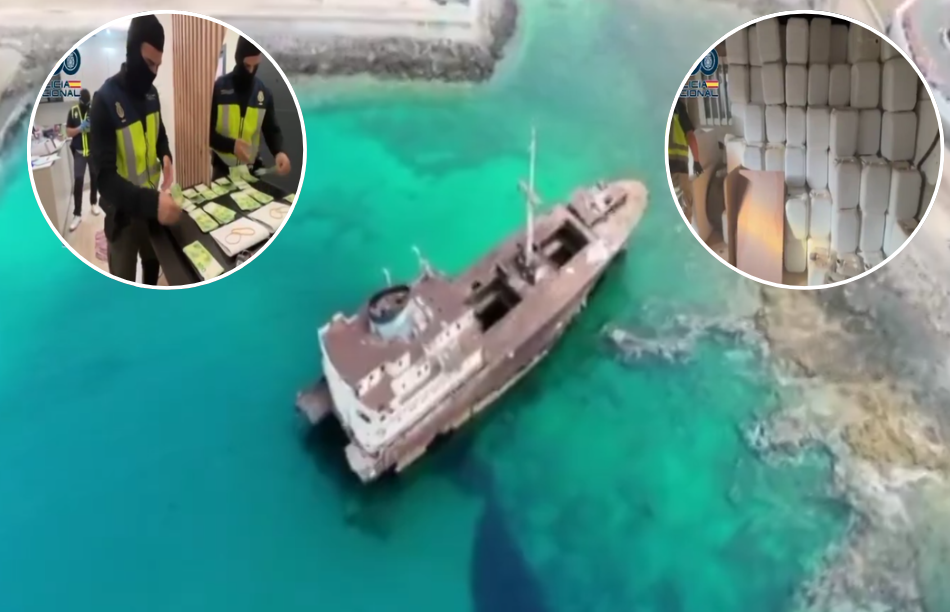

Spanish police have dismantled what they describe as the largest cocaine-trafficking network ever to dominate the Atlantic and Spanish river routes using high-speed ‘narcolanchas’.
The vast international operation has led to 105 arrests and the seizure of more than 10.4 tonnes of cocaine.
The year-long investigation, led by the Policia Nacional, involved coordinated raids across Spain and the Canary Islands, with support from the UK’s National Crime Agency, the US Drug Enforcement Administration, Europol, and authorities in France, Portugal, Morocco, Colombia and Cape Verde.
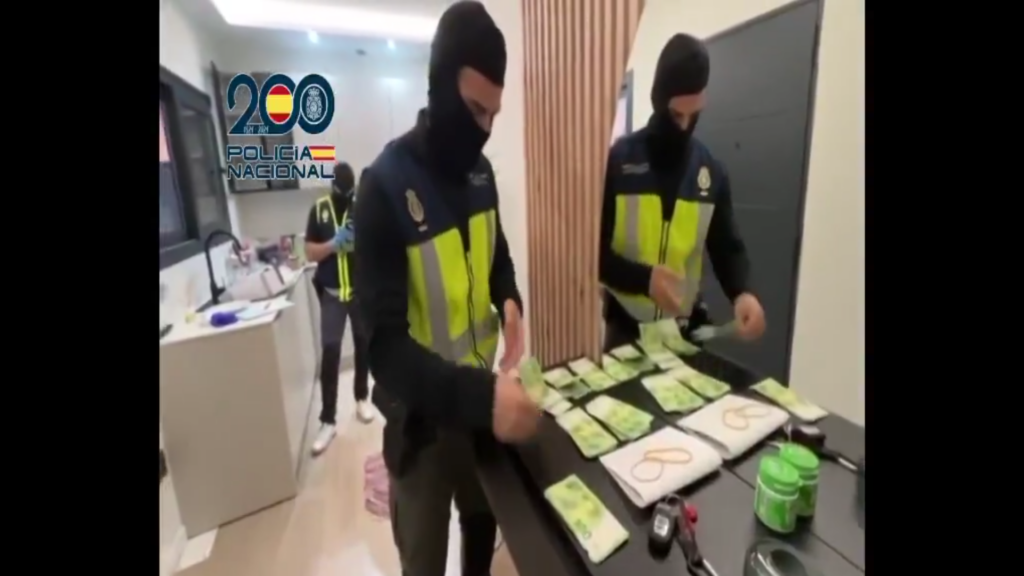
In total, officers carried out 49 searches and confiscated 70 vehicles, 30 boats, six properties, three firearms, more than €800,000 in cash, two hexacopter drones, over 150 mobile phones and sophisticated maritime technology worth an estimated €2.5 million.
Among those arrested are the gang’s lieutenants, responsible for transmitting and enforcing the orders of the ringleader in Spain.
The head honcho is currently in Dubai and, according to reports has not yet been apprehended, although support has been requested from third countries.
Night-time Atlantic runs at 40 knots
Investigators say the network specialised in moving huge cocaine shipments from mother ships in the Atlantic onto ultra-fast narco-boats, which then raced back towards the Canary Islands and southern Spain, often travelling at over 40 knots under cover of darkness.
The vessels departed from the Guadalquivir and other rivers in Cadiz, Huelva, Malaga, Almeria and Portugal, as well as from Morocco and the Canary Islands.
Once at sea, crews used encrypted communications, satellite phones and coded language to evade detection.
Police believe the sophistication of the technology allowed the organisation to operate almost exclusively at night, making interception by law enforcement extremely difficult.
Raids across Spain and the Canaries
Arrests and searches were carried out in Lanzarote (14), Gran Canaria (14), Fuerteventura (2), Algeciras (11), La Línea de la Concepcion (7) and Jerez (2), with elite units including the GEO and GOES deployed during the operation.
One of the most significant blows came with the shutdown of what police describe as the largest logistics and money-laundering hub in the Campo de Gibraltar, which supplied secure communications equipment and navigation technology to major drug traffickers across Andalucia.
Floating platforms and months at sea
The scale of the operation went far beyond fast boats. Investigators uncovered floating maritime platforms where pilots reportedly spent more than a month at sea, carrying out repeated drug transfers without returning to land.
Smaller support vessels ferried fuel, food, clothing and communications equipment, while the organisation maintained its own fuel depots, using over 100,000 litres of petrol to keep operations running.
Spotters positioned along the coast monitored the movements of police aircraft and patrol boats, creating a wide surveillance network designed to warn traffickers of any approaching authorities.
€12 million paid for silence
In one of the most disturbing revelations, police say the organisation paid €12 million to the family of a crew member who died during a drug run, allegedly to ensure their silence and prevent any link to the criminal network.
Two-phase operation, 57 tonnes linked to the gang
The crackdown unfolded in two phases. The first, in June last year, resulted in 48 arrests, nearly 3.8 tonnes of cocaine seized, and the confiscation of 69 vehicles, including boats and jet skis across the Canary Islands.
The second phase, concluded in November, led to a further 57 arrests in southern Spain, with more than €700,000 in cash, hexacopter drones and advanced surveillance equipment seized.
According to investigators, the network was responsible for bringing an estimated 57 tonnes of cocaine into Europe in the past year alone.
Authorities in Portugal also intercepted 6.6 tonnes of cocaine aboard a semi-submersible vessel linked to the same organisation.
European-backed operation
The operation was co-financed by the EU’s Internal Security Fund, supporting cross-border efforts to dismantle organised crime networks and disrupt their business models.
Spanish police say the takedown represents a major blow to cocaine trafficking routes feeding southern Spain, the Canary Islands and wider Europe – and a clear signal that narco-boat operations in the Atlantic are firmly in the sights of international law enforcement.
Read more Costa del Crime news at the Spanish Eye.