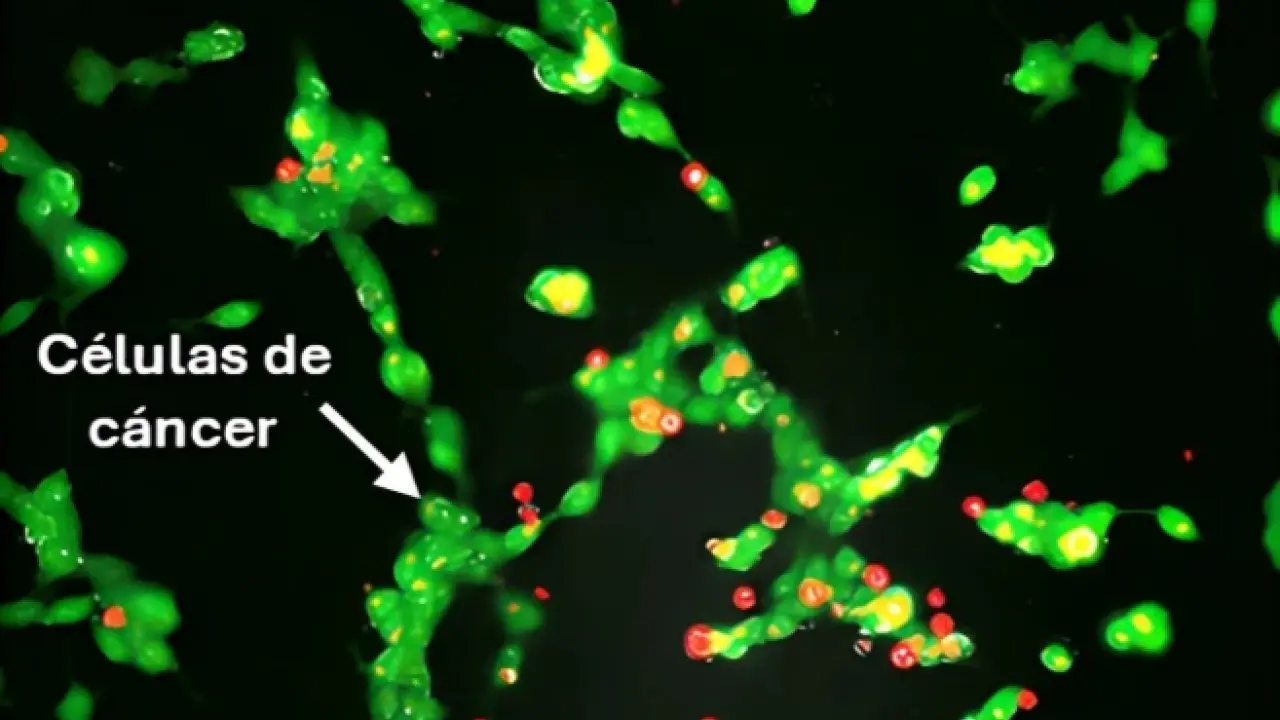

Spanish researchers have developed a new strategy to treat neuroblastoma, combining nanotechnology with cell therapy to help the immune system identify and destroy cancer cells more effectively.
Neuroblastoma is one of the most aggressive childhood cancers and currently has the poorest prognosis among paediatric tumours.
Existing treatments often lack precision, damaging healthy tissue alongside cancer cells.
In the case of cell therapies – which involve administering living cells capable of performing functions the patient’s own cells cannot – a key limitation has been their inability to reliably distinguish between healthy and cancerous cells within the highly complex tumour environment.
The new approach has been developed by researchers from the Universidad Politecnica de Madrid (UPM), in collaboration with the Hospital Infantil Universitario Niño Jesús and the Instituto de Salud Carlos III (ISCIII).
By combining nanotechnology with cellular therapy, the team aims to significantly improve the effectiveness of cancer treatments.
Nanotechnology has advanced rapidly in recent years, allowing scientists to design microscopic devices capable of highly sophisticated tasks, such as locating specific cells within a mixed population or releasing drugs only once inside a targeted cell.
Applying these capabilities to cell therapy could dramatically increase treatment success rates.
The research team, led by Professor Alejandro Baeza of UPM’s Organic Nanotechnology Group, has developed a technique that modifies both neuroblastoma cells and a type of the patient’s own immune cells – macrophages – by introducing chemical groups on their surfaces that are designed to recognise each other.
These chemical groups, known as ‘click molecules’ or ‘LEGO-like molecules’, fit together in a highly specific way, similar to a lock and key.
When macrophages carrying one type of click molecule reach the tumour, they are able to unambiguously identify cancer cells marked with the complementary molecule, binding to them selectively in a process likened to snapping LEGO pieces together.
The surface modifications are carried out using liposomal nanoparticles, which can also carry drugs inside them.
These drugs can weaken or kill tumour cells while simultaneously activating the macrophages, further enhancing the immune response.
According to UPM researcher Sandra Jimenez Falcao, the findings could have implications well beyond neuroblastoma.
She said the approach opens the door to ‘much more effective and selective therapies, not only for treating neuroblastoma but also other types of cancer’, as both the cell-recognition elements and the drugs can be adapted to suit different tumours.
This, she added, could improve treatment precision, reduce required doses and minimise side effects.