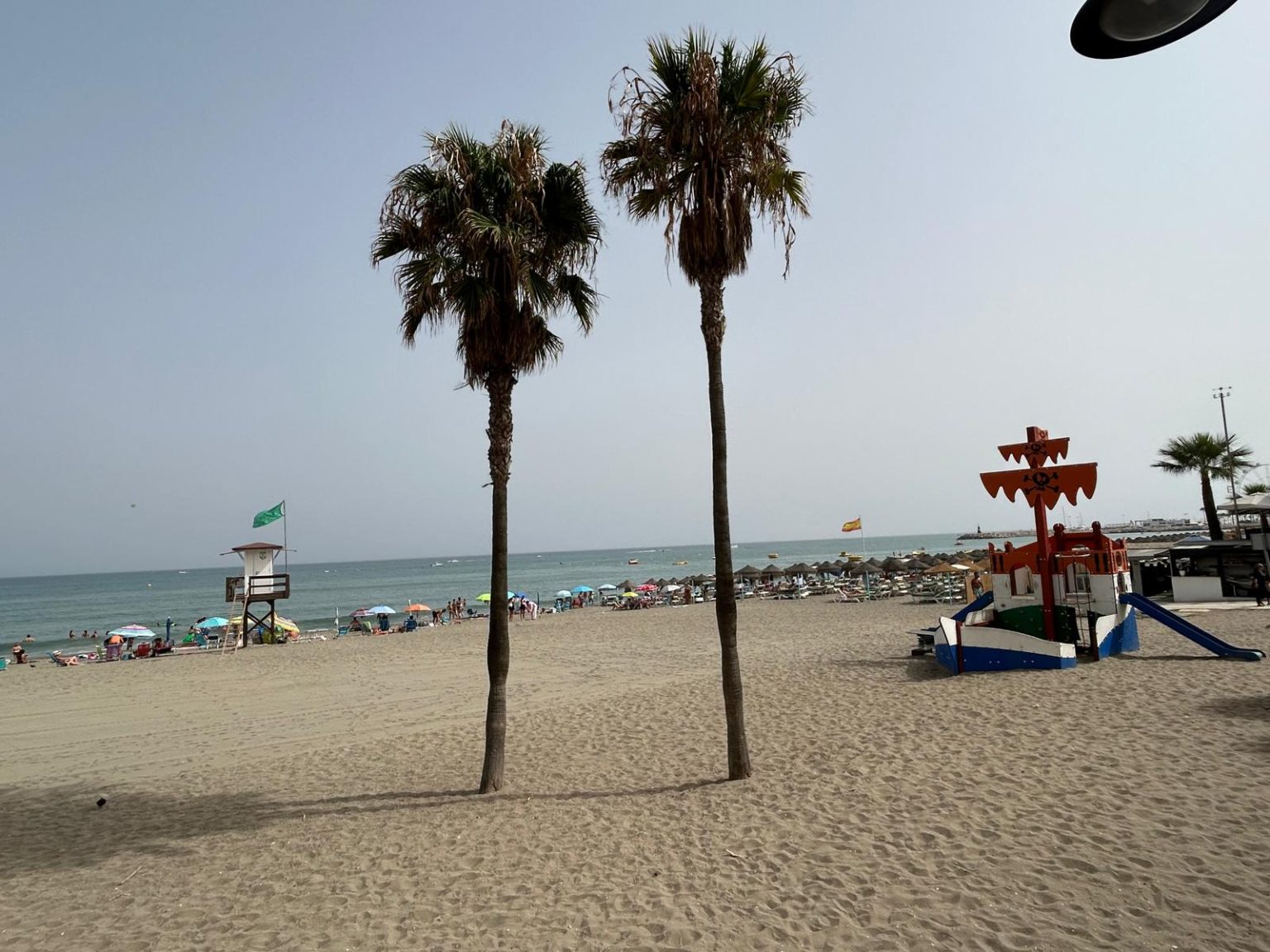

A large number of beaches are at risk of extinction across Andalucia due to climate change.
That’s the finding of a series of studies commissioned by the Junta as part of its Plan Andaluz de Accion por el Clima (PAAC).
Even the most optimistic climate scenarios predict significant losses of beach area across much of the region.
By 2050, models suggest that between five and 25 metres of dry beach could disappear along large stretches of the Andalusian coast – with the Costa del Sol identified as the most heavily affected zone.
Beyond 2050, depending on the type of beach and the nature of its sediments, erosion could become far more severe.
Open beaches with fine sand are especially vulnerable, and in extreme cases could suffer permanent retreats of up to 65 metres by 2100.
The Junta’s report is blunt: under the worst-case climate scenario, up to 33 Andalusian beaches could disappear entirely before the end of the century – with the greatest impact concentrated on the Costa del Sol and the western coast of Cadiz.
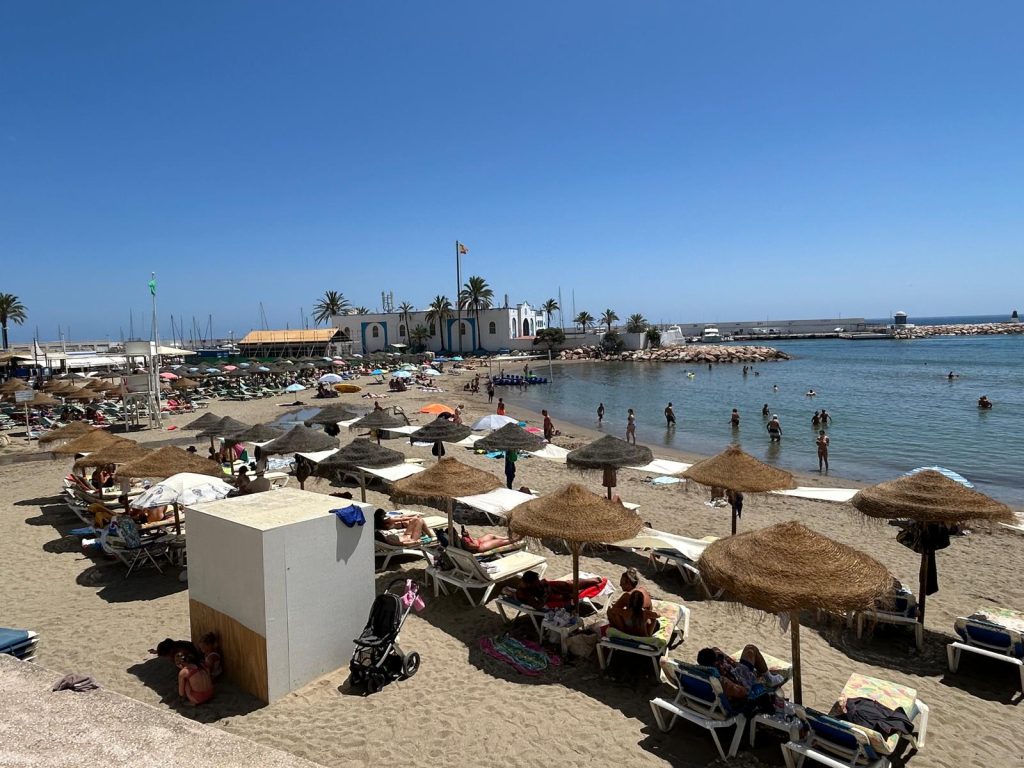
The ‘blacklist’ of beaches at risk
The study highlights Malaga and Cadiz as the provinces facing the most serious long-term threat.
In Cadiz province, beaches at critical risk include:
- La Costilla and Galeones (Rota)
- Cruz del Mar and Camarón (Chipiona)
- La Victoria and Cortadura (Cádiz city)
- La Barrosa (Chiclana)
- Santa Catalina, Levante and Valdelagrana (El Puerto de Santa María)
- Roche (Conil)
On the Costa del Sol, the list is equally extensive:
- Torre del Mar and Valle Niza (Vélez-Málaga)
- La Caleta, El Candado and La Misericordia (Malaga city)
- El Faro and Rio Verde (Marbella)
- Los Álamos and El Bajondillo (Torremolinos)
- Santa Ana (Benalmádena)
- Los Boliches-Gaviotas and Carvajal (Fuengirola)
- Butibamba (Mijas)
One of the most dramatic examples is Carvajal beach in Fuengirola.
Projections indicate it could lose around 74% of its current width by 2050, and by 2100 may disappear altogether, leaving virtually no visible shoreline.
The reports also warn of huge sediment losses along the Huelva coast, including beaches of exceptional environmental value.
In Huelva, the most at risk beaches are:
- Matalascañas, on the edge of Doñana National Park, could lose around 12.5 million cubic metres of sand
- Playa de Castilla (Almonte) is forecast to lose 7.8 million cubic metres
- Playa de Levante (El Puerto) could lose 6.4 million cubic metres
Experts note that potential sand losses are closely linked to beach length.
Among the most exposed are Levante, La Victoria, La Anegada, Río Verde, Artola, Los Boliches, Carvajal, Campo de Golf, Guadalhorce and La Caleta, spread between Cadiz and Malaga.
If the extreme climate scenario becomes reality, by 2100 several beaches could vanish completely, including:
- In western Cadiz: Micaela, Cruz del Mar, La Victoria, Sancti-Petri and Roche
- On the Costa del Sol: Nueva Andalucia, Fuengirola, Los Boliches, Benajarafe and Caleta de Velez
Warnings and plans
The Junta’s findings add to a growing body of scientific warnings about the region’s coastline. In August, the Junta announced new initiatives to improve climate modelling, assess future scenarios and develop tools to anticipate impacts rather than react to disasters.
In 2024, Greenpeace called for structural, long-term solutions rather than temporary fixes, including a rethink of urban development along the shore.
All proposed measures are being folded into Andalucía’s climate adaptation strategy for coastal management, but any redevelopment plans will need to put into motion fast.