New Year’s Eve in Spain (Nochevieja) is less about fireworks at midnight and more about timing, tradition and a surprising amount of fruit.
While the celebrations may look familiar on the surface, the way Spaniards ring in the New Year is distinctly their own.
Here’s how millions across Spain usher in the New Year.
The 12 grapes of luck
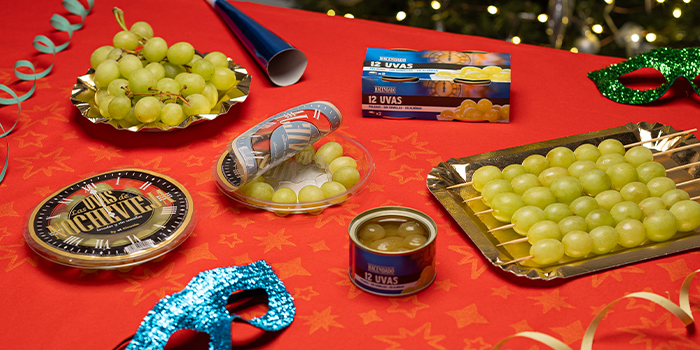
The most iconic Spanish New Year tradition is eating 12 grapes, one for each chime of the clock at midnight. Each grape represents a month of good fortune in the year ahead.
The challenge is keeping up. The clock in Puerta del Sol in Madrid sets the pace for the entire country, and the bells don’t wait. Miss a grape and superstition says you may miss a bit of luck too.
The tradition dates back to the early 20th century and is now so ingrained that supermarkets sell pre-packed grape portions, sometimes even peeled and deseeded, to help people manage the countdown.
The country watches the same clock
As midnight approaches, millions of Spaniards gather around the television to watch the live broadcast from Puerta del Sol. The ritual includes two moments often confused by visitors: the cuartos (preliminary chimes) and the campanadas (the real ones).
Start eating on the wrong bells and you’ll instantly identify yourself as a foreigner.
Red underwear
Another popular custom is wearing red underwear on New Year’s Eve, believed to bring love, passion and good luck.
It should ideally be new, and in some regions, gifted rather than bought by yourself.
Dinner first, party later
Families usually sit down for a long, late dinner – often seafood, lamb or jamon – before midnight.
Once the grapes are eaten and the New Year toasted with cava, younger crowds head out to street parties, clubs or ticketed ‘cotillon‘ events, often lasting until sunrise.
Cotillon
A cotillon is a classic Spanish New Year party, typically including party hats, noise-makers, confetti and a sense of organised chaos. Many venues hand out bolsas de cotillón – goodie bags packed with novelty items to kick-start the night.
Even upscale hotels and town halls host cotillones, making them a cross-generational affair.
New Year’s Day
January 1 in Spain is a public holiday, and the pace drops dramatically, with streets very quiet and very little open.
In coastal towns, some brave souls take part in dips in the sea, in what has become a popular trend, particularly in expat hotspots on the Costa del Sol and Costa Blanca.
Read more Spain news at the Spanish Eye.