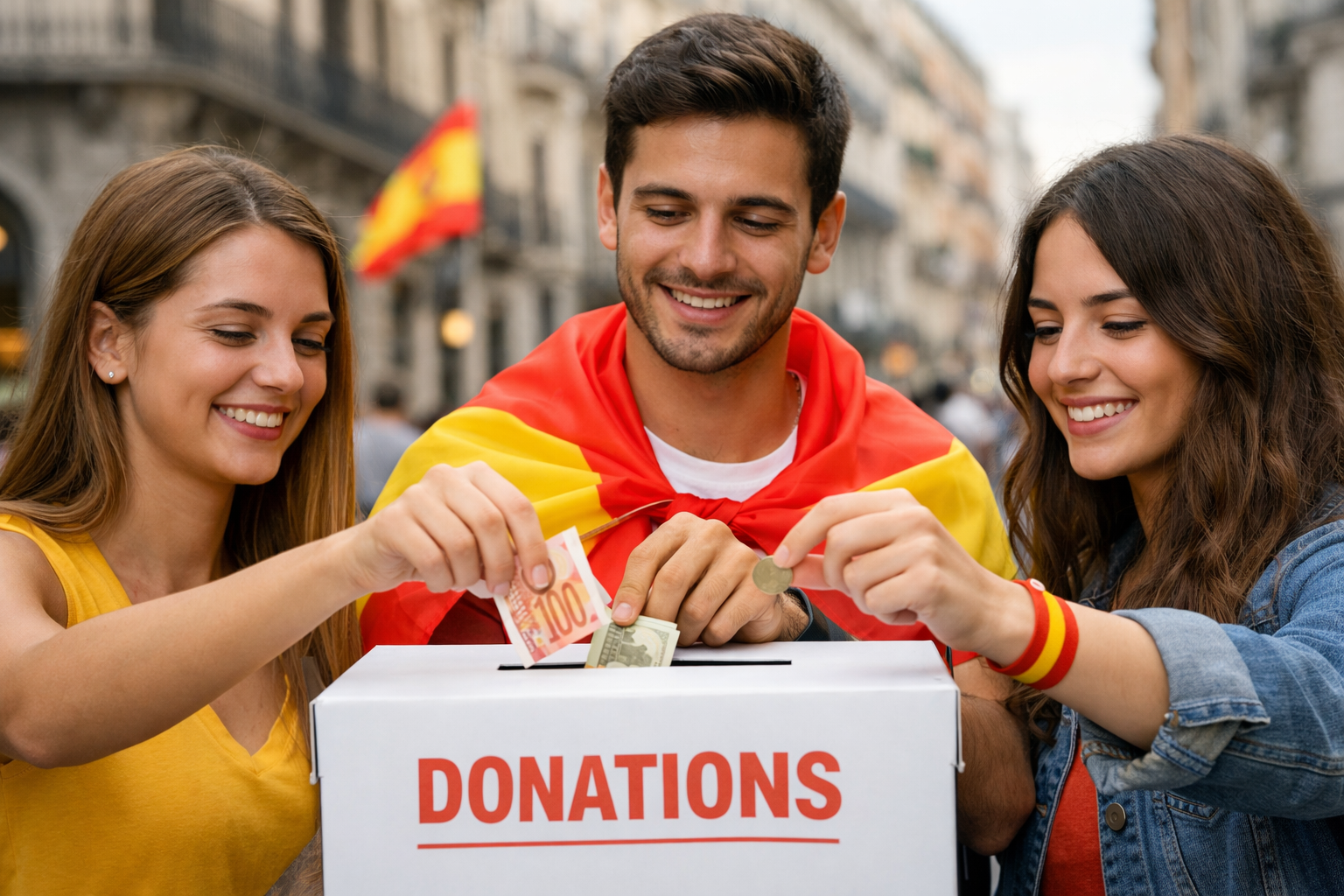

Generosity in Spain is on the rise, according to a new report by CaixaBank Research, produced in collaboration with Fundación la Caixa and Universitat Pompeu Fabra.
The study offers a detailed snapshot of philanthropic behaviour across the country and points to a clear increase in donations, the growing importance of so-called ‘super-donors’, and the consolidation of four main causes that attract the vast majority of public support: international cooperation, healthcare, social services and religion.
One of the most striking findings is Spain’s strong collective response to emergencies.
Following the devastating DANA storms that hit the Valencia region in October 2024, donations to charitable organisations rose by 45% in just one month.
Among people living close to the affected areas, contributions surged by 83%, highlighting a powerful sense of empathy and solidarity with neighbouring communities.
The report draws on data from a survey carried out by the Fundación “la Caixa” Observatory, combined with anonymised transactional data from CaixaBank customers.
This approach allows researchers to track how donations fluctuate throughout the year, how different social groups behave, and which causes inspire the greatest commitment.
December emerges as the most generous month of the year, with donations running 21% above the monthly average.
The findings reinforce the idea that solidarity intensifies during the festive period, when family gatherings and shared experiences appear to encourage a stronger spirit of giving.
A key insight from the study is the outsized role played by ‘super-donors’. Although they account for just 10% of all donors, this group contributes 47% of the total amount raised.
Notably, many of these donors do not have high incomes but give regularly and consistently, underlining that generosity is driven more by commitment than by wealth.
The analysis also shows that people on lower incomes often make the greatest relative effort. Those earning under €20,000 a year donate an average of 1.3% of their income — significantly more, proportionally, than higher-income groups. The report highlights this as a clear sign of the social engagement of households with fewer resources.
Generational differences are also evident. Young people aged 16 to 29 show a particular sensitivity to environmental causes, accounting for 8.2% of donations in this area despite their limited financial capacity.
Those aged between 30 and 49 lead donations to education and universities, while over-65s are the strongest supporters of culture, arts and the humanities.
Overall, international cooperation, healthcare, social services and religion receive around 90% of all donated funds. Religious organisations record the highest average donation per donor (€347), followed by education (€314) and international cooperation (€262), reflecting a strong attachment to causes linked to social welfare and human development.