
Every year on December 28, Spain marks Día de los Santos Inocentes.
The date often confuses visitors and expats because it combines a religious origin with a nationwide tradition of pranks, hoaxes and fake news.
In practice, it functions much like April Fools’ Day in the UK, but with deeper historical and cultural roots.
The Day of the Innocents commemorates a passage from the Gospel of Matthew, which recounts how King Herod ordered the killing of male infants in Bethlehem in an attempt to eliminate the newborn Jesus.
The ‘innocents’ refer to those children, and for centuries the date was observed solemnly within the Christian calendar.
Over time, however, the meaning of the day evolved in Spain and parts of Latin America, gradually taking on a more playful – and sometimes mischievous – character.
Today, December 28 is Spain’s main prank day.
What you should be aware of is that it is common for:
- Newspapers, radio stations and TV channels to publish deliberate hoaxes
- Companies and institutions to announce fake policies or products
- Friends, families and colleagues to play practical jokes on one another
The key difference from April Fools’ Day is that the jokes are expected to last all day, not just until midday.
Once a prank is revealed, the traditional phrase is: ‘¡Inocente, inocente!’
Spanish media outlets often participate openly, publishing spoof stories that are deliberately plausible.
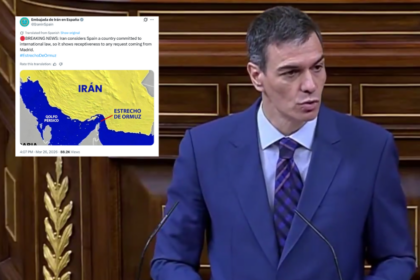
Past examples have included fake political announcements, invented celebrity news and bogus changes to traffic laws or taxes.
For this reason, December 28 is a day to read the news carefully, especially on social media, where hoaxes can spread rapidly before being debunked.
In some parts of Spain, the day is marked with unique local celebrations rather than simple pranks.
One of the most famous takes place in Ibi, where locals stage Els Enfarinats, a mock coup involving costumes, flour, eggs and fireworks, which symbolically turns the town upside down for a day.