
A mystery that has puzzled historians for more than eight decades has finally been solved beneath the waters off Cadiz.
A Franco-Spanish research team has confirmed the discovery of the wreck of Le Tonnant, a French Navy submarine deliberately scuttled during the Second World War following combat with US forces during Operation Torch in 1942.
The find was made by a joint team of researchers and divers from the University of West Brittany (Brest) and the University of Cadiz, working under the European SeaEU framework.
The project was led by oceanographer Erwan L’Her, who said the wreck’s location and structure now allow historians to place the submarine’s final moments with unprecedented accuracy.
Le Tonnant disappeared during the Allied landings in North Africa in November 1942, and while its fate was known in broad terms, its exact resting place had never been confirmed.
The research team initially investigated archival material and carried out exploratory dives in areas where the submarine had long been thought to lie – including the Guadalquivir estuary – but poor visibility and conflicting historical records made early searches unsuccessful.
It was only after re-examining original logbooks and naval documentation that researchers from the University of Cadiz were able to narrow down a more precise search zone in waters off Cadiz.
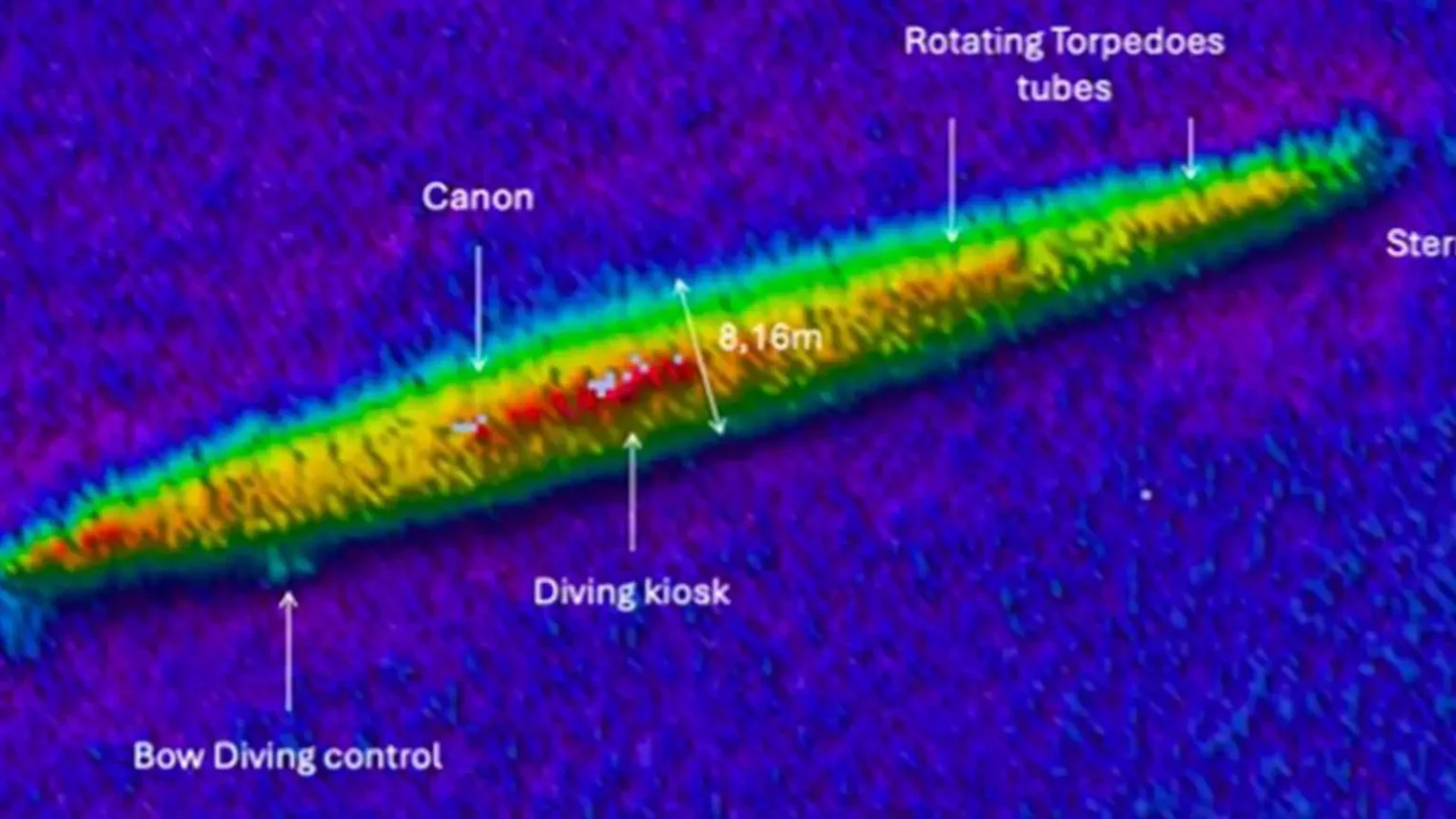
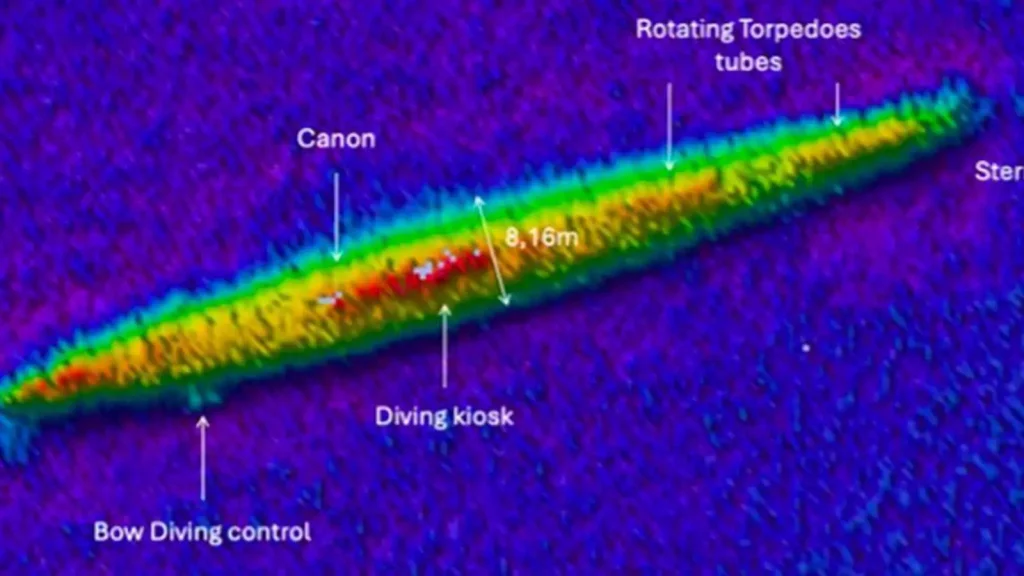
Using multibeam sonar technology, the team detected a wreck whose dimensions and layout closely matched those of Le Tonnant.
According to researchers, the identification can now be made with a high degree of confidence. Sonar images clearly show the submarine’s forward diving planes, conning tower and rotating torpedo launchers, while the stern lies partially embedded in the seabed, around six metres below the surrounding seafloor.
What happened during Operation Torch
Operation Torch began on the morning of November 8, 1942, when Allied forces launched a large-scale invasion of French-controlled North Africa, targeting Morocco and Algeria, then under the authority of the Vichy regime.
French forces anticipated some form of action but were not at full alert when the assault began. At the time, France possessed the world’s largest submarine fleet, and several vessels – including Le Tonnant – were moored in port and not fully prepared for combat.
US destroyers opened fire shortly before 8am, followed by intense aerial bombardment. The attack caused widespread destruction: cargo ships, civilian liners, destroyers and multiple submarines were sunk at harbour.
Le Tonnant was caught in a particularly vulnerable position. Its commanding officer, Captain Paumier, was killed during the bombardment. Command passed to his second-in-command, who managed to submerge the submarine under extreme conditions.
Only 30 of the original 72 crew members were able to reach the vessel in time, many of them wounded. The submarine was also poorly armed, carrying just four torpedoes.
Despite this, Le Tonnant engaged US forces before attempting to escape. Damage sustained during the attack, however, made it impossible for the submarine to surface again. Faced with capture, the surviving crew took the decision to sabotage and scuttle the vessel, ensuring it would never fall into enemy hands.
It sank off the coast of Cadiz, where it remained undiscovered until now.
Researchers stress that the wreck will not be disturbed. Instead, it will be documented as an underwater war grave and historical site, offering new insight into a little-known chapter of the Second World War in southern Spain’s waters.