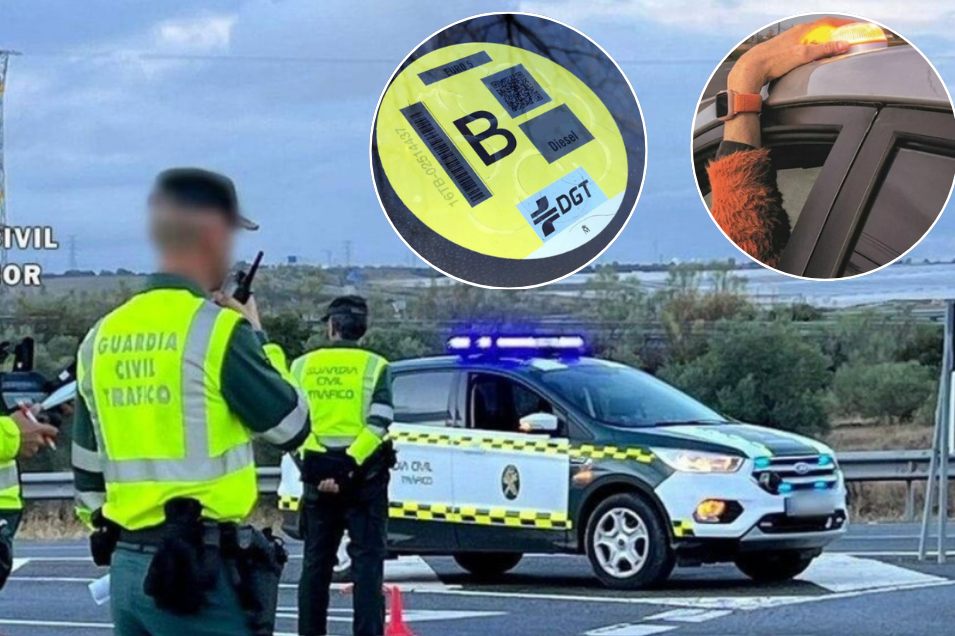

Motorists in Spain can feel official ‘brakes’ pressing on their diesel and petrol cars.
- ZBEs: Granada City creates the perfect storm
- More moans in Malaga
- Environmental stickers: moving the goalposts
- Fossil fuels in the fleet
- Rising diesel tax
- Electric vehicles: driving towards high prices
- Do Spanish motorists welcome EVs?
- Falling foul of speed limits
- The V16 beacon: a compulsory gadget
- Alcohol limits… saving lives but killing rural venues?
- The outlook: fragile freedom for drivers in Spain
From low-emission zones (ZBEs) introduced in city centres, to environmental stickers, flashing rooftop beacons, and Guardia Civil ‘trafico’ patrols everywhere, driving from A to B is becoming an obstacle course.
The rationale, stated by Spain’s Dirección General de Tráfico DGT), is seguridad vial (road safety) and meeting environmental targets, such as cleaner air and less noise.
So, what lies ahead for drivers?
ZBEs: Granada City creates the perfect storm
An unpopular scheme is the launch of low-emission zones (ZBEs) in city centres. These are no longer optional. Spain’s Climate Change Law (7/2021) requires ZBEs in towns with over 50,000 inhabitants.
In Granada, the new ZBE – started in 2025 – bans older petrol (pre-2001) and diesel vehicles (pre-2006) from entering the controlled zone, if they belong to non-residents.
However, those with identical cars registered in Granada may still enter. This has created a ‘bunfight’ between municipalities, with the mayor of nearby Armilla denouncing it as ‘unconstitutional’.
Enforcement cameras began issuing penalty fines on October 1 2025. Several municipalities claim city access is by postcode, rather than pollutant. Spanish newspaper, El País, reports more than 250 formal objections, and that the ZBE will be reviewed (but surely not abolished).
More moans in Malaga
Cordoba’s ZBE fines cars without an environmental sticker that enter the historic centre, and Malaga’s zone began issuing €200 fines on November 30, 2025.
Opposition parties in Malaga accuse the council of launching the ZBE without sufficient metro or bus expansion, or proper park-and-ride installations. This leaves visitors with fewer options to reach their chosen destination.
‘Teething’ problems suggest a widespread issue. Restrictions have arrived more quickly than infrastructure.
Environmental stickers: moving the goalposts
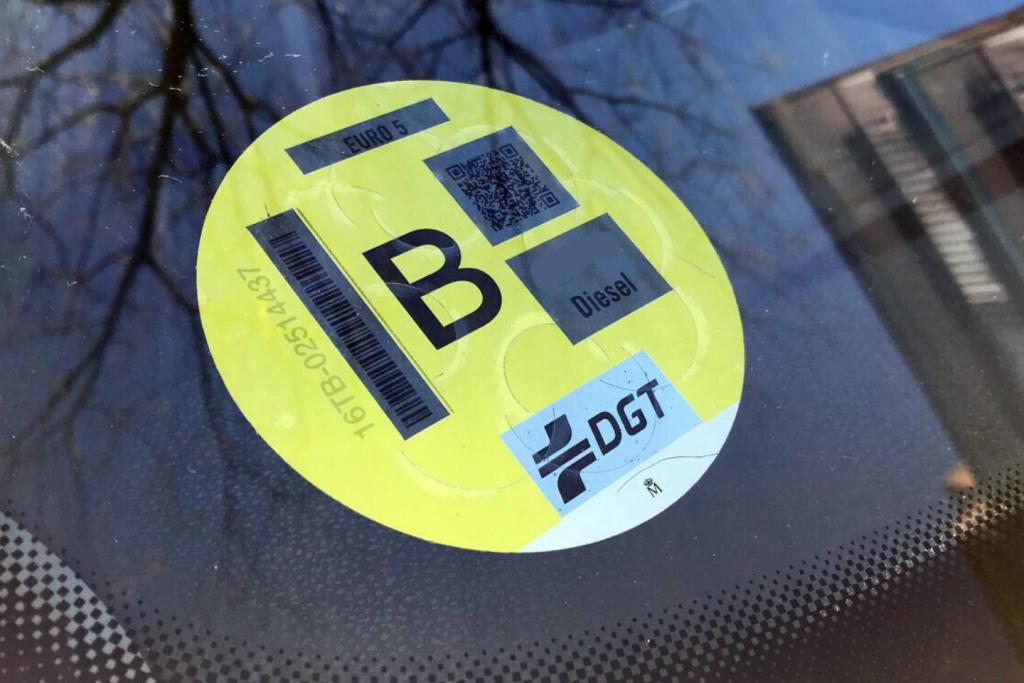
DGT environmental stickers determine what cars can enter a city centre. The four stickers – 0, ECO, C and B – soon turned into a “passport” for entry.
Vehicles with no sticker are barred from many ZBEs. Next in the firing line is B-stickers – i.e. Euro 3 petrol and Euro 4/5 diesel vehicles.
There’s currently no national decree to ban Bs from ZBEs in 2026. However, the Climate Change Law invites cities to design their own restrictions using the sticker system. Next on the firing line will be C.
This is bad news for owners of 10 to 15-year-old diesel cars.
Fossil fuels in the fleet
Spain’s car fleet is still overwhelmingly fossil fuelled. Petrol cars account for 33.8% of the fleet; and petrol and diesel combined 92.7% – according to manufacturers’ association, ANFAC. These are non-compliant with the ‘green’ rules.
Spain isn’t exactly ‘forcing us out of our diesel car’ – but it’s moving in that direction. The government firmly backs the EU’s decision to ban fossil fuel vehicles from 2035.
However, the EU is being lobbied to move the deadline back to 2040. The clean-energy drive is colliding with reality – consumer reluctance, EV cost and infrastructure failures.
Rising diesel tax
Diesel vehicles are also losing their fuel cost advantage. For decades, diesel in Spain has enjoyed lower taxation than petrol, as industry favours diesel vehicles.
However, the government has increased it in stages. The plan is to align it with petrol.
For those using their diesel car daily, the message is clear: your car may remain legal, but pressure on you to scrap it will increase.
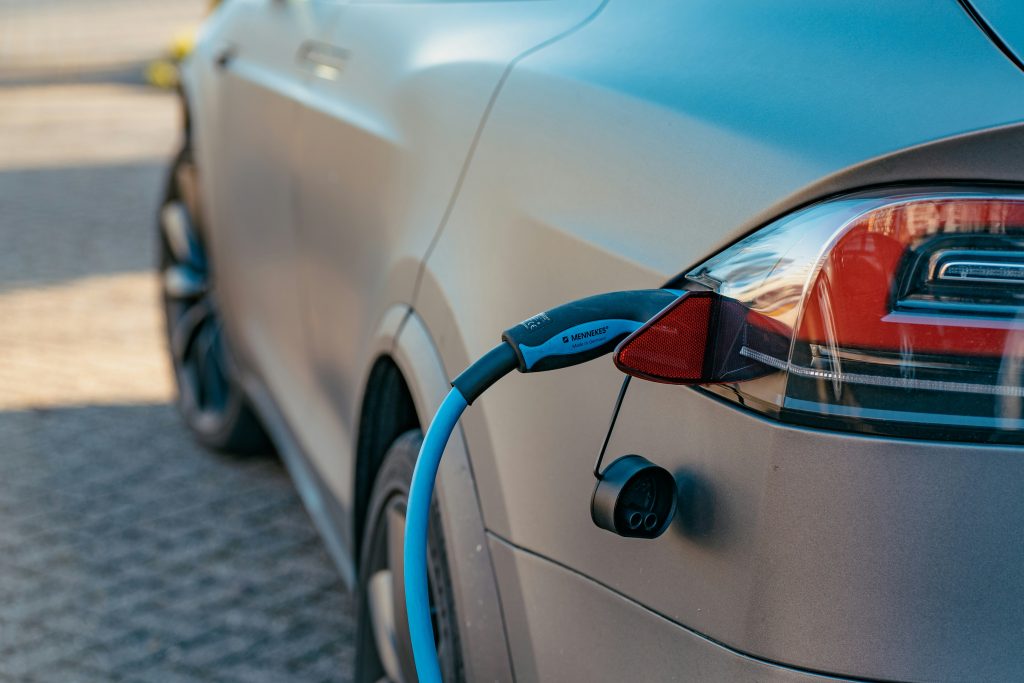
Electric vehicles: driving towards high prices
The clear aim is to make consumers invest in EVs. Unfortunately, the maths is dodgy. According to Spain’s Instituto Nacional de Estadística (INE), the average annual wage in Andalucía is around €21,000. Or, €1,400–€1,500 a month, after tax.
Meanwhile, a used EV in Andalucia costs over €18,000. New models are from €30,000–€35,000. A ‘budget’ option, such as the Dacia Spring, costs almost €18,000, although grants can lower it to €11,000.
Leasing costs from around €300 per month for small EVs, with limits on the kilometres you can drive.
Look for subsidies. The national MOVES III scheme, running until 2025, paid up to €7,000 for a new electric car and €9,000 for a van if you scrapped your old one, plus help with installing charging points.
In 2026, Spain will introduce the new Auto 2030 Plan, which replaces MOVES with subsidies at the point of sale. The idea is to ‘reduce bureaucracy’.
However, not everyone has €11,000 to spare. Will it become rich versus poor; battered old Berlingo bangers versus shiny, new EVs…
Do Spanish motorists welcome EVs?
According to a 2024 survey by French company, Electra, 62% of Spaniards will consider buying an EV during the next five years. However, an EU Consumer Monitor study put this figure at 44%.
And, what about rural mountain dwellers? A typical argument goes: “Where would I charge it up a mountain… imagine charging it on my solar system during a cloudy week.”
Mathew Wood of real estate advice agency, Solving Spain, based in La Alpujarra, takes a different view. He says: ‘I like the idea of an electric pickup, especially if charged on solar. It is cheap motoring after the initial investment.’
Falling foul of speed limits
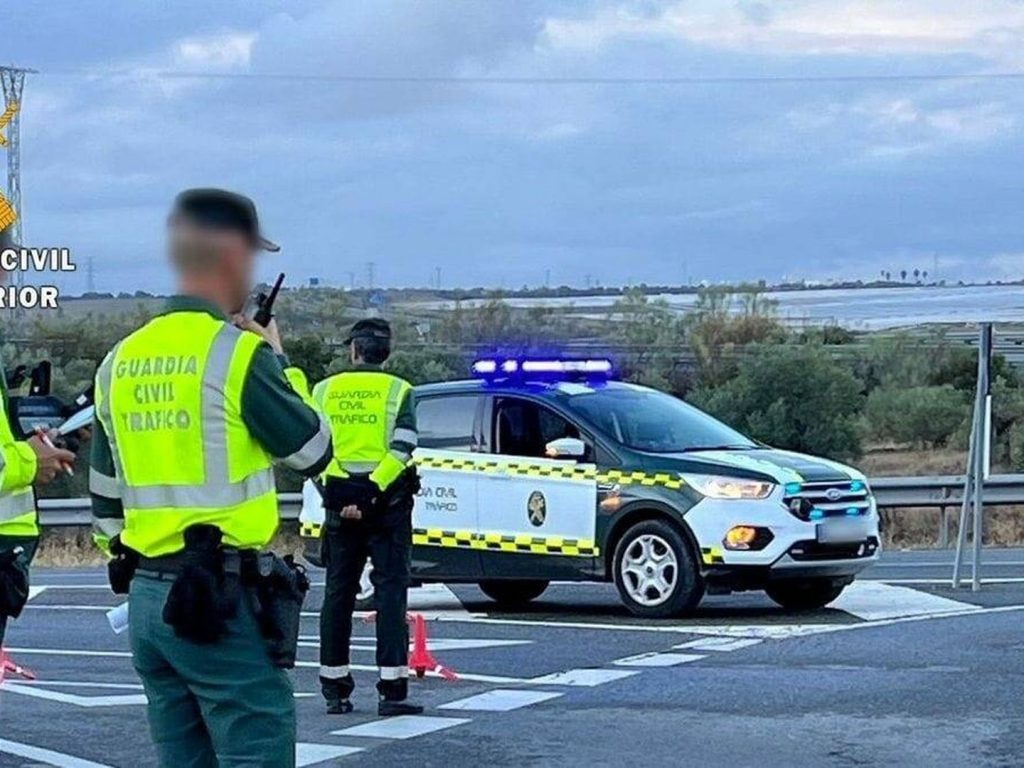
Whatever you drive, watch out for speed limits – and speed traps. Since 2021, the default speed limit on single-lane city streets has been 30km/h, and 20km/h where there’s a footpath. Drivers can get €100 fines for marginal speeding. Driving in a bus lane or down a one-way street can cost between €200 and €500.
Guardia Civil Trafico agents commonly deploy mobile ‘radar’ speed cameras to catch unsuspecting motorists. This practise is increasing.
Meanwhile, legal parking spaces in urban areas shrink as city councils build more bike lanes, pedestrian zones, and bus corridors. Green policy is great until you can’t find any bus, tram, or train to your destination.
The V16 beacon: a compulsory gadget
From January 1 2026, the warning triangle for accidents/breakdowns becomes obsolete. The only legal device is the new V16 flashing roof beacon – approved by the DGT.
You can pop it onto the roof without leaving the car. It flashes 360 degrees, and it transmits your location to the DGT’s 3.0 traffic system.
However, some drivers are annoyed. Approved units cost €30–€60, early models from many retailers aren’t compliant with the DGT 3.0, and cheap lookalikes sold online are illegal.
Spain’s data protection authority, the Agencia Española de Protección de Datos (AEPD), says the signal from the beacon is anonymous and only transmits the position of a stopped vehicle; it doesn’t track or identify the driver. Some people remain suspicious!
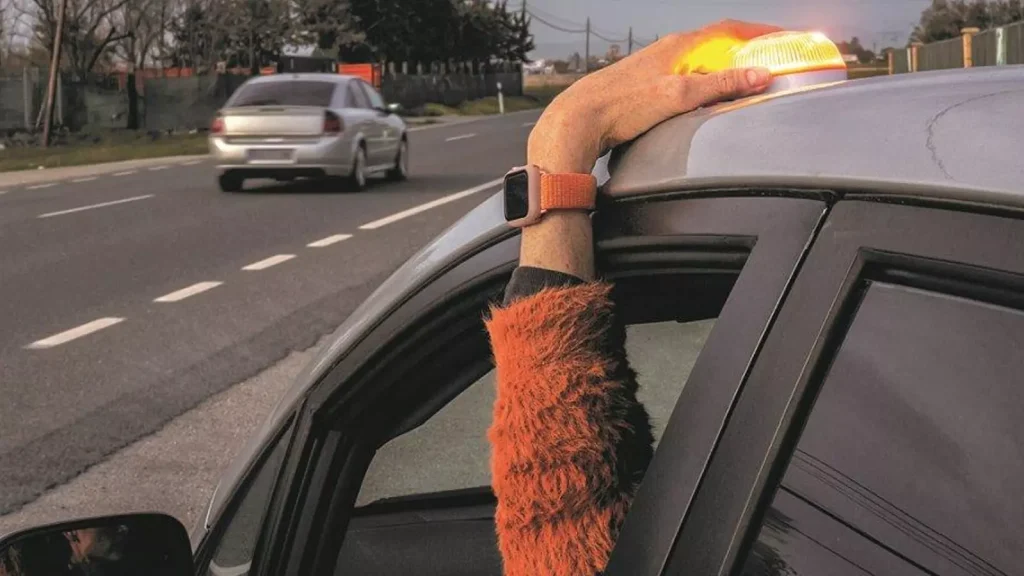
And what happens if you break down on a blind corner, on a winding mountain pass, in bright sunlight? Maybe keep the triangle in the boot!
Alcohol limits… saving lives but killing rural venues?
A mooted change for drink driving would reduce the (non-professional driver) limit to 0.25 mg/l in breath and 0.5 g/l in blood to 0.10 mg/l and 0.2 g/l respectively. This doesn’t have parliamentary approval yet. If it does, women can’t even have one beer at that out-of-town bar.
Rural bar/restaurants are the losers here. The drinking culture (anecdotally) is that almost 90% of male rural bar customers drink beer. Will they just go to their cortijos with paellas and crates of beer?
The DGT argues that alcohol and drugs are key factors in fatal crashes. Therefore, trafico enforcement is intensifying.
Extra patrols, drones, and speed cameras are becoming routine. Reportedly, just one major campaign can fine up to 8,000 motorists. Watch out.
The outlook: fragile freedom for drivers in Spain
Driving in Andalucía is becoming more of a challenge. City access depends on a sticker. Safety depends on a flashing beacon. Compliance depends on lots of things!
For those with newer cars and higher incomes, these changes are manageable. With older vehicles and limited dinero, the lane is narrowing.
Mobility is part of liberty in Spain. The question for 2026 is whether it’s becoming a matter of environmental policy – or how deep is your purse?