While scrolling through property portals in Malaga, you might stumble across offers that seem too good to be true.
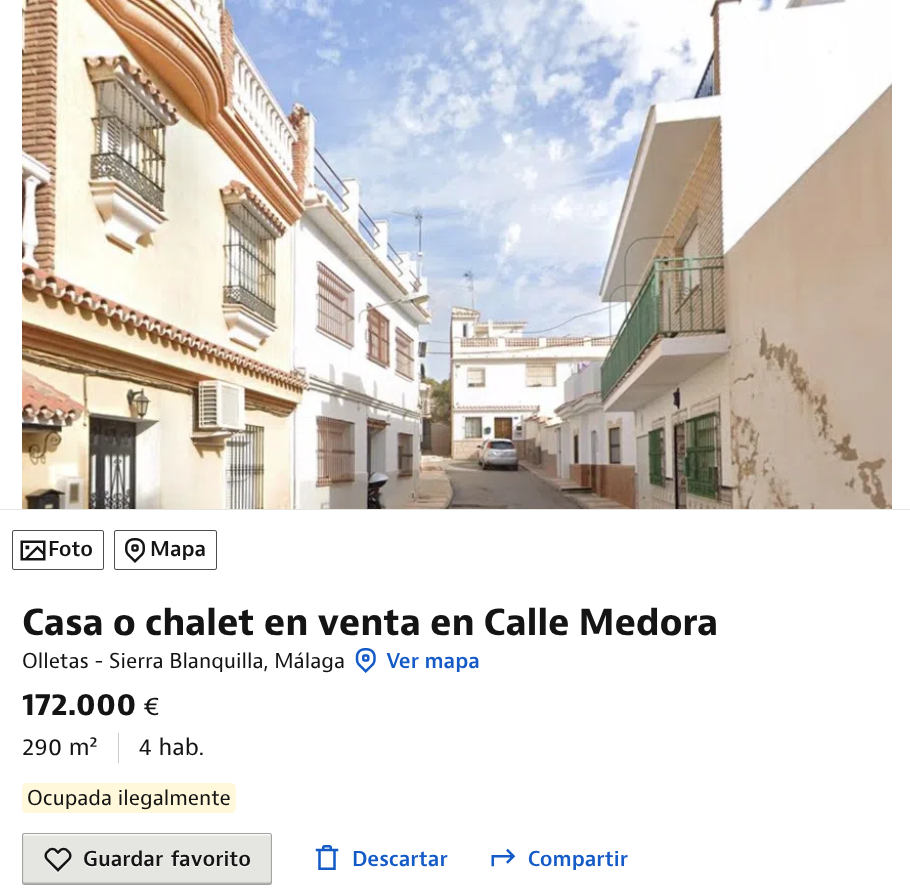
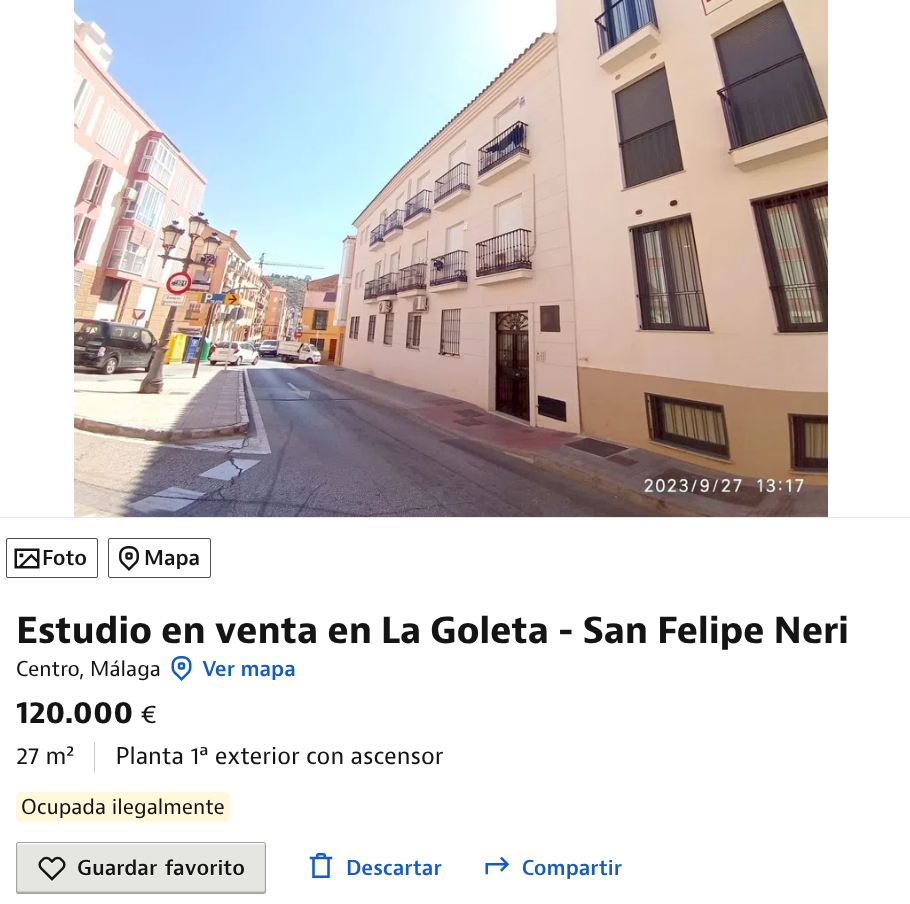
There are some 70m2 flats going for €80,000 or €90,000, in a market where resale prices can soar beyond €4,000 per m².
READ MORE: EXCLUSIVE: British woman loses €100k after being forced to sell squatted Malaga home
The catch is that many of these homes are ‘okupado’, i.e. taken over by squatters (or ‘okupas’ in Spanish).
A risky investment play
The listings often carry disclaimers, including ‘Property without possession‘ or ‘Visits not possible due to occupancy.‘
For would-be buyers, this means taking on not just the property, but also the legal headache of eviction proceedings, often already underway, and the unpredictable timelines of Spanish justice.
READ MORE: How squatters are skirting new laws in Spain designed to kick them out faster
‘Buying a house or flat with squatters can be very profitable,’ admits Paul Stuart from Palm Estates Marbella.
However he told the Spanish Eye: ‘But you have to have the patience for it and the stomach for a lot of problems and difficulties.’
He said anyone thinking about buying a squatted home should only do so if they have the time and money to go through the often tedious process of evicting ‘okupas’.
Paul added: ‘And remember that unpaid utility bills often remain with the property so they are also buying the property debt.’
The expert said the typical buyer of a squatted home is a professional property flipper or investment firm.
They are turning more and more to occupied homes due to the lack of supply that is currently hitting markets like Marbella and other Costa del Sol hotspots, including Malaga city.
‘It used to be unthinkable. No one would touch an squatted property,’ Pedro Soria, from Tecnitasa, recently told La Opinion de Malaga.
‘Now, with so little supply, investors are willing to look at them.’
Indeed, the surge in demand has created a niche market aimed at investors, not families looking for a home.
Developers admit they now put such homes up for sale immediately instead of waiting for eviction, because competition is so fierce.
Flipping, rentals – and mafias
For investors, the appeal is obvious. They can buy low, refurbish after eviction, and flip or rent – often as tourist accommodation or in newer ‘co-living’ models.
But the trend also opens the door to mafias exploiting squatting. Criminal groups reportedly pay vulnerable people to move into properties, then pressure new owners to pay for a quick ‘negotiated’ exit.
‘They take the bulk of the money,’ says Soria.
Numbers behind the phenomenon
According to Idealista, Malaga province currently has around 1,130 squatted homes listed for sale, about 1.7% of the housing stock, below the Spanish average of 2.6%.
Within Malaga city, however, the problem is sharper, with 286 squatted properties, representing 3.8% of homes.
That is the fifth highest rate among Spanish provincial capitals, behind Girona, Murcia, Sevilla and Almeria.
What it means for the market
While still a small slice of the housing picture, the practice sidelines properties that could otherwise become long-term housing stock.
For locals struggling with Malaga’s skyrocketing rents and prices, it’s yet another sign of how distorted the market has become.
Read more Spanish property news at the Spanish Eye.