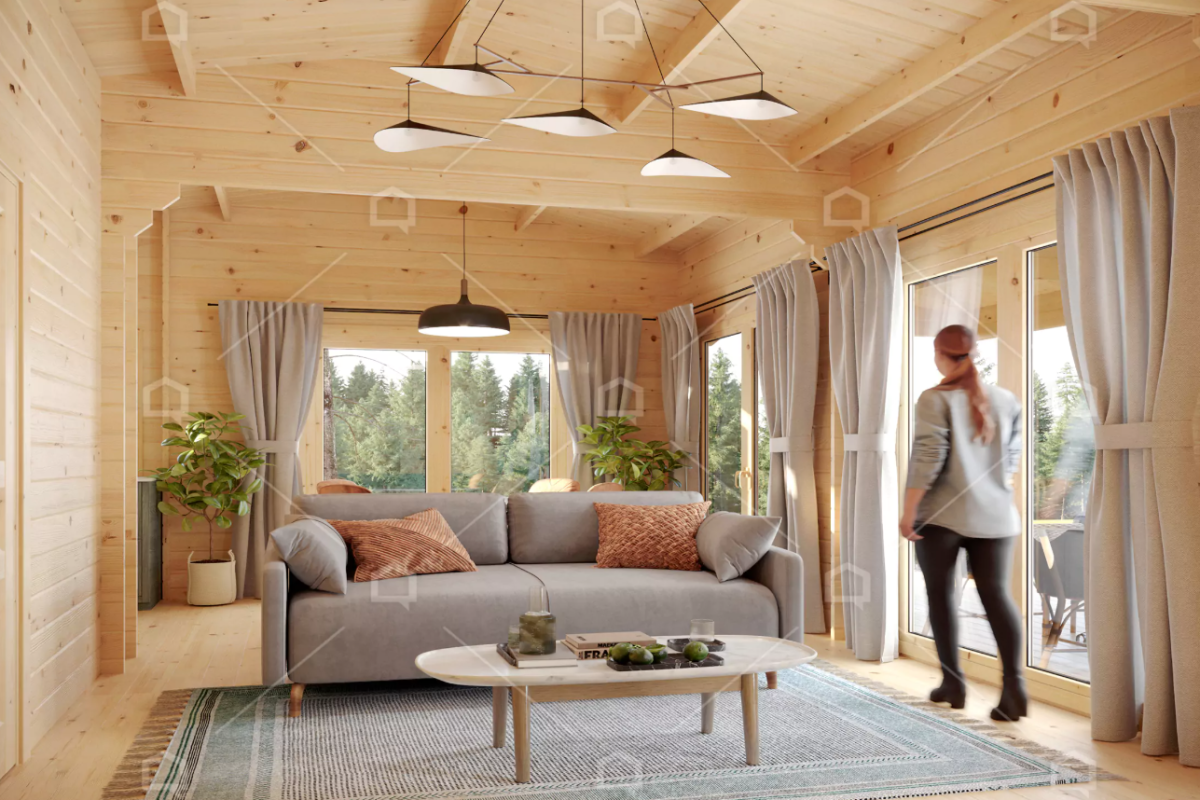

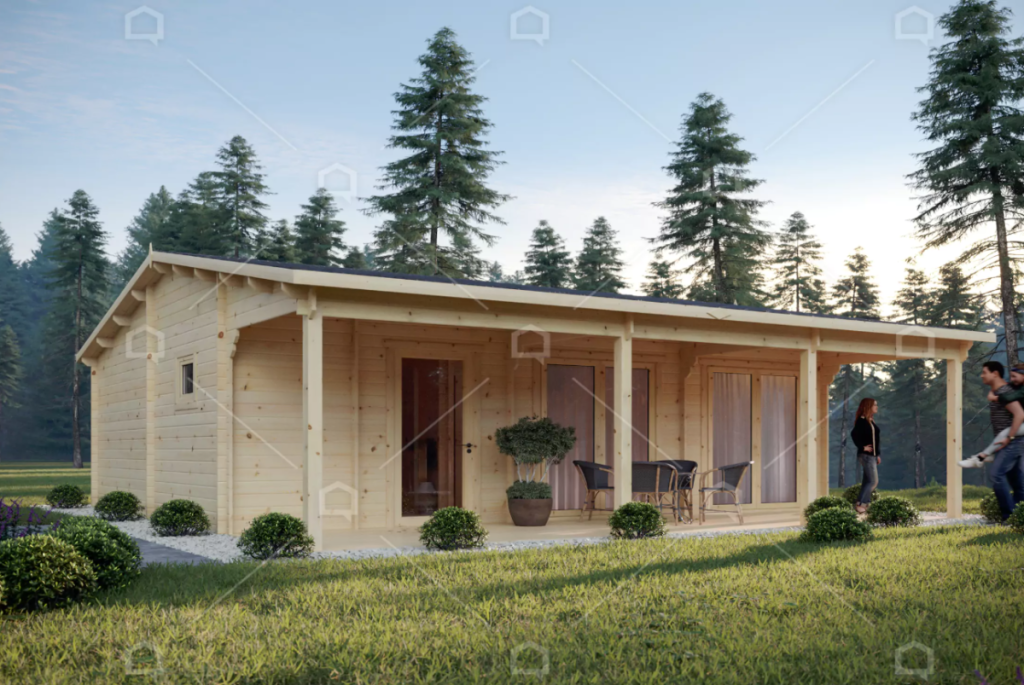
A charming wooden house with room for the whole family, a terrace and a pitched roof, all for just €16,629.
That’s the offer behind the Duero, a pre-fabricated home by Maestro Casas. Combining rustic charm with practical design, it’s being sold as a low-cost solution for countryside living or summer getaways.
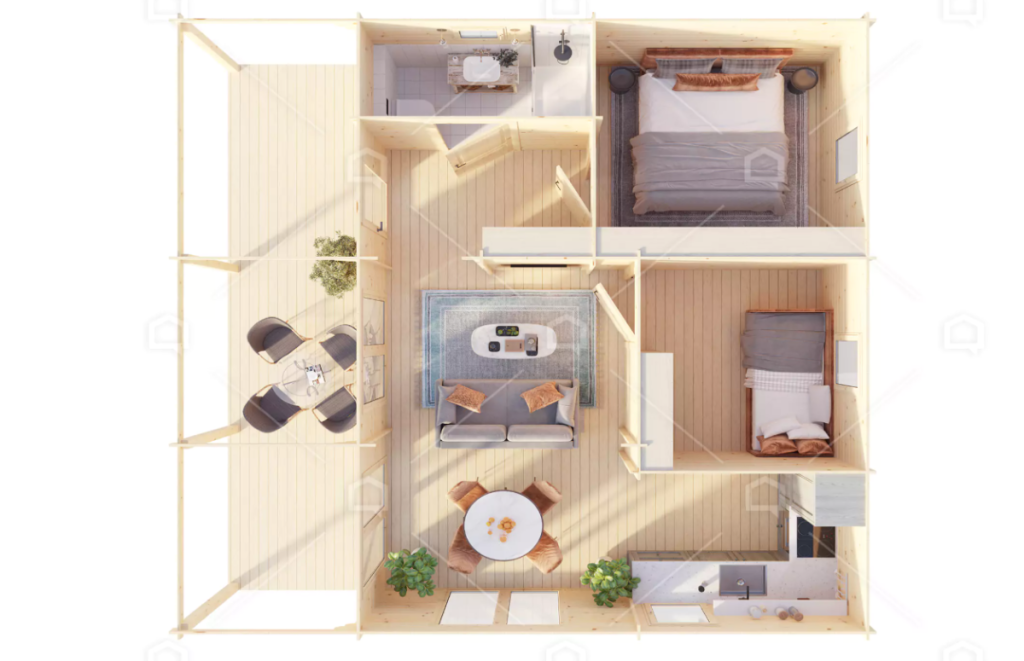
The Duero offers 64 m² of built space (44 m² usable) in a compact layout suited to families of three or four.
Priced from €16,629 (before extras), it’s one of the more affordable prefabricated options on the Spanish market.
What’s included?
The house has a square-shaped, single-storey layout, which makes it easy to place on most plots. Inside you’ll find two bedrooms, one bathroom, an open-plan kitchen and lounge and a 16 m² covered terrace, protected by a pitched roof.
Large front-facing windows bring in plenty of natural light, while the mix of traditional and modern design elements (think timber structure meets glass façade) gives the home a warm, airy feel.
The base price includes the timber structure with standard windows and doors.
Extras – such as full insulation, rainwater drainage, and roofing materials – can be added at extra cost. Delivery and production take roughly six to eight weeks.
But are they legal in Andalucía?
Pre-fab homes are legal in Andalucia but there are conditions that must be met.
Like elsewhere in Spain, you can’t simply place a prefabricated home on land without prior approval. Whether it’s legal depends on several key factors:
Zoning: The land must be classified as suitable for residential use (urban or ‘urbanisable’ land).
Planning permission: You’ll need a building licence (licencia de obra) from the local town hall – just like with any other permanent dwelling.
Foundations and permanence: If the home is connected to utilities and fixed to the ground (e.g. on a foundation), it’s considered a permanent structure and must meet building code standards.
Rural land restrictions: If you plan to install it on rustic or protected land, expect major legal hurdles. In most cases, building any residential structure there is not allowed.
So while models like the Duero are legal, they require the same bureaucratic process as conventional homes and skipping those steps can lead to fines or demolition orders.
Read more Spanish property news at the Spanish Eye.