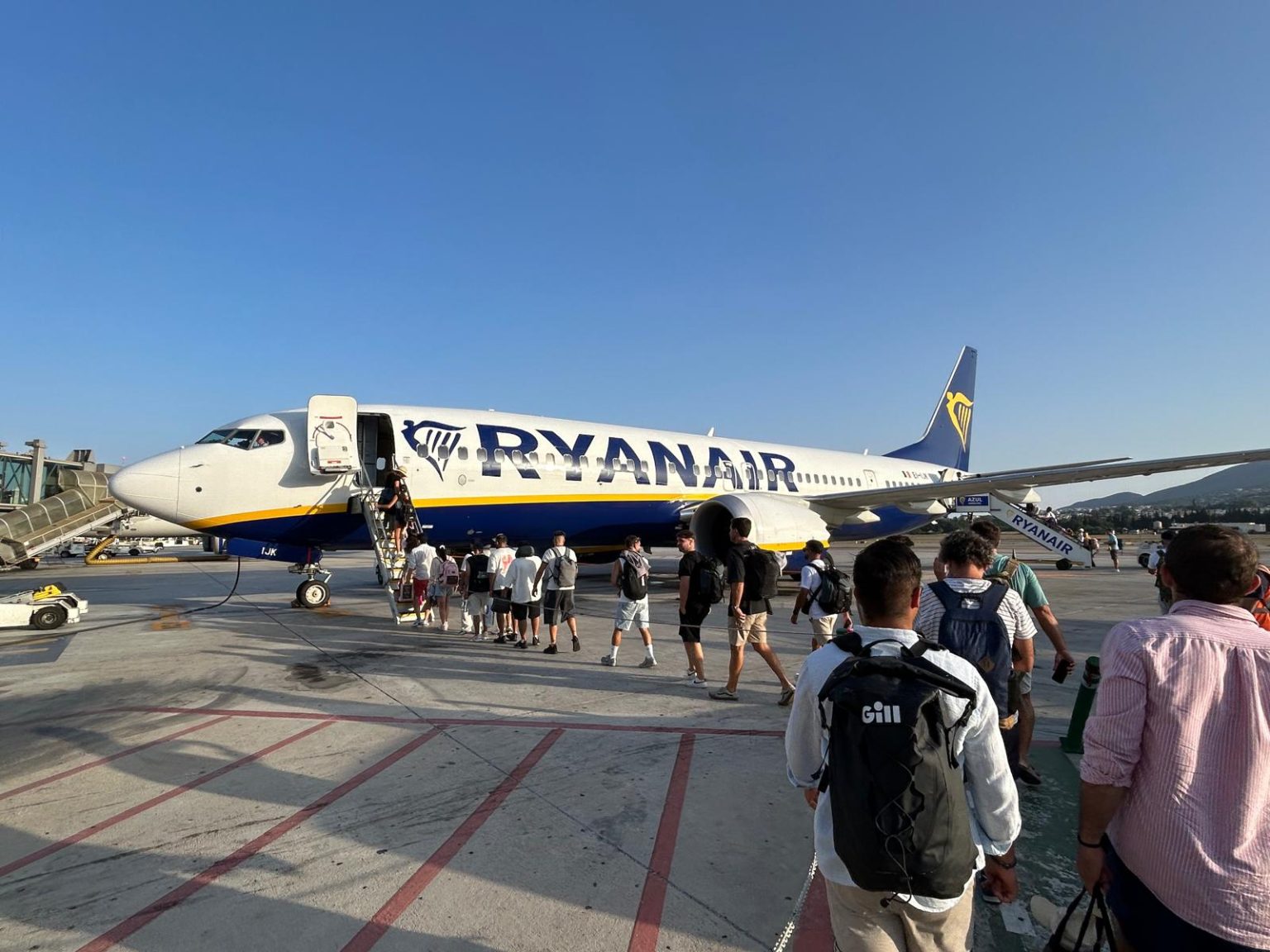

Ryanair has warned it will slash a further one million seats on its Spanish routes next summer, escalating its battle with Aena over rising airport fees.
In an interview with the Financial Times, CEO Michael O’Leary said he would travel to Madrid in two weeks to announce the cuts.
He accused Aena of pricing out regional airports and repeated his criticism of a 6.5% increase in airport charges, which will add 68 cents per passenger. From March 2026, airlines will pay €11.03 per passenger.
‘If costs at regional airports are too high, we’ll fly elsewhere,’ O’Leary said. ‘It makes more sense for us to fly to Palma than to Jerez if the costs are the same.’
Aena pushes back
Spain’s airport operator insists its rates remain competitive, pointing out that flight capacity for the coming season has actually increased by 2.1%.
Other airlines – among them Iberia, Vueling and Wizz Air – have announced they will expand services in airports Ryanair is abandoning, such as Santiago, Vigo and Tenerife Norte.
Millions in subsidies
Despite O’Leary’s combative stance, Ryanair has benefited from at least €42 million in public subsidies since 2020, according to Spain’s public procurement portal. These funds were awarded in exchange for promoting destinations through flights and marketing contracts.
Examples include:
- €25 million from Cantur, the Cantabrian tourism promotion agency
- €8.4 million from the city of Vigo
- €4 million from the company managing Castellón Airport
Additional deals have involved airports in Andalucia, Lanzarote, Asturias and Ibiza.
What it means for travellers
If Ryanair follows through, Spanish regions reliant on budget flights could face higher fares and reduced connections.
But with rivals stepping in to fill gaps, the real impact on passengers may depend on how aggressively competitors expand.