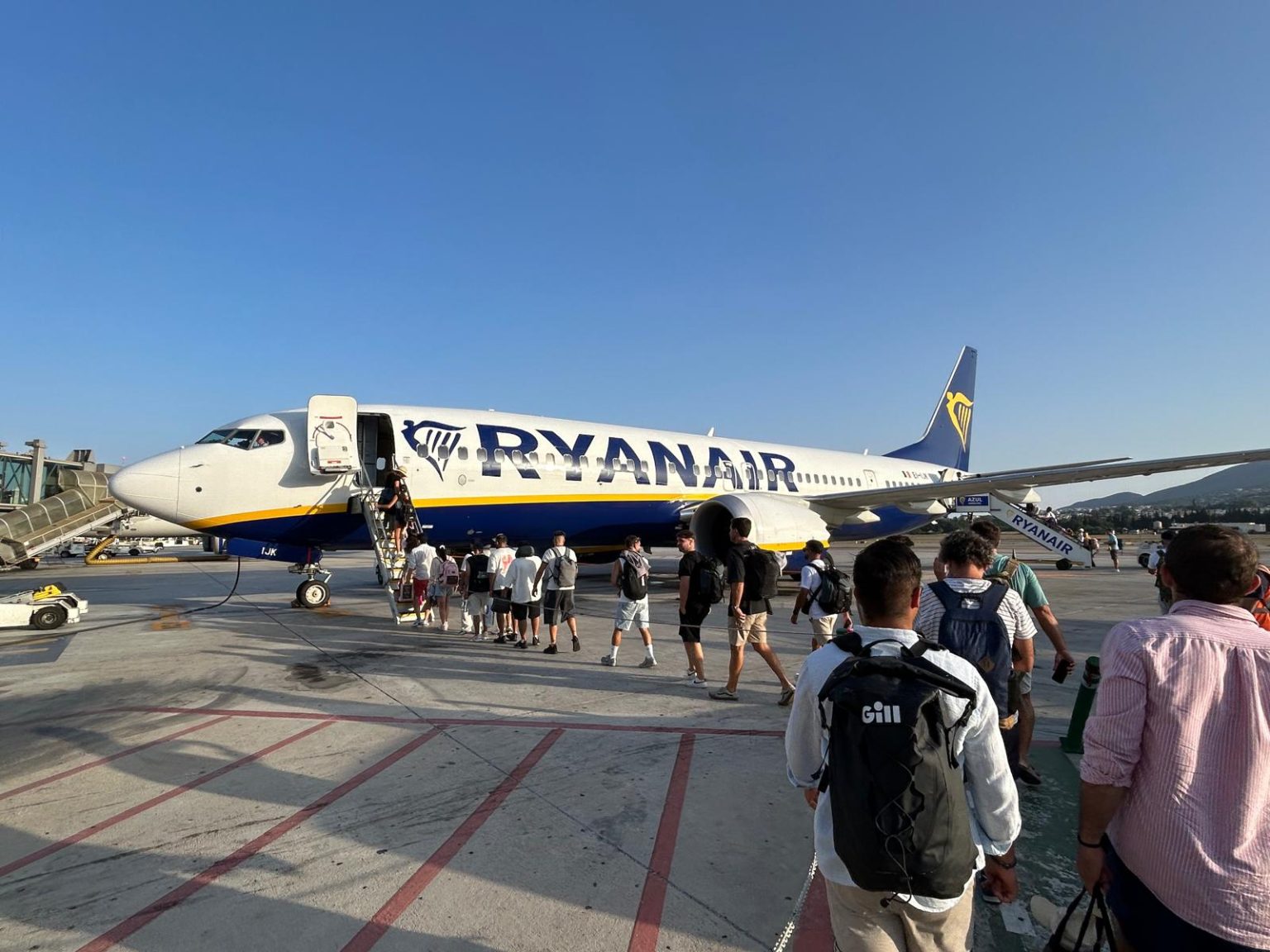

Ryanair has announced it will slash one million passenger seats from its Spanish operations over the next year, triggering concern among travellers, airports, and tourism officials.
The cut, which affects flights across multiple Spanish airports, comes amid a deepening dispute with airport operator AENA.
But what does this actually mean for passengers and what’s behind the drastic move?
What’s happening?
Ryanair says it is reducing its seat capacity across Spain by 10%, starting this winter season.
That translates to approximately one million fewer seats available for booking on routes into and out of key Spanish destinations like Barcelona, Madrid, Malaga, Alicante and Palma de Mallorca.
Importantly, these aren’t just flight cancellations. Ryanair will keep many routes but operate them with fewer frequencies or smaller aircraft, effectively reducing the number of people they can carry without pulling out entirely.
Why is Ryanair doing this?
1. AENA Fee Hikes
The airline is blaming airport fee increases imposed by AENA, the state-run Spanish airport operator.
Ryanair claims these higher charges – covering landing fees, passenger handling, and infrastructure use – make flying in Spain ‘less competitive.’
‘While other countries like Italy and Portugal are cutting fees to stimulate travel and tourism, Spain is doing the opposite,’ said Ryanair’s spokesperson. ‘We simply cannot absorb these unjustified cost hikes.’
2. Strategic retaliation?
Critics argue the move is more about pressure than pricing. Ryanair has a long history of using route cuts as leverage in disputes with airport authorities and governments.
3. Shifting resources elsewhere
Ryanair has confirmed that many of the aircraft and crew pulled from Spain will be redeployed to countries offering better incentives, including Italy, Morocco, and parts of Eastern Europe.
The airline is chasing higher margins and lower operational costs and Spain, it seems, no longer fits the bill.
Who will be affected?
- Travellers: Expect higher prices and reduced availability on popular Spanish routes, especially during peak travel periods like Easter, summer and Christmas.
- Airports: Regional airports are likely to be hit hardest, as Ryanair may scale back services where it holds a dominant market share.
- Tourism Sector: Spain’s coastal regions and islands that rely heavily on Ryanair for incoming tourists could feel the impact through fewer visitors and lost revenue.
The Balearic and Canary Islands, both heavily dependent on air connectivity, have already called on the central government to intervene.
Is this permanent?
For now, Ryanair is calling it a ‘capacity adjustment’ and not a full-scale withdrawal. The airline says it may restore seats if AENA revises its pricing policy.
However, the tone of the announcement was combative, and unless there’s movement on airport charges, the cuts could last well into 2026.
Read more Andalucia news at the Spanish Eye.