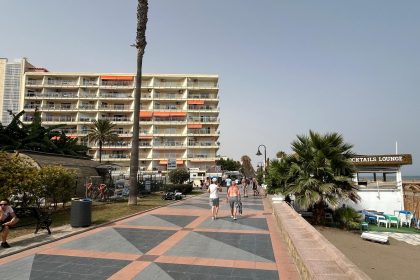

Roquetas de Mar has posted the second-fastest population growth of any Spanish city with more than 100,000 residents this century, new figures show.
The city, in Almeria, saw its number of inhabitants explode by 144.2% since 2000. Only Rivas-Vaciamadrid, near Madrid, has grown faster, with a staggering surge of 249.4%.
The surge dwarfs national trends, which show Spain’s 50 provincial capitals have grown by an average of just 11.9% over the same period – well below the 20.1% average for all Spanish cities.
A quarter of them have actually shrunk, with Cadiz city reportedly losing one in five residents.
Other big gainers behind Roquetas include Parla (+81.8%), Marbella (+50.2%), and Torrejon de Ardoz (+49.8%). Provincial capitals that made the top 10 include Girona (+44.6%) and Murcia (+32.1%).
Nationwide, the latest municipal register shows Spain’s population rose by 8.15 million between 2000 and 2024 – but only 20% of those new residents live in provincial capitals. The rest flocked to other large municipalities.
The shift is clear in the numbers: in 2000, 34% of Spaniards lived in provincial capitals; today, it’s just 31.67%.
Some capitals have boomed – Girona (+44.6%), Guadalajara (+37.5%), and Palma (+31.2%) -while others have slumped hard.
Population losers
Cadiz tops the list of decliners, down 20.6%, followed by Leon (-11%), Salamanca (-8.9%), Zamora (-8.7%), and Valladolid (-6.1%). Even big names like Sevilla (-2.0%) and Granada (-4.5%) are in the red.
Biggest absolute winners
Meanwhile, Madrid has added 539,556 residents since 2000, Barcelona 189,942, Murcia 114,816, and Palma 104,309. Alicante (+81,722), Valencia (+85,326), and Zaragoza (+86,406) also saw large gains.
Experts say the trend reflects ‘demographic decline and aging’ in many capitals, with suburban growth and the rise of satellite cities pulling residents away.
‘Some capitals are seeing fewer people of reproductive age and notable aging,’ researcher Miguel González-Leonardo warned in 2021.
Read more Andalucia news at the Spanish Eye.