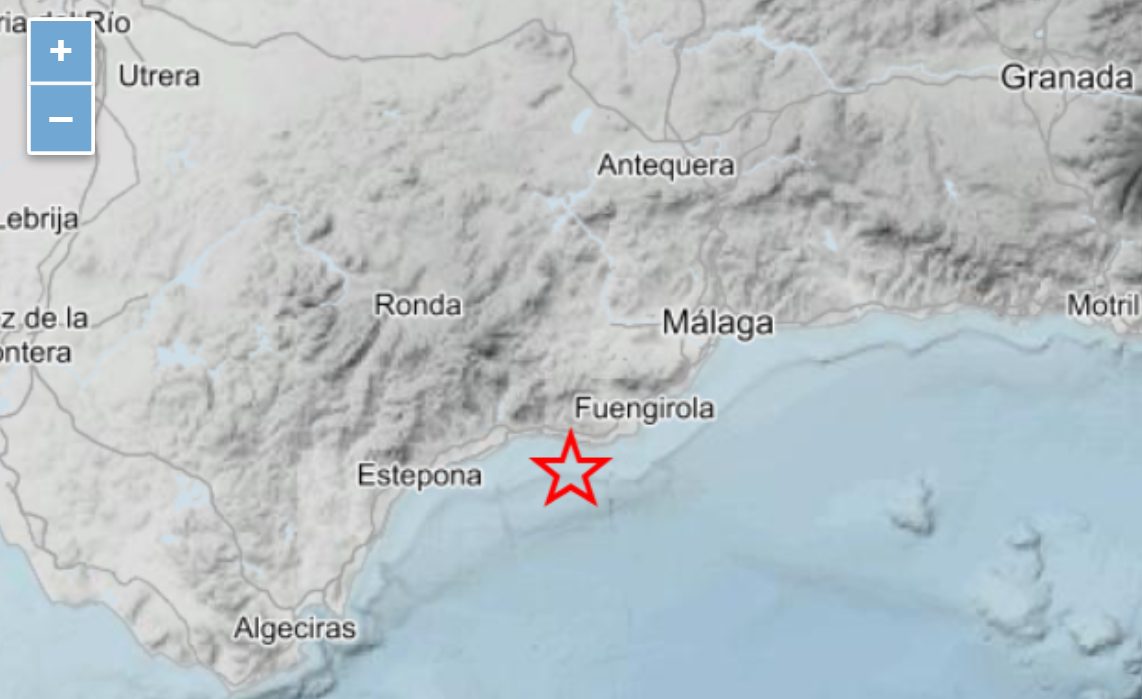

A minor earthquake was registered in Marbella on Wednesday, August 6, with a magnitude of 2.7 and no reported damage.
The tremor, detected by Spain’s National Geographic Institute (IGN), occurred at 11.43am and had its epicenter southeast of the municipality, at a depth of 83km.
Although imperceptible to most residents and tourists, the event once again highlights the steady seismic activity taking place beneath the Alboran Sea – a region that continues to attract attention from geologists due to its complex tectonic structure.
According to IGN, the quake classifies as a microseism – a small, deep tremor with insufficient energy to be felt at the surface.
No need to panic… yet
These kinds of events are common in southern Spain but serve as a reminder that the region remains geologically active.
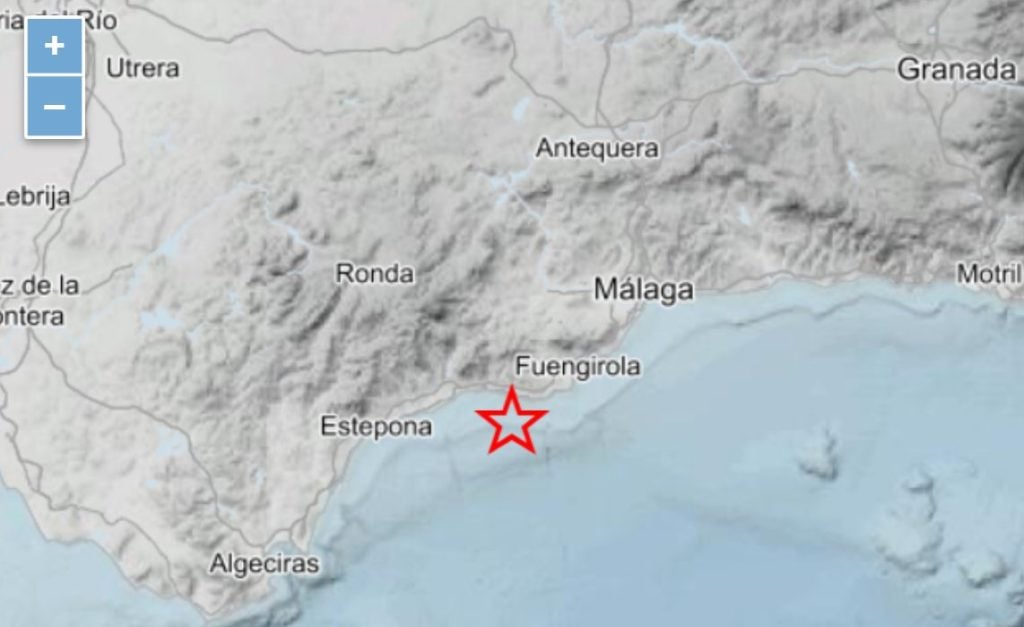
The Alboran Sea, located between the southern coast of the Iberian Peninsula and northern Morocco, is one of the most seismically active areas in the western Mediterranean.
It lies at the boundary of the African and Eurasian tectonic plates, with a microplate also present.
This triple interaction generates constant seismic tension and explains the frequent, low-to-moderate magnitude earthquakes in the area.
Most of these tremors do not pose a threat to the population, but the fault systems beneath the Alboran have produced damaging earthquakes in the past.
Notable historical examples include the 1804 Dalias earthquake in Almeria, which killed nearly 400 people, and a powerful offshore quake near Malaga in 1494.
In recent decades, attention has focused on the Al-Idrissi Fault, located in the southern part of the Alboran Basin.
This fault has been the source of several significant earthquakes, including a 6.3-magnitude event in 2016 that was strongly felt in Melilla, Ceuta, and parts of Andalucia.
Since 2021, this zone has experienced an ongoing uptick in seismic activity featuring thousands of small-to-moderate tremors, several exceeding magnitude 5.
While Wednesday’s event in Marbella caused no disruption, it fits a broader pattern of persistent seismic activity along Spain’s southern coast, which continues to be closely monitored by scientists and authorities.
Read more Spain news at the Spanish Eye.